
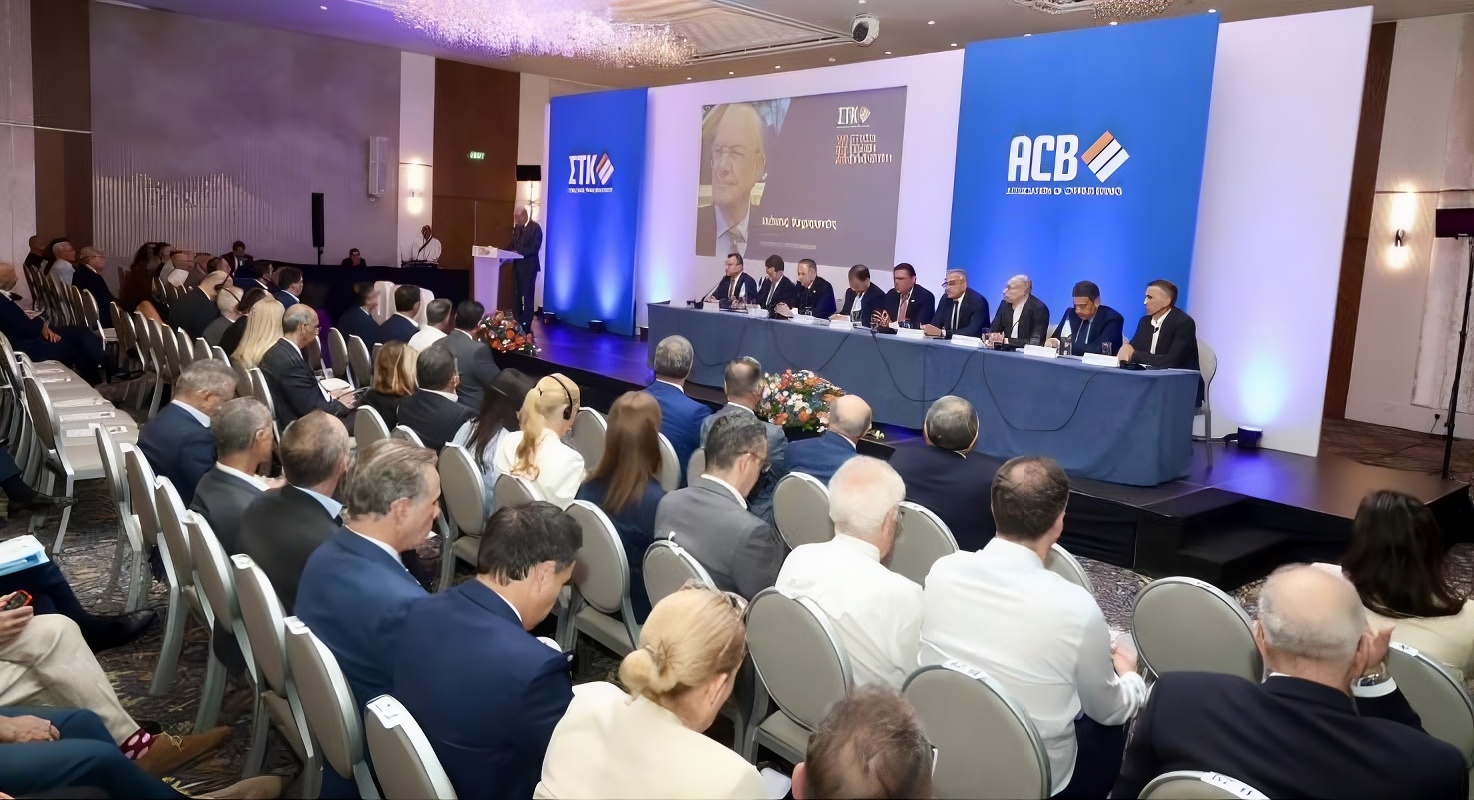
Banks association calls for cooperation with new parliament, stresses need for financial stability
Cyprus’ banking sector has called for close cooperation with the state and the newly elected House of Representatives, while warning that populist interventions in foreclosures and lending risk undermining financial stability, according to remarks delivered at the annual general meeting of the Association of Cyprus Banks (ACB).
Indeed, Association of Cyprus Banks chairman Panicos Nicolaou used his address to send what he described as a message of cooperation to both the government and members of the newly elected parliament.
He stressed that the banking sector’s longstanding positions on the need to preserve a stable foreclosure framework are based on economic realities rather than subjective assessments.
Nicolaou said these views had been reinforced by the recent and strongly worded opinion issued by the European Central Bank (ECB).
At the beginning of his speech, he emphasised that the stability of the financial system is increasingly taken for granted by many people, despite the fact that maintaining that stability is far from automatic.
“Frankfurt makes it abundantly clear that horizontal interventions, proposals made without impact studies and populist calls to suspend procedures not only fail to protect genuinely vulnerable borrowers, but also undermine financial stability, reward strategic defaulters and ultimately punish the overwhelming majority of responsible citizens by increasing borrowing costs and depriving the Cypriot economy of much-needed liquidity,” he stated.
Nicolaou stressed that the interests of depositors, responsible borrowers and young people seeking financing to start their lives or establish businesses should remain a priority.
“At the same time, the reduction in non-performing loans demonstrates something else as well,” he stated.
“Our fellow citizens themselves have become more financially mature,” he continued. “They better understand their obligations, plan more carefully and act more responsibly.”
He acknowledged that there is still progress to be made in financial literacy and said the Association of Cyprus Banks intends to invest even more in this area in the coming years.
“Let us not be criticised because we are profitable, because we have some of the strongest capital ratios in Europe, because we comfortably exceed our very strict supervisory requirements, because we attract major institutional investors and because we have the capacity to proceed with acquisitions of smaller institutions that otherwise would not survive,” he said.
“Let us not be criticised when we distribute dividends to shareholders who trusted us when they could have invested their money in any other business anywhere else in the world,” he added.
Reflecting on previous crises, Nicolaou underlined the importance of a strong banking system for the broader economy.
“We have experienced this before,” he said. “Without a healthy banking sector, the economy cannot move forward.”
“And without rational and prudent fiscal and political decisions, banks themselves cannot contribute to the economy to the fullest extent possible,” he added.
Finance Minister Makis Keravnos, Central Bank of Cyprus (CBC) governor Christodoulos Patsalides, and Association of Cyprus Banks (CBC) director-general Marios Skandalis also made special reference to the issue of non-performing loans, legislative initiatives on foreclosures, and the opinion issued by the ECB regarding possible amendments to the framework.
“To address this phenomenon, the government has promoted bills and regulations that ensure a stable and effective management framework,” said Keravnos.
He added that borrowers “have additional tools at their disposal, while the institutional safety net is being strengthened.”
“At the same time, the ability for debt restructuring and settlement is being enhanced,” he continued.
“Significant additional powers have also been granted to the Financial Commissioner,” he stated.
Keravnos also referred to the passing of bills by parliament “despite the expressed views of both the Finance Ministry and the CBC, as well as the Legal Service, that they may contain unconstitutional and other legal and institutional issues.”
He said this had led president Nikos Christodoulides to proceed with referrals and references to the Supreme Court, and further to request the opinion of the ECB on the suspension of foreclosures and the restructuring of loans and guarantees.
The ECB, the Finance Minister said, “expresses strong concerns about the expansion of financial risks that could evolve into fiscal risk, as well as a worsening of the borrowers’ problem rather than its resolution”.
Meanwhile, Skandalis warned that the international environment has deteriorated significantly since last summer.
He referred to escalating geopolitical tensions stretching from the Middle East to Ukraine, as well as trade disputes and instability that have disrupted long-established balances.
Skandalis said few observers would have expected a small and open economy such as Cyprus to demonstrate such resilience under these circumstances.
Turning to domestic political developments, he pointed out that the country had recently completed parliamentary elections and would soon begin preparations for the presidential election campaign.
“Election periods always have particular significance for the banking sector,” he said.
“Issues directly affecting our industry, from loan management and restructurings to fees, consumer protection and digital transformation, become central topics in political debate, with important implications for the country’s economy,” he added.
Skandalis stressed that the banking sector, as the largest contributor within financial services to gross domestic product, does not determine policy but addresses every issue with professionalism and technocratic expertise regardless of political considerations.
“We are and will remain a reliable, honest and predictable partner of the state and a supporter of efforts to preserve the stability of the financial system,” he said.
“The only side we choose and will always passionately support is that of our Cyprus, our society and our businesses,” he added.
“We choose meaningful and constructive dialogue based on facts, evidence and proposals that will lead to stability and sustainable prosperity for our people,” Skandalis said.
He also argued that the strong profitability recorded by Cypriot banks is the result of strict restructuring strategies, cost containment and digitalisation efforts.
According to Skandalis, these developments strengthen the resilience of banking institutions, ensure the fulfilment of capital and other obligations and contribute to the overall stability of Cyprus’ financial system.
“There can be no social prosperity without financial stability,” he stated.
“There can be no financial stability without a healthy economy, and there can be no healthy economy without a strong banking sector,” Skandalis concluded.




Click here to change your cookie preferences