
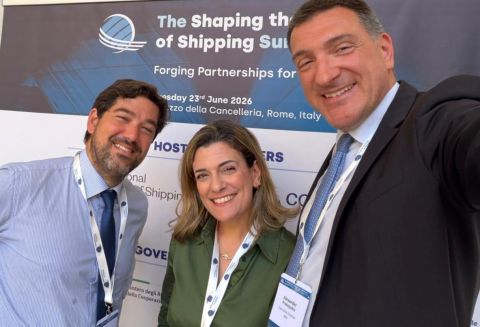
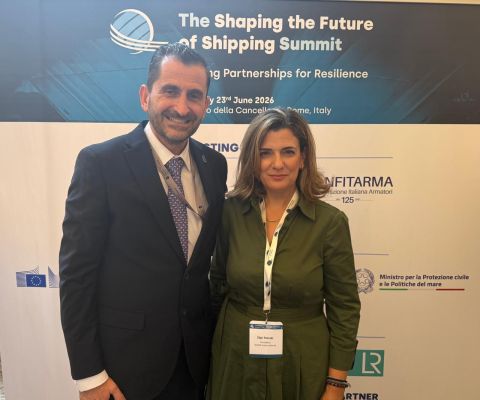
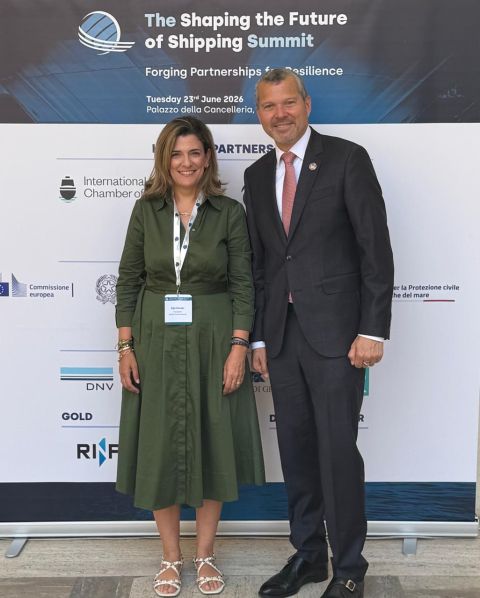
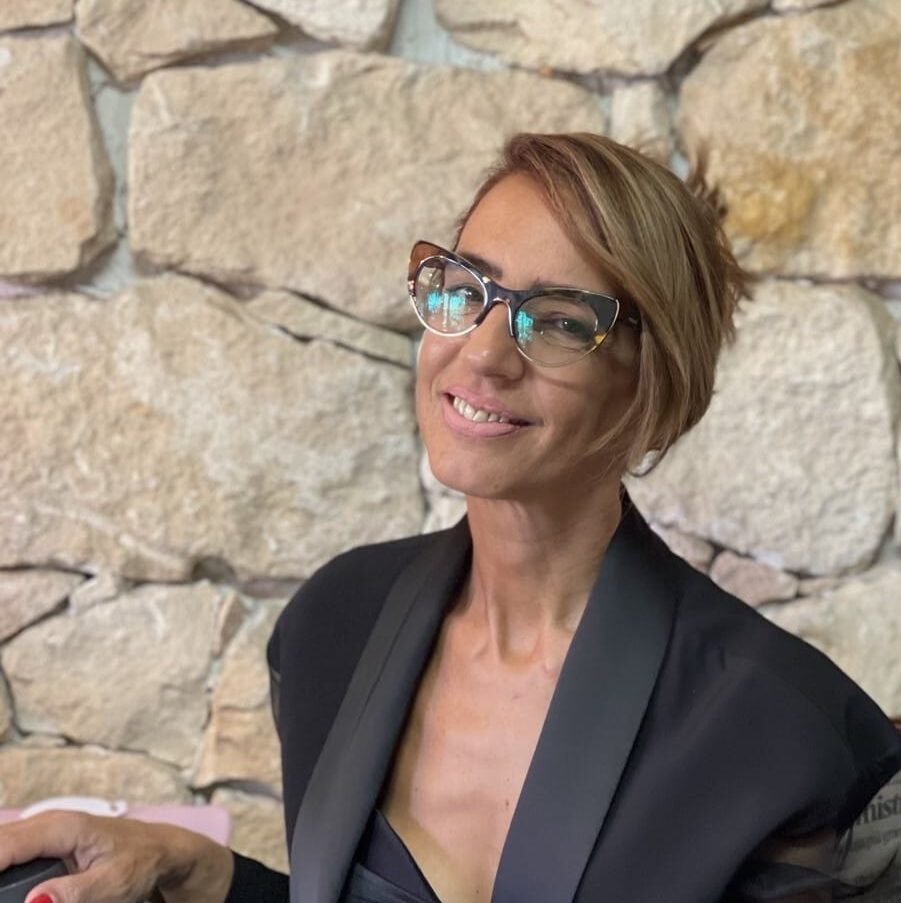
Shipping leaders used the International Chamber of Shipping’s (ICS) Rome summit this week to call for stronger cooperation across the maritime sector, with WISTA International president Elpi Petraki saying the industry’s challenges cannot be addressed in isolation.
In a post on her personal platform after attending the Shaping the Future of Shipping Summit in Rome this week, Petraki said the discussions had reinforced a point she strongly believes in.
“The challenges facing our industry cannot be addressed by any one organisation acting alone,” she said.
The summit, held under the title ‘Shaping the Future of Shipping Summit 2026 – Forging Partnerships for Resilience’, brought together senior figures from shipping, government and international organisations, at a time when global trade is being tested by geopolitical tension, regulatory pressure, cybersecurity risks and the energy transition.
Petraki said the same message was also reflected in the closing remarks of John Denholm CBE, who has just been elected chairman of the ICS.
“This message was echoed in the closing remarks by the new ICS Chairman, John Denholm CBE, who spoke about the importance of partnerships and deliberate investment in strengthening resilience in an increasingly uncertain world,” Petraki said in the post.
Denholm’s appointment was announced during the ICS annual general meeting in Rome, where he succeeded Emanuele Grimaldi, who had served as chairman since June 2022.
His election comes as the ICS is placing renewed emphasis on cooperation between governments, shipowners, regulators and the wider supply chain, particularly as shipping faces a more fragmented and unpredictable operating environment.
That concern was also reflected in the ICS Maritime Barometer report, launched in Rome, which identified geopolitical instability as the leading risk shaping global shipping.
According to the ICS, industry leaders are increasingly concerned not only about security risks and changing trade patterns, but also about cybersecurity, regulatory fragmentation and the pace of decarbonisation.
For Petraki, however, resilience also has a human dimension.
“As president of WISTA International, it was an honour to attend and to discuss the role of diversity and inclusion in securing the future of our industry,” she said.
Her comments placed diversity and inclusion within the wider resilience agenda, rather than treating them as a separate issue. As shipping works to attract new talent, manage technological change and prepare for a lower-carbon future, the question of who is represented in decision-making is becoming increasingly important.
WISTA International has repeatedly argued that the industry’s transformation cannot succeed if parts of the workforce remain outside the conversation.
The Rome gathering also carried a strong Cyprus link. Petraki thanked Thomas Kazakos, the ICS secretary general and former director general of the Cyprus Shipping Chamber, for the invitation to attend.
Kazakos, replying to Petraki’s post, said it had been “a pleasure” to have her at the summit again.
“Your presence reflects the very active involvement, interest and commitment of WISTA International on all major matters that affect Shipping today,” he said.
He added that Petraki’s “personal contribution in the relevant discussions held all over the world as to how to collectively address and resolve these issues, is so much appreciated”.
His remarks pointed to WISTA International’s growing role in global maritime discussions, particularly as the sector looks for collective responses to issues affecting trade, regulation, employment and security.
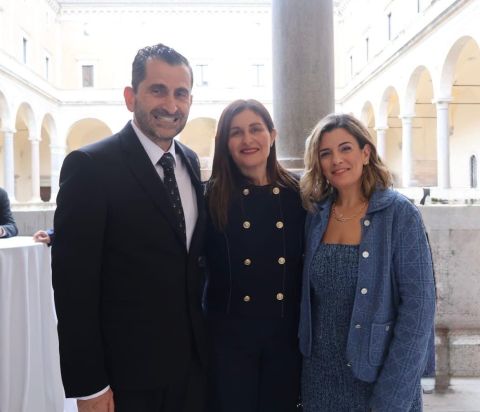
Cyprus was also represented at the summit by Shipping Deputy Minister Marina Hadjimanolis, who took part in the wider programme and attended events on the sidelines, as the island continues to strengthen its presence in international maritime discussions.
Petraki also thanked the ICS for organising what she described as a “timely and valuable event”.
Her remarks come as shipping is increasingly being judged not only by how it reacts to disruption, but by whether it can build the partnerships, investment and human capital needed to withstand what comes next.



Click here to change your cookie preferences