
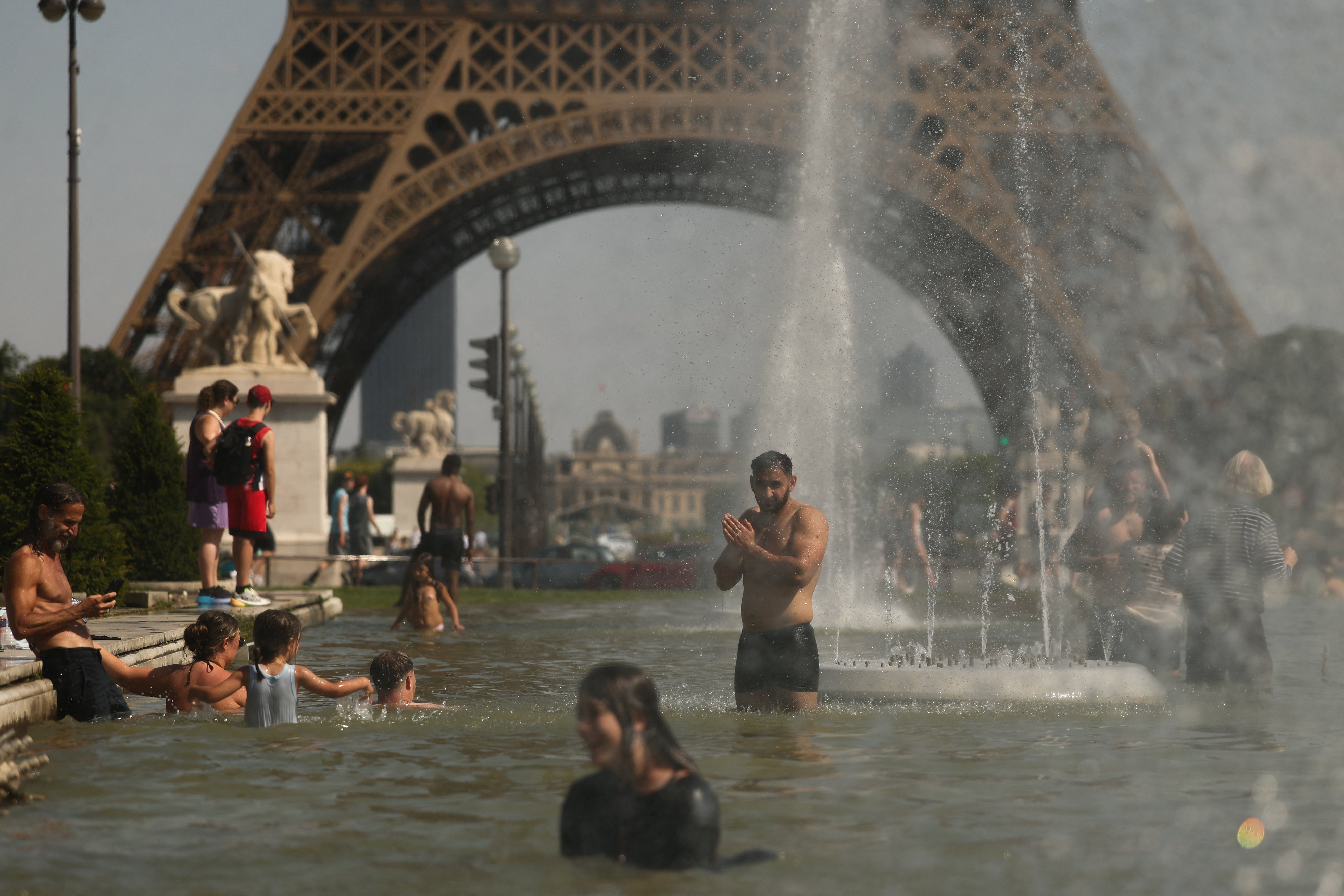
France recorded its hottest day since national records began in 1947 on Wednesday as an intense early summer heatwave continued to grip much of western Europe, triggering power outages, wildfire warnings and widespread disruption.
The national temperature indicator, which measures average day and night temperatures across dozens of locations, reached 30C, surpassing the previous record of 29.8C set a day earlier. Temperatures exceeded 40C in Paris and many other regions, while parts of western France recorded highs of up to 43C.
More than half of France remained under a red heat alert, with tens of thousands of homes in western regions left without electricity. Authorities also warned of an elevated risk of forest fires as prolonged extreme temperatures continued to affect large areas of the country.
The heatwave has spread across western Europe, with severe warnings issued in Belgium, the Netherlands, Germany and parts of eastern Europe. Forecasters expect temperatures to approach 40C in Germany later this week, while the Netherlands could see highs of 39C.
French authorities reported at least 40 heatwave-related drowning deaths since last Thursday. Among the victims were a six-year-old child who drowned at an unsupervised beach in Gironde and a 17-year-old girl who died while swimming in a prohibited area near Paris.
Major tourist attractions have also been affected. The Louvre Museum closed earlier than usual due to extreme temperatures, saying its historic building remains vulnerable to the effects of climate change and excessive heat. The Eiffel Tower also reduced operating hours.
In western France, firefighters brought a major forest fire under control after deploying more than 150 personnel to tackle flames in the Breignon forest in Maine-et-Loire.
Spain and Italy have also been severely affected. Spain recorded its highest average June temperature since at least 1950, while parts of northern Spain remained under red heat alerts with temperatures reaching 42C. In Italy, 16 provincial capitals were under the highest level of heat warning.
Scientists have repeatedly linked the increasing frequency and intensity of European heatwaves to climate change. Europe is warming at roughly twice the global average rate, contributing to more extreme temperatures, greater pressure on water resources and heightened wildfire risks across the continent.





Click here to change your cookie preferences