
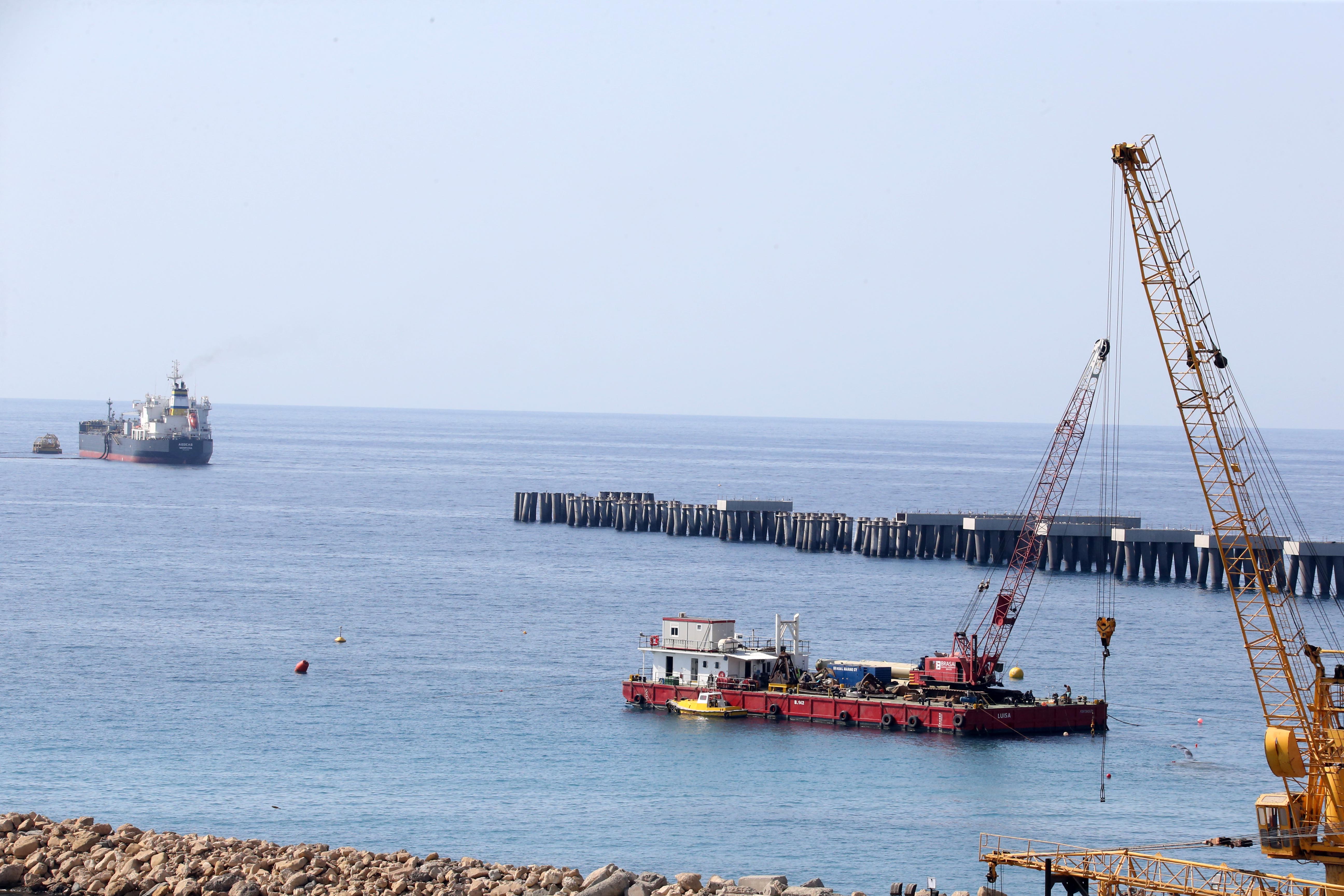
Cyprus may find itself with insufficient electricity by 2030, opposition politicians warned on Thursday, calling on the government to get its act together fast.
MPs were speaking to the press following a closed-doors session of the House audit committee, which reviewed a report by the Audit Office into the stalled LNG project at Vasiliko.
The session itself was off-limits to the media, due to sensitive matters discussed which might impact arbitration proceedings underway in London between the Cypriot state and the Chinese consortium that formerly held the contract for the LNG terminal.
But in remarks later, Akel leader Stefanos Stefanou spoke of “one of the biggest scandals in the history of Cyprus…which leaves the island exposed in terms of electricity sufficiency.”
Stefanou added: “We risk being left without power after 2030, and the solutions will be bloody, financially speaking.”
Moreover, the non-use of natural gas means electricity prices remain high for consumers, while at the same time Cyprus has to keep buying greenhouse gas emissions allowances because of reliance on heavy fuel oil for electricity generation.
According to the Akel MP, between 2018 and mid-2025 Cyprus paid €1.2 billion for these allowances.
“Faced with this terrible scandal, the Christodoulides administration’s approach is this: slow as molasses.”
Instead of defusing this “ticking time bomb”, said Stefanou, “the government has added to its explosive power.”
The MP explained that by the end of 2029, authorities must decommission power turbines at the Dhekelia power station, plus three more turbines at the Vasiliko plant.
This means that 720 megawatts will be taken offline, and will need to be replaced.
“The government must assume its responsibilities and give convincing answers.”
Regarding developments with the half-finished LNG project, Stefanou said only that from their briefing, MPs understood that the government is still looking for new contractors.
“They’re still at the preliminaries. It’s no accident the parliamentary session was held behind closed doors.”
Alma MP Odysseas Michaelides acknowledged that the current administration “inherited” the LNG debacle, but hastened to add that it has not fixed the problem over the past three years.
The closed session was attended by the auditor-general as well as officials from the energy ministry, the attorney-general’s office, the energy regulator, and the Natural Gas Public Company (Defa).
The LNG contract was awarded in 2019 with a 24-month deadline for completion.
The Chinese-led consortium subsequently submitted four delivery timetables, all missed – September 2022, July 2023, October 2023 and lastly July 2024.
In July of the same year the consortium tore up the contract, citing insurmountable differences with the Cyprus government and claiming unpaid invoices.
Despite government promises of a swift resolution, the LNG project remains in limbo.
The Prometheas, a floating storage and regasification unit and a key component of the project, is still anchored in the Strait of Malacca near Malaysia.
In parliament last September, a former official at the Transmission System Operator revealed that the sub-contractor hired to build the jetty at Vasiliko had declined to take responsibility for the materials and infrastructure equipment as they require repair and/or remanufacture.
Meanwhile the European Public Prosecutor’s Office (Eppo) is leading an ongoing investigation into the LNG terminal over suspected procurement fraud, corruption, and the misappropriation of over €101 million in EU funds. The probe, triggered by a damning Audit Office report, centers on irregularities in the contract awarded to the Chinese-led consortium.





Click here to change your cookie preferences