
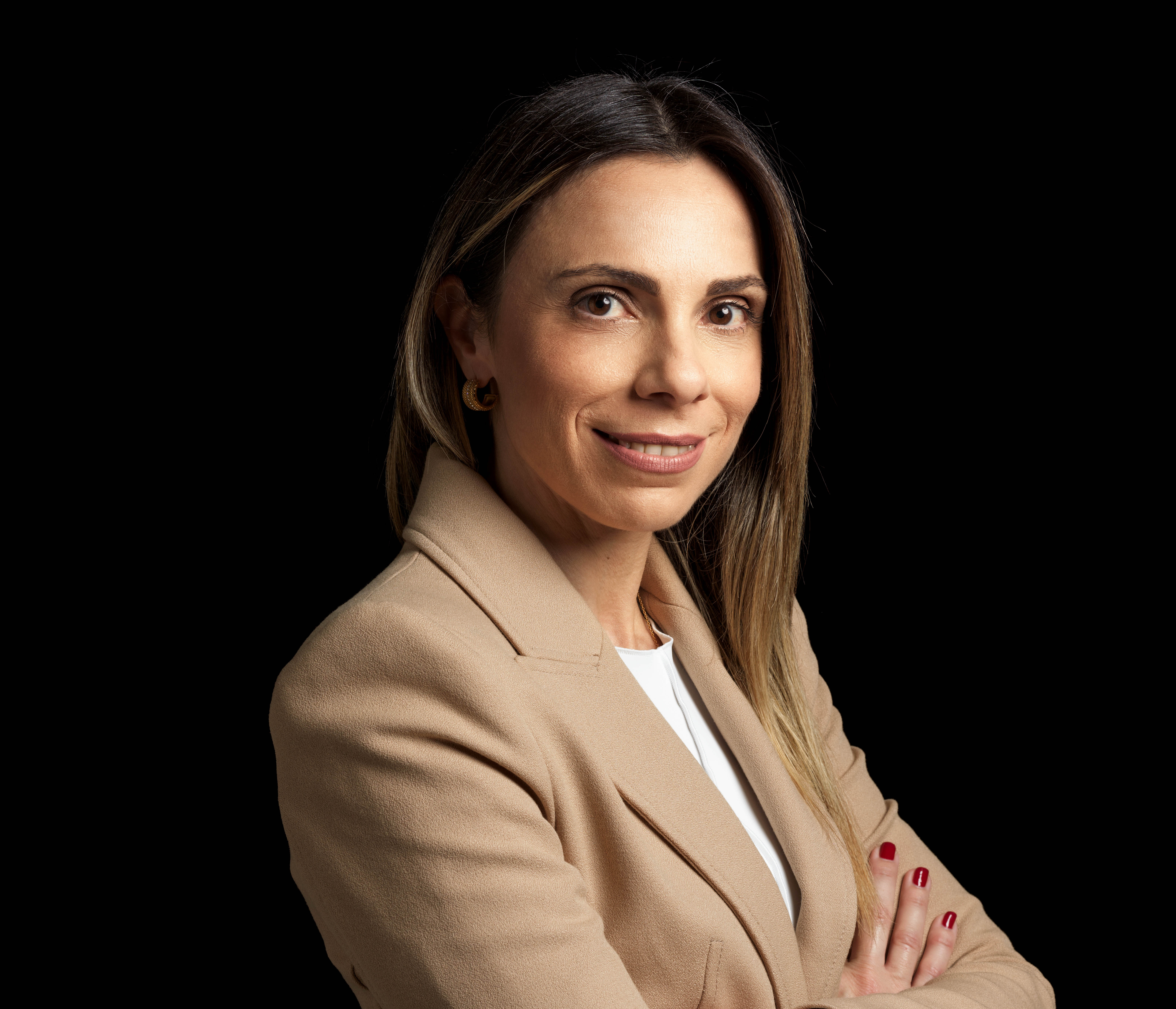
Interview with the Founder and Managing Director of Blackbook Agency, Eleftheria Voskaridou
Cyprus has built fast over the past decade. Towers have gone up, neighbourhoods have changed and real estate has become one of the island’s most visible growth stories. But for Eleftheria Voskaridou, the more important question is no longer what is being built, but how these projects are changing the way people live.
The founder and managing director of Blackbook Agency has spent more than two decades working with developers, investors, architects and consultants across Cyprus and Greece, helping shape the identity and positioning of major real estate projects. Yet her view of the sector is not limited to branding, sales or glossy launches.
For Voskaridou, the strongest projects start much earlier, with a simple but often overlooked question: who are we building for? As Cyprus enters a new phase of urban growth, she believes the developments that will stand the test of time will not be judged only by their location, size or finishes.
They will be judged by whether they make daily life easier, create a sense of place and add something meaningful to the city around them.
Cyprus has experienced significant development over the past decade. In your view, what are the biggest challenges our cities face today?
For many years, the conversation was about attracting investment and encouraging development. Cyprus has done that successfully. So, the challenge today is not so much about growth alone, but about how we grow in the most successful and meaningful way.
As our cities expand, we need to think more carefully about what that growth looks like and how it affects everyday life. Infrastructure, mobility, public spaces, sustainability and quality of life are all areas where this matters. The conversation must move beyond the number of developments being built and focus more on the type of environments we are creating.
When I look at a new development today, I don’t just think about the building itself. I think about how it fits into the city around it and whether it contributes something positive. Are our cities becoming better places to live and work? This is what we should be focusing on as we enter the next chapter of development.
Are we building cities with a long-term vision, or are we still largely focused on individual developments?
I think we are moving in the right direction, but there is still room for a broader perspective.
A successful city is not defined by individual landmark projects. It is shaped by how different developments work together and how people experience them as a whole.
Every project has an impact beyond its own site boundaries. It influences movement, accessibility, identity and the daily lives of the people who interact with it. The most successful developments, in terms of long-term value, are usually the ones that understand their role within the wider ecosystem.
Has the definition of a successful development changed?
Absolutely. Ten or fifteen years ago, success was often measured by location, size, specifications and sales performance. Those factors still matter, but people now expect more.
They are looking at how a place fits into their lifestyle, whether it offers convenience, flexibility, sustainability and accessibility, and whether it supports well-being through experiences that improve daily life.
For me, a truly successful development is not just one that sells or performs well. It is one that people still value as relevant and desirable long after it has been completed.
What do people truly look for when choosing where to live or work?
Quality of life has become a major consideration. Whether we are talking about residential or commercial real estate, people are thinking about how that environment will support their daily routine in terms of productivity, health, social interaction and overall experience.
Another thing I have noticed over the years is that people are placing a much higher value on their time. Developments that help people save time, for example by reducing unnecessary travel, have a significant advantage.
You speak about creating destinations rather than developments. What do you mean by that?
A development becomes a destination when people actively choose to spend time there. It is not somewhere they visit because they have to. It is somewhere they enjoy being.
That could be a residential community, an office building, a mixed-use or hospitality project, or even a public space. The common factor is that people feel connected to it in some way. There is a sense of belonging, atmosphere and purpose.
The projects that resonate most strongly are those that create experiences beyond their primary function.
What differentiates a successful destination from a successful building?
It all comes down to people. You can have an architecturally impressive building, but the strongest projects, which in turn become the most successful destinations, usually begin with a clear understanding of human behaviour.
How will people move through the space? How will they use it? And what experience will they have when they are there?
These questions are becoming more and more important. In fact, developments that prioritise people tend to generate stronger demand, greater loyalty and more sustainable long-term value.
How important is understanding the end user before a project is designed?
I would say it is one of the most important parts of the entire process.
Every successful project I have worked on started with an understanding of the audience. What they aspire to, what kind of lifestyle they want, what challenges they face and what value they are looking to gain from the development.
Having had the opportunity to work with developers, investors, architects and consultants on a wide range of high-profile real estate developments across Cyprus and Greece over the past two decades, I have seen first-hand that the projects which create the greatest long-term value are those built around a genuine understanding of the people they are aiming to serve.
That is why I see my role as a Strategic Marketing Consultant as much more than communication. It is about understanding the market, buyer behaviour, emerging trends and the aspirations of the audiences a project seeks to attract.
Projects should be asking “Who are we building for?” and “What role will this project play in the life of the city?” rather than simply “What should we build?”
Many people see marketing as the final stage of a project. Why do you believe it should begin much earlier?
Strategic marketing in real estate is often misunderstood. Many people associate it with advertising campaigns, social media or sales launches. In reality, the work begins years before a project reaches the market.
My role is to help define the project’s positioning. Our objective is to create something that people connect with and see value in, with clear purpose and a place within the market.
We think about who it is for, how it will stand out from competing developments and how it can create long-term destination value. This includes understanding the market, analysing demand and defining the audience, as well as shaping brand strategy, placemaking and commercial positioning.
When marketing is involved early, developers are able to make more informed decisions from the outset. This can in turn increase the relevance, desirability and long-term sustainability of a project.
By the time a project reaches the sales stage, many of the key strategic decisions have already been made. The strongest projects are those where developers, architects, consultants and marketers are working together from day one.
Can strong marketing compensate for a weak project?
No. Good marketing can generate awareness and interest, but it cannot create long-term value where none exists. Today’s buyers and tenants are also well informed and recognise authenticity.
The best results come when a strong concept is supported by clear communication and a well-executed strategy.
Has the meaning of luxury changed?
Significantly. Luxury today is no longer defined by size or expensive finishes, and certainly not a gold wrap.
People are placing greater value on things that improve their quality of life, such as time, convenience, privacy, well-being and flexibility.
Luxury should make their lives easier. It should provide meaningful experiences, while offering comfort and functionality.
This shift is influencing how future developments are conceived and delivered.
Looking ahead, what trends do you believe will shape the next generation of developments?
I believe we will continue to see greater emphasis on wellness, sustainability, flexibility, mixed-use concepts, smart technologies and community-focused environments.
However, the most important trend is human-centric design and the growing focus on how people actually experience a place. The future of real estate is not about creating more buildings. It is about creating better experiences.




Click here to change your cookie preferences