
The tournament through the eyes of a self-confessed Messi fan
This week I had planned to write a carefully argued article on economics and the creation of money. After sending it to a couple of friends for comment, however, the response was distinctly lukewarm.
“Interesting,” they said. “But did you watch the World Cup last night? What a game Argentina had!”
So, regrettably, the economics piece found its way into the bin, and I began writing about what, it seems, everyone has been talking about. And I do mean everyone. Quite apart from football’s traditional, predominantly male audience, this World Cup has captivated people across every part of society.
How else can I explain the enthusiasm of one of my proofreaders – a retired journalist and, until now, someone I regarded as possessing only the most serious of interests? Or my nine-year-old granddaughter, who put me firmly on the spot when she asked, “Pappou, who do you like better – Ronaldo or Messi?”
When I replied that I was a Messi fan, she looked at me in disbelief.
“Stop messing with me. You can’t be serious.”
I tried to explain Messi’s subtle brilliance, pointing to his exquisite first goal against Cape Verde: the sublime first touch to control the ball before delicately lifting it over the goalkeeper. My explanation was entirely wasted.
“That’s all very well,” she replied, “but Ronaldo goes like this!”
She threw her elbows wide, puffed out her chest and struck Ronaldo’s trademark celebration pose.
Checkmate. End of discussion.
This World Cup has somehow surpassed previous tournaments. Perhaps it was the expanded 48-team format, or the fact that matches were spread across three neighbouring countries. Whatever the reason, the competition felt like a genuinely global festival.
For the first time, nations such as Cape Verde, Curacao, Jordan and Uzbekistan shared the stage with established powers like Brazil, Argentina, Germany and France, alongside countries steadily trying to make it to the big league.
At times I was reminded of George Orwell’s famous observation in his 1945 essay The Sporting Spirit that sport is “war minus the shooting”. Yet this tournament suggested almost the opposite. Rather than inflaming national rivalries, it became a celebration of sporting excellence and shared enjoyment.
Orwell wrote shortly after the Second World War, when Dynamo Moscow’s controversial tour of Britain reinforced his pessimism about international sport. Thankfully, despite occasional attempts to drag us back in time, the world has evolved positively since then and this World Cup has been a model of civility and fun.
Norway stole the headlines not only by eliminating Brazil but also with its wonderfully choreographed rowing celebration, which quickly became a viral sensation.
Not everything was perfect, of course.
Donald Trump could not resist telephoning his friend Gianni Infantino at Fifa to overturn the red-card suspension of the USA’s star striker, Folarin Balogun, before the match against Belgium. The football gods, however, appeared unimpressed. Belgium promptly dispatched the United States 4-1. Trump, uncharacteristically, remained silent afterwards. I can only assume the FBI is still investigating possible match-rigging.
Unfortunately for Egypt, those same football gods seemed rather distracted.
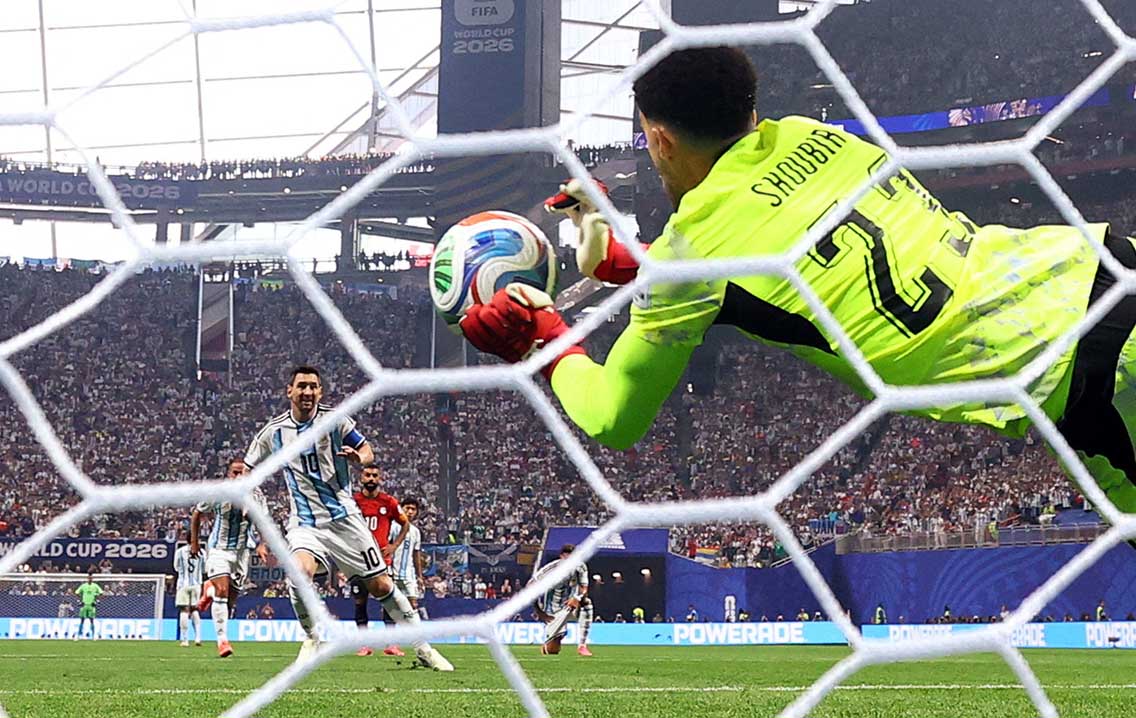
Despite producing one of the performances of the tournament and leading Argentina 2-0, Egypt somehow contrived to lose 3-2 after an extraordinary final 15 minutes. The controversy centred on VAR. An outstanding Egyptian goal was ruled out after officials detected a foul much earlier in the move, yet Argentina’s winning goal escaped the same scrutiny and survived, despite a remarkably similar sequence. The football gods have always displayed a curious partiality towards football’s aristocracy.
Witness Maradona’s infamous “Hand of God” in 1986.
As Thucydides observed over two thousand years ago, “the strong do what they can and the weak suffer what they must.” Football, it seems, is no complete exception.
The World Cup is, in many ways, a microcosm of the wider world. Even the official cooling breaks reflected the growing impact of climate change and extreme heat.
On the field, meanwhile, there was no shortage of unforgettable moments: Erling Haaland’s wonderfully nonchalant second goal against Brazil; Mikel Merino’s inspirational return from a four-month injury lay-off to score for Spain against Postugal, and Jude Bellingham’s two goals for England against Mexico.
We watched traditional giants such as Germany and Brazil fade, while emerging football nations like Cape Verde and Egypt sparkled. We also witnessed some of the game’s greatest names attempting to defy time itself.
Ronaldo, Neymar and Modric gave everything, but ultimately could not lift their teams to the heights required.
Whether Messi can do so for Argentina remains to be seen.
I still have a score to settle with a certain nine-year-old.





Click here to change your cookie preferences