
By Dina Kapardis
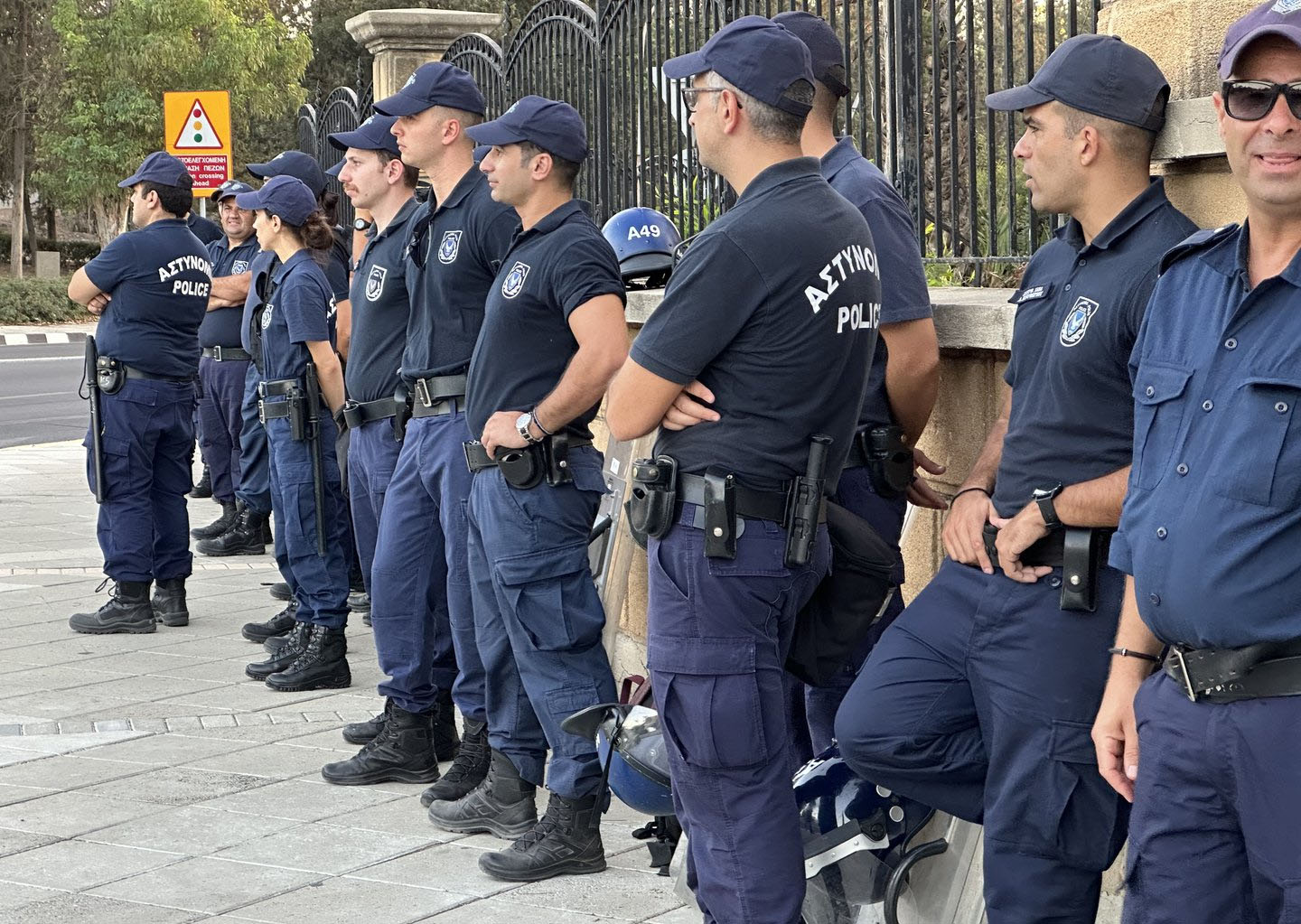
Following the establishment of the Republic of Cyprus, the police and gendarmerie structures of the early post-independence period were brought together to form the present Cyprus police in 1964. Women were already part of this policing history. Yet, more than six decades later, Cyprus has still never seen a woman chief of police nor a deputy chief of police.
That fact should make us pause.
The point is not to criticise the Cyprus police for the sake of criticism. Nor is it to suggest that women should be promoted simply because they are women. The question is more serious and more constructive than that. If women have been part of policing in Cyprus since the earliest years of the Republic, why has their presence never translated into leadership at the very top?
According to the latest figures women now make up around 28 per cent of police officers in Cyprus. But their distribution across the hierarchy tells a more complicated story. Women make up 30 per cent of constables and special constables, 21 per cent of sergeant ranks, 12 per cent of officers and 13 per cent of senior officers.
At the level of chief, deputy chief and assistant chief, the current figure is zero.
These numbers matter because representation is not only about fairness inside an organisation. It is also about public trust, legitimacy and the quality of institutional decision-making. The police serve the whole of society. That society includes women and men, mothers and fathers, daughters and sons, victims, witnesses, suspects, young people, older people and vulnerable people. A police organisation that reflects the society it serves is better placed to understand that society.
This does not mean that all women lead in the same way, or that women naturally possess one fixed leadership style. That would be too simplistic. The value of women’s representation lies in the widening of experience, judgement and perspective at the senior table. Different life experiences can change the questions that are asked, the risks that are noticed, the assumptions that are challenged and the priorities that are set. In an organisation as powerful and socially important as the police, that matters.
The comparison with other countries is useful, not because Cyprus can or should simply copy another system, but because it shows that women’s senior police leadership is not unimaginable. In England and Wales, official Home Office statistics show that women now make up 36.1 per cent of police officers, the highest proportion recorded there since comparable data began. Senior policing figures show that around 40 per cent of chief constables are women. In Sweden, the national police service is currently led by a woman, National Police Commissioner Petra Lundh. These examples do not mean that those systems are perfect. They do show, however, that women leading police organisations is no longer exceptional in many European contexts.
Cyprus itself has also seen women in public leadership. The current House president is a woman, Annita Demetriou. Women remain under-represented in Cypriot politics, with 11 women among the 56 members of the House, but their presence in public authority is no longer a theoretical possibility. It already exists.
So why not in policing?
One easy answer would be to say that women simply do not want these roles. Perhaps some do not. Perhaps some women look at the demands of senior police leadership and decide that the personal or professional cost is too high. But if a pattern has lasted for more than 60 years, that explanation is too narrow. It is not enough to sit comfortably with the idea that women are simply choosing not to apply. We also need to ask how career choices are made within an organisational landscape where opportunities may be visible or hidden, encouraged or discouraged, accessible or seen as costly.
Police careers are built through rank, experience, operational credibility, mobility, visibility and trust. These may appear to be gender-neutral career requirements. In practice, however, they may advantage those whose working lives fit more easily with the traditional model of the always-available police officer, while placing additional constraints on those whose careers are shaped by gendered expectations, caring responsibilities or limited access to informal networks.
The question is not whether women are capable of leading the Cyprus police. That question should already be settled. It is something deeper: how are police leaders produced, recognised and encouraged? Who becomes visible as leadership material? Who is sponsored, mentored and advised to move forward? Who is quietly assumed to be unsuitable, unavailable or unlikely to cope? How do ideas about motherhood, family responsibility, authority, toughness and commitment shape the way women’s careers are understood?
The absence of women from the highest ranks of the Cyprus police should not be treated as normal simply because it has lasted for so long. It is a historic pattern, but it is also a present question. And perhaps the question is no longer whether Cyprus is ready for a woman chief of police.
Perhaps the question is what has made it take so long.
Dina Kapardis is a Criminologist at the University of Portsmouth and Co-Editor of the International Journal of Police Science & Management





Click here to change your cookie preferences