
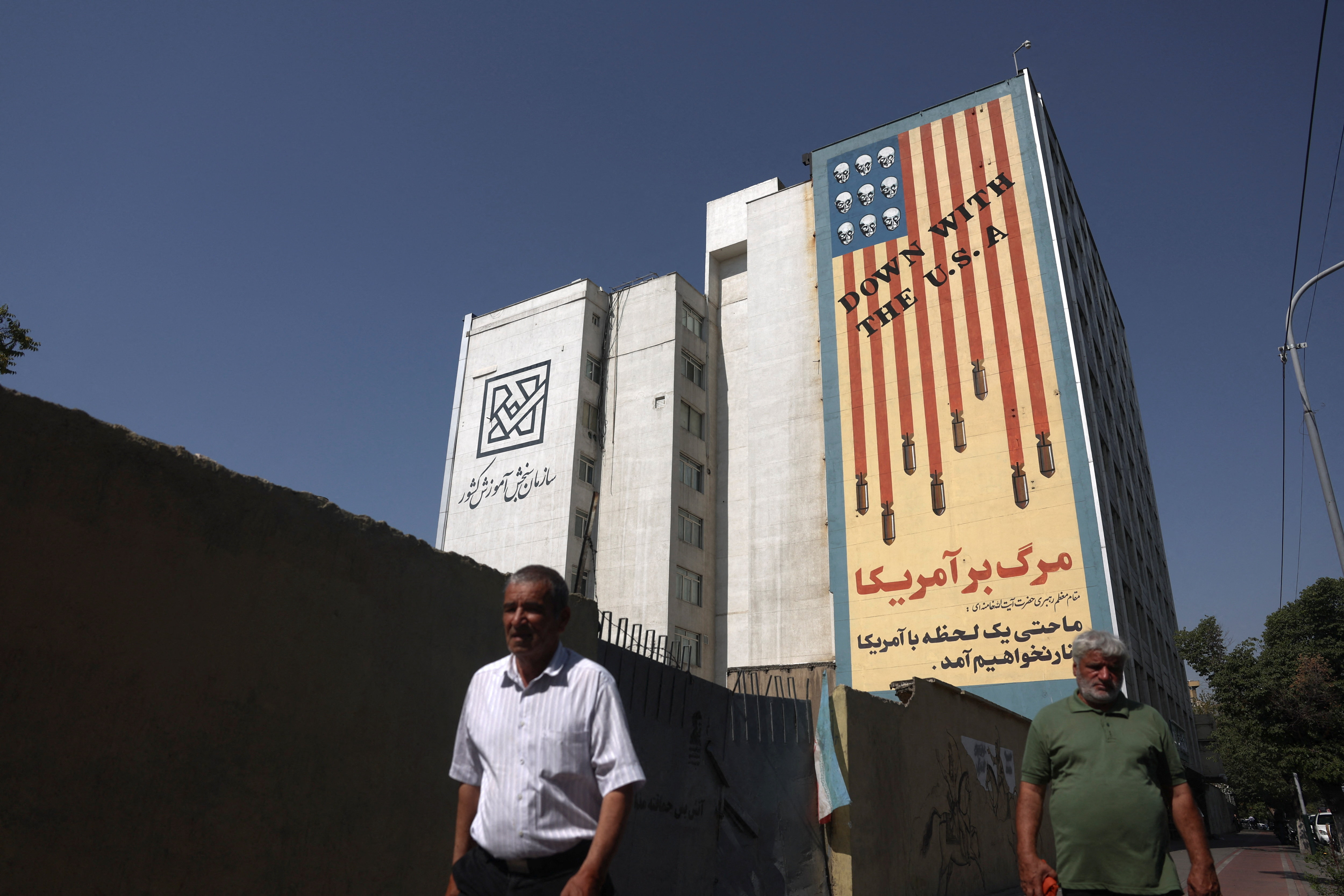
The last time oil-tankers were being shot up in the Persian Gulf, back in the 1980s, it was Saddam Hussein’s brutal tyranny in Iraq versus Ayatollah Khomeini’s revolutionary Islamist regime in Iran, and people used to say “It’s a shame that both sides can’t lose.”
The United States backed Saddam because he was just another murderous thug, whereas the new regime in Tehran was an actual threat to American interests. It had overthrown Iran’s American-backed puppet king and wanted to spread its Islamist ideology across the region.
So of course, Ronald Reagan’s administration chose Saddam’s side. It sent Iraq arms by clandestine means (because Congress wouldn’t authorise it), and even provided targeting information for Iraqi poison gas attacks on Iran. The Americans chose the ‘lesser evil’, but at least they knew it was evil.
Once in a while they would even say it out loud: “It’s a shame that both sides can’t lose.” But they never did anything about it, and after ten years of slaughter the war ended in a no-score draw.
Approximately thirty years later, the world finds itself in a similar situation. This time it is the United States itself, not a local henchman, that has attacked Iran, and Israel has also made thousands of air strikes on Iran. Yet the war has swiftly degenerated into a stalemate that could last for years. Is it inappropriate to wish that both sides could lose?
The United States has already lost. Donald Trump can bomb Iran to his heart’s content but he cannot force Iran to keep the Strait of Hormuz open. The US-Israeli attack has taught the Iranian regime that their control of the Strait is a far more usable and effective strategic asset than their mythical nuclear weapons ever could have been, and they will never give it up.
The current on-again-off-again ‘strikes’ and ‘pauses’in the Persian Gulf are due to the fact that the ‘Memorandum of Misunderstanding’ that made the 60-day ‘ceasefire’ possible was deliberately vague about who actually gets to control the Gulf.
The text says that “Upon the signing of this MoU, the Islamic Republic of Iran will make arrangements using its best efforts for the safe passage of commercial vessels, with no charge for 60 days only, from the Persian Gulf to the Sea of Oman, and vice versa.”
A straightforward reading of the MoU puts Iran in charge of guaranteeing safe passage, and Iran was already insisting that ships pass through on the Iranian-controlled northern side of the Strait with Tehran’s permission and guidance.
However, the ink was not yet dry on the MoU when the United States began ‘encouraging’ ships to use the southern, Oman-controlled channel through the Strait instead. Iran immediately began targeting those ships to discourage that behaviour, and the US hit various Iranian shore installations again, and so on. Protection rackets often involve violence.
This may go on for some time, because neither side yet believes that it has been irrevocably defeated. Trump really does have no way of turning this around unless he’s willing to use nuclear weapons (so far, so good), but the Iranian regime unfortunately can see a path to victory.
It wouldn’t be a military victory, of course, but Trump is a man of little patience and at any point he can just ‘declare a victory and leave’ (as the saner Americans used to say during the final years of the Vietnam war). That would probably leave Iranians suffering under the brutal tyranny of their current rulers for a long time to come.
By last year that 47-year-old regime was clearly nearing its sell-by date. January’s demonstrations were suppressed with the massacre of up to 35,000 protesters, but in the normal course of events mass killing on this scale would suggest that the regime was on its last legs. It probably was, until the United States and Israel launched their surprise attack.
Now, instead, the regime has appealed to both Iranian nationalism and the Shia Muslim tradition of victimhood and won a whole new claim to legitimacy by its successful defence of the Iranian state.
Trump and his Svengali, Israeli prime minister Binyamin Netanyahu, also killed off the old, cautious generation of Iranian leaders. They have been replaced by younger, bolder, more innovative men who have run rings around the traditional military strategies of the Pentagon.
It really would be a good thing if both sides could lose this war: the Iranians might be free of the theocratic regime at last, and it might also be the beginning of the end politically for Donald Trump. But that is not to be. Only one side has lost.
Gwynne Dyer’s new book is ‘Intervention Earth: Life-Saving Ideas from the World’s Climate Engineers’. The previous book, ‘The Shortest History of War’, is also still available.
.





Click here to change your cookie preferences