
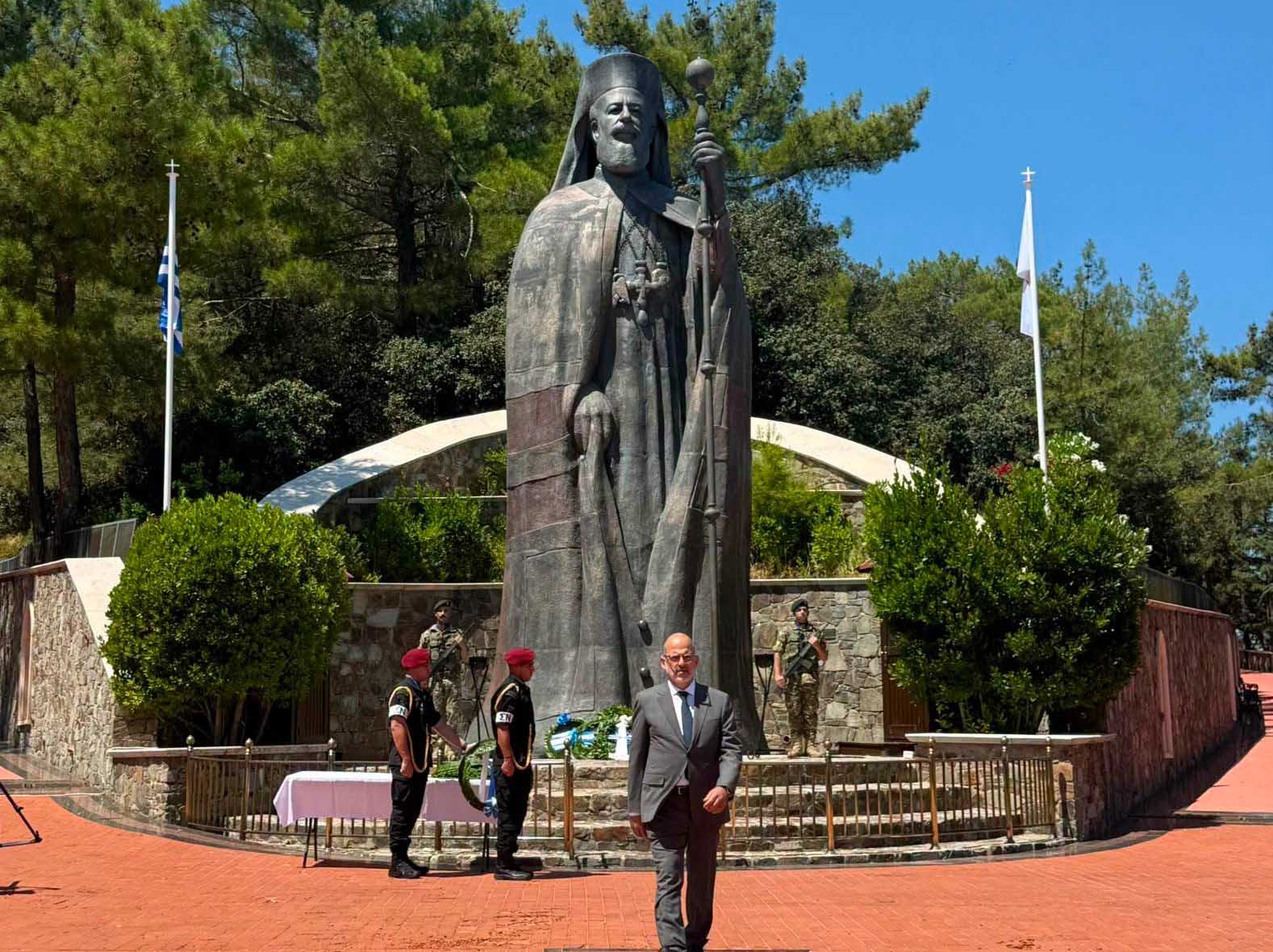
In front of political and church leaders and representatives from all walks of life, a memorial was held on Sunday for the first president of the Republic, Archbishop Makarios III, who died 49 years ago.
He was born in in 1913 in Panayia of Paphos, following a path from the Holy Monastery of Kykkos to the Pancyprian Gymnasium, from Athens to Boston, to the Metropolis of Kition, to the Archdiocese and, finally, to the Presidential Palace.
“A course full of challenges, responsibilities and historic decisions. In 1950, elected by the people to the archdiocesan throne, he assumed a role that transcended the boundaries of the Church. As the last Ethnarch in the primary political-religious sense of the term, he was not only a spiritual shepherd, but also a political exponent of Cypriot Hellenism. He embodied a centuries-old tradition, which pre-existed the state structures and international balances that shaped the future of our country,” Limassol MayorYiannis Armeftis said in an address.
He began his speech with a phrase from the last speech of Archbishop Makarios: “The peoples who want to live and struggle to live are not lost”.
These words, he said, underlined Makarios’ belief that the people of Cyprus have the right to live free.
The service was held at Kykkos monastery, where Makarios was laid to rest. He chose Kykkos so that in death his gaze could take in the whole of Cyprus, Armeftis said.
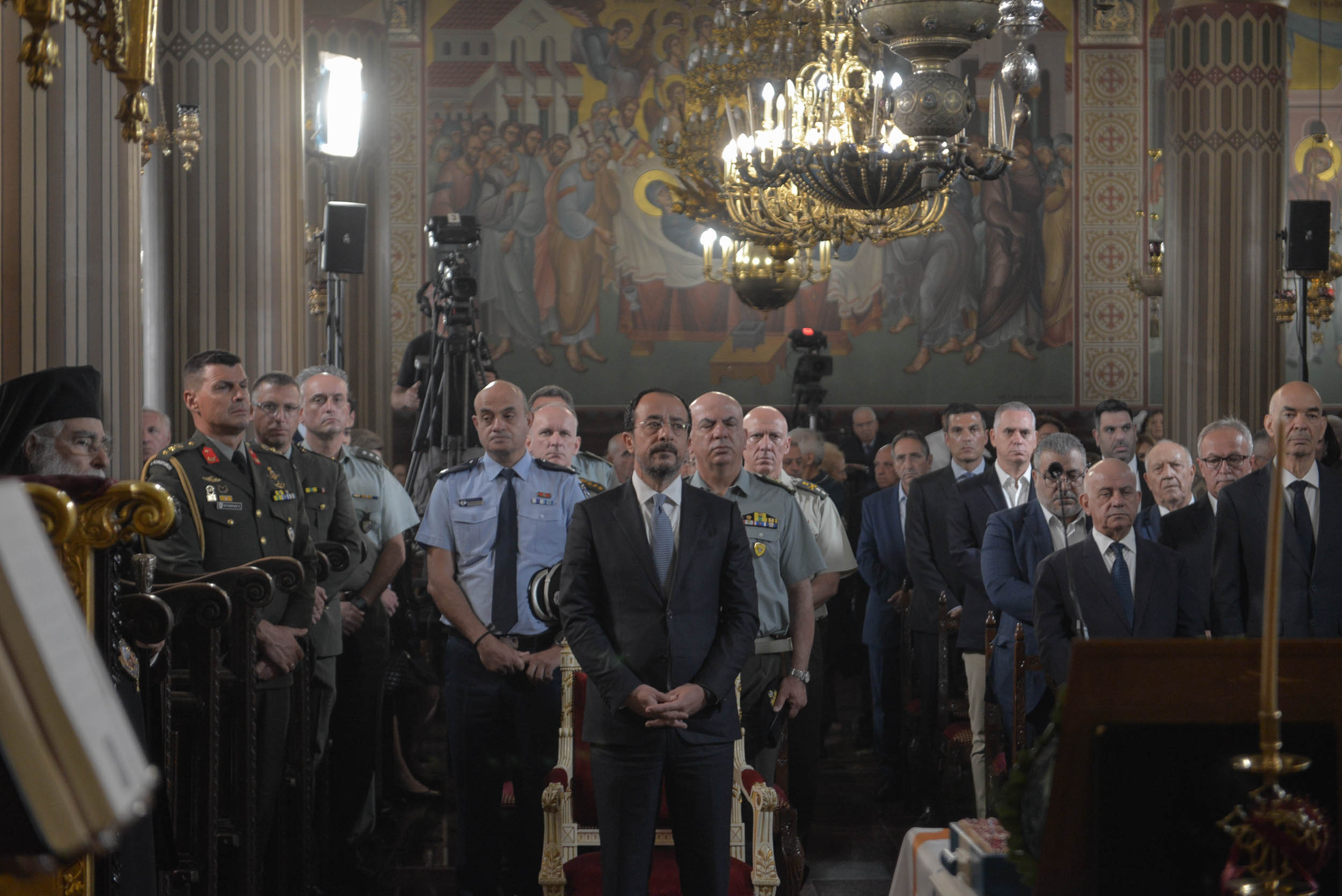
It is impossible to discuss the history of Cyprus without including Makarios, he added.
“During his presidency, the Republic of Cyprus was consolidated, strengthened its international presence and gained a strong voice in the international community. He was the leader who elevated the Cyprus problem to an international political issue, securing the recognition of the Republic of Cyprus and broad international support for the struggle for independence, sovereignty and territorial integrity.
“Intelligent and charismatic. Calm and moderate in speech, but immovable in his principles,” he added.
“The legacies of great leaders,” Armeftis said, “are not enough to be honored with words. They must be put into practice and function as a timeless compass for the future of our country.”
Armeftis also made special reference to the presence of Makarios at the General Assembly of the United Nations on July 19, 1974, just a few days after the coup.
“From the podium of the UN, the President of the Republic of Cyprus denounced the constitutional deviation and the coup d’état in Cyprus, calling for the restoration of democratic order.”
Not everyone approved of his choice of words. “Some people today, persistently and with selected excerpts on social networks, are trying in an insidious way to bring back the theory that Makarios invited Turkey to Cyprus with his speech. The historical reality, however, is clear. After all, when Makarios was speaking in New York, in Cyprus, due to the time difference, July 20 was already dawning and the Turkish ships were already sailing for the invasion,” he added.
After the visit last week of United Nations Secretary-General Antonnio Guterres to te island, Armeftis said that “difficult times require leaders with vision, people with endurance and political forces that can serve the common good.”



Click here to change your cookie preferences