
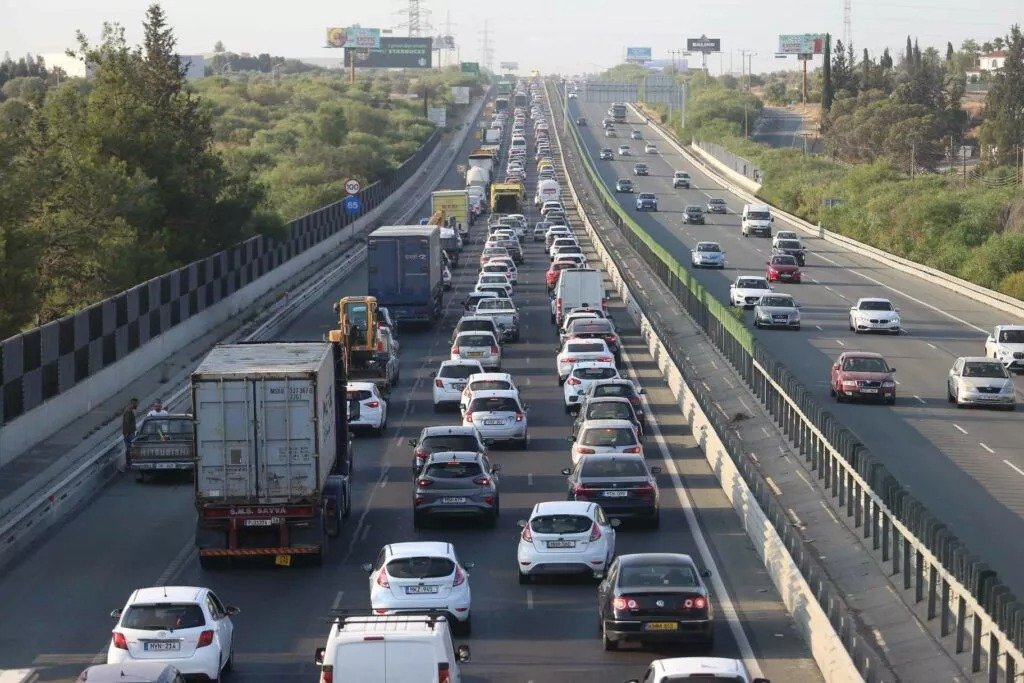
The government will assume responsibility for removing vehicles involved in serious traffic accidents under a new rapid response system, Justice Minister Costas Fitiris said on Monday, with insurance companies expected to reimburse the state after roads have been cleared.
The measure forms part of the proposed “Nestor” plan which was developed following last month’s seven-hour closure of the Nicosia-Limassol highway after an overturned lorry brought traffic to a standstill.
Speaking to Politis radio, Fitiris said planning for the scheme is expected to be completed this week, with a live exercise involving cranes and drones scheduled for August before the system is introduced.
“In practice, this means that the road will be opened as soon as possible and they will not wait for the insurance companies to decide which crane to bring,” he explained.
The plan will place responsibility for coordinating the removal of damaged vehicles with the state, replacing the current system under which recovery can be delayed while insurers arrange towing services.
Before any vehicle is moved, authorities will fully document the accident scene using photographs, video recordings and, where necessary, drones to preserve evidence required for the police investigation and insurance claims.
The scheme will also apply to lorries or trucks, with the state arranging specialist cranes where required to remove overturned heavy goods or other large vehicles from the road.
Fitiris said the government would initially cover the recovery costs before seeking reimbursement from insurance companies.
“The state will proceed with the removal of the vehicles and then, based on the photographs and other details of the accident, will claim the relevant costs from the insurance companies,” he said.
The proposals build on a rapid response framework unveiled after the highway disruption in July, when the ministry announced plans to establish emergency teams in every district involving police, the fire brigade as well as private contractors.
Under that plan, a designated coordinator will oversee the response, police will manage road closures and diversions while civil defence will issue public warnings through the CY Alert system.
The government also plans to establish advance agreements with private companies capable of supplying specialist equipment when state resources are insufficient, with contracts setting out response times and costs to speed up mobilisation.





Click here to change your cookie preferences