
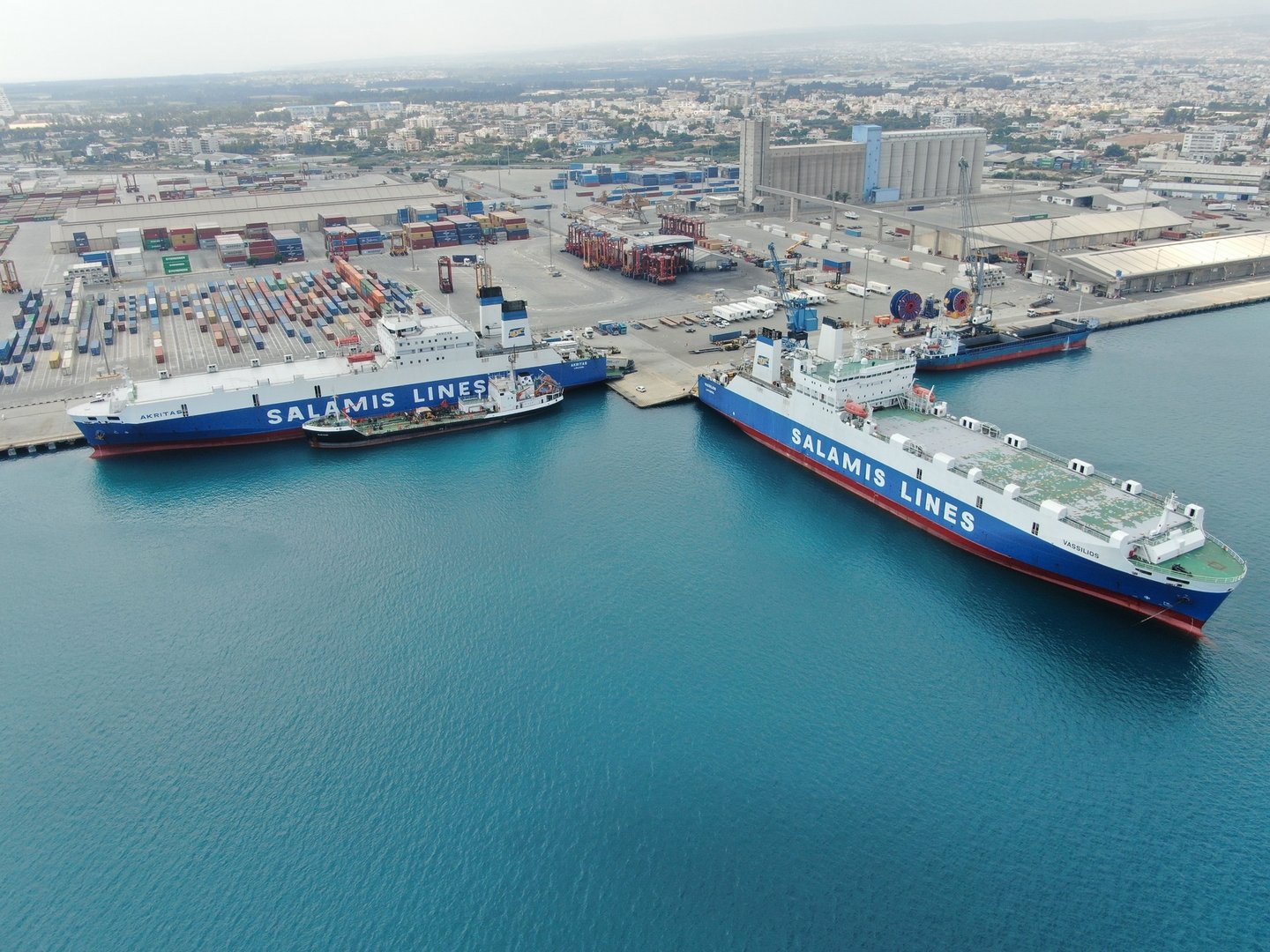
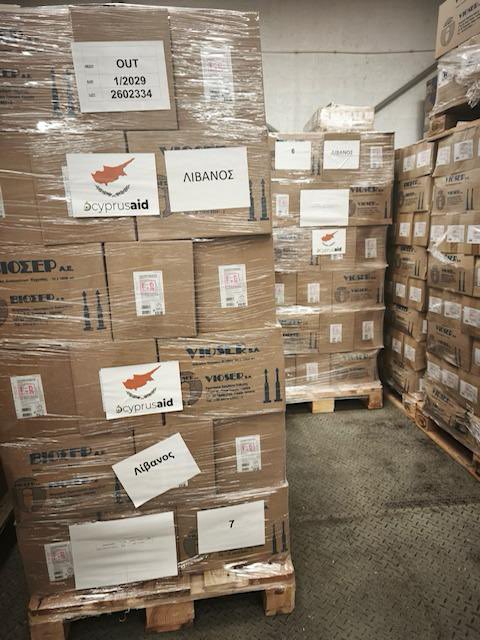
The Cypriot government has shipped around €200,000 worth of humanitarian aid to Lebanon, the foreign ministry said on Monday.
The shipment comprised a total of 31 containers, which the foreign ministry said contained “pharmaceuticals and consumables”, and departed from the port of Limassol last week.
With the ship having “already” arrived at the port of Beirut, according to the foreign ministry, its arrival brings the total value of humanitarian aid provided to Lebanon by the Cypriot government this year to €840,000.
Additionally, the ministry announced that from next month, scholarships will be offered by the Cypriot government to Lebanese citizens to attend both short-term seminars and training courses and longer-term higher education programmes on the island.
The aid shipments come with relations between Cyprus and Lebanon having significantly strengthened since Joseph Aoun was elected as Lebanon’s president in January last year.
Cypriot President Nikos Christodoulides visited Lebanon the day after Aoun’s election, becoming the first foreign leader to meet Aoun in his capacity as president.
Aoun then visited Cyprus in July last year, saying at the time that “Cyprus has always been by Lebanon’s side” and highlighting the “proximity of the two countries, not only geographically, but also in common interests and challenges”.
“Cyprus has always been supportive of Lebanon,” he said, adding that his country “relies” on Cyprus and will continue to do so.
At the time, Christodoulides expressed his “great joy” over welcoming Aoun to the island.
He went on to describe Aoun’s visit as “substantial, symbolic, and historic”, and added that it “constitutes clear proof, among other things, of the close bonds of friendship and cooperation which govern our relations”.
Additionally, he said that the two countries had been “like twins” historically, and that the Mediterranean “unites, rather than divides” them.
More recently, Cypriot Foreign Minister Constantinos Kombos said in April that the Lebanese government is “doing an amazing job” in its efforts to stabilise the country amid an insurgency being undertaken by Iran-backed militia Hezbollah and an invasion launched by Israel.
Since then, the governments of Lebanon and Israel have negotiated a ceasefire, which has brought about a partial withdrawal of Israeli forces from territories it had occupied in southern Lebanon, while Hezbollah conditionally accepted the ceasefire, with its acceptance contingent on Israeli forces’ withdrawal from Lebanon.




Click here to change your cookie preferences