
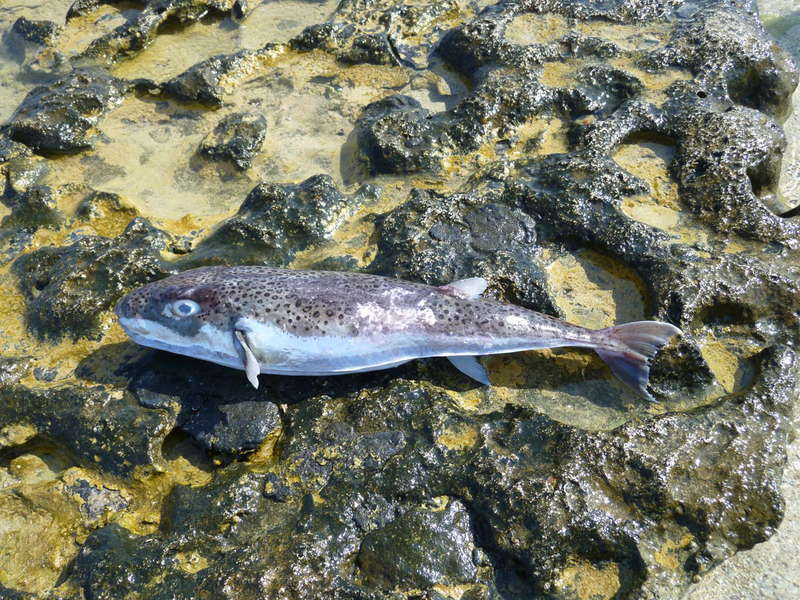
Almost 145 tonnes of the silver-cheeked toadfish, known locally as hare’s head, have been caught in Cypriot seas over the past two years, fisheries department marine research officer Nikoletta Varnava told the Cyprus News Agency on Friday.
The plan, running until 2029, has a budget of €1,304,000, with 70 per cent financed by the European fisheries fund.
Of the total budget, €685,000 has been paid to fishermen for the 145 tonnes delivered since June 2024, Varnava said.
The payments are distributed to the fishermen association heads participating in the scheme, who then divide the amounts among fishermen within each group according to the weight of fish caught.
Fish delivered under the programme are collected for incineration by a licensed company.
Varnava explained that similar plans addressing the species’ population have been in place since 2012, with the toadfish having established itself in Cypriot waters for the past two decades.
Although no attacks on humans have been recorded in Cyprus, the department said the growing population has caused significant damage to fishing gear and catches.
The measures taken by the department are therefore aimed primarily at reducing the population, with data collected in cooperation with professional fishermen to track numbers.
Varnava said Greece had recently sought consultation with Cyprus regarding the methodology used to address the species’ spread, following its appearance in Greek waters.
Asked whether any species, such as sea turtles, had emerged as a natural predator capable of reducing toadfish numbers, she said it remained unclear whether any species could fulfil that role.
The department is also monitoring other invasive species that have appeared in Cypriot waters in recent years, Varnava said, though none have proven as damaging as the toadfish.
Among them is the lionfish, which is in fact edible once its spines are removed.
Some 150 professional fishermen are participating in the scheme, with the fish going for €4.73 per kilogramme.
Officials have previously stressed the only risk posed to humans is confined entirely to consumption due to the tetrodotoxin concentrated mainly in its liver.
Sale and marketing of the species remain prohibited throughout the EU.
The species entered the Mediterranean through the Suez Canal and has become firmly established in Cypriot waters over the past two decades, aided by its adaptability and rapid growth.
Despite sustained efforts under the eradication scheme, fisheries officials have acknowledged that complete elimination of the species from Cypriot waters remains unlikely.





Click here to change your cookie preferences