
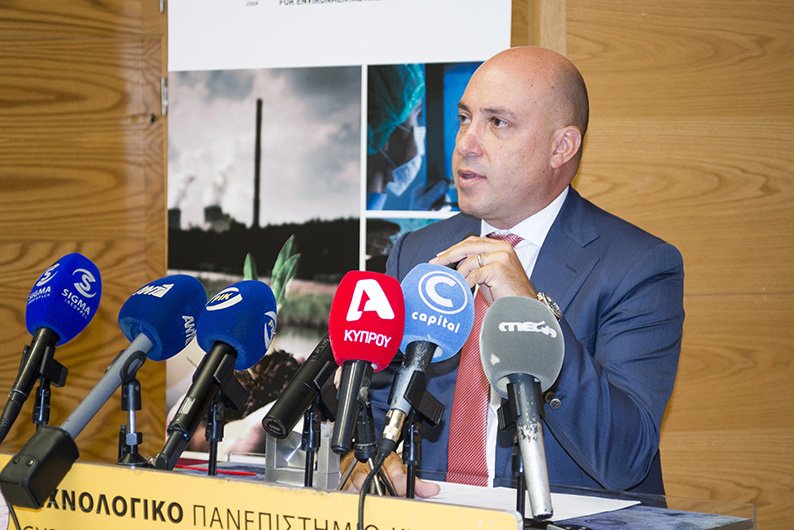
Newly elected Disy deputy Giorgos Pamborides, who served as health minister during Nicos Anastasiades’ first term, made some staggering revelations in an interview on a television show. He claimed that organised crime had gained entry into politics. This was of great concern to him he said, explaining that members of organised crime had access to politicians.
“The issue of public safety should be given particular attention and the mechanisms to safeguard the country must be strengthened,” he said. He gave no details as to how members of organised crime gained access to politicians nor did he offer any examples of how this was ‘cooperation’ was taking place. Nor did he say how he arrived at this conclusion which, if accurate, should have sparked an immediate investigation by the police.
In fairness, it would be very difficult for the legal service to order an investigation of a vague allegation that is not backed by any evidence. As things are, this seems to be nothing more than a hunch of the deputy that could be dismissed as a publicity-seeking exercise. Pamborides has made no secret of his intention to take part in the presidential candidacy contest in Disy, which for 2028 is open to all members; it is no longer the prerogative of the party leader.
Was the revelation part of Pamborides’ campaign? An attempt to position himself as the anti-corruption candidate, given that he is a relative newcomer to frontline party politics? Were the politicians with connections to organised crime members of Disy, of the government or of some other political party? Do people not deserve to know?
It is funny that Pamborides, who wants to promote himself as a new style politician, is adopting one of the oldest tricks in Cyprus politics – making sensationalist allegations, for which he has not provided a shred of evidence to back them up. Are people now supposed to believe that some politicians have links with organised crime because a deputy said so?
One newspaper columnist took Pamborides’ allegation very seriously, writing on Wednesday that “in a normal state of the planet, if a politician made such a public accusation, it would have caused a quake.” Here, he lamented, it was ignored and the government said nothing. But what could the government say about such vague allegations? That it will carry out an investigation of all politicians to establish who had links with organised crime?
The authorities can only deal with facts, and the truth is that Pamborides provided none. He expressed an opinion, but it is difficult for the police to investigate an opinion. Pamborides must realise that if his allegations are to be taken seriously by anyone he has to provide some kind of documentation.





Click here to change your cookie preferences