
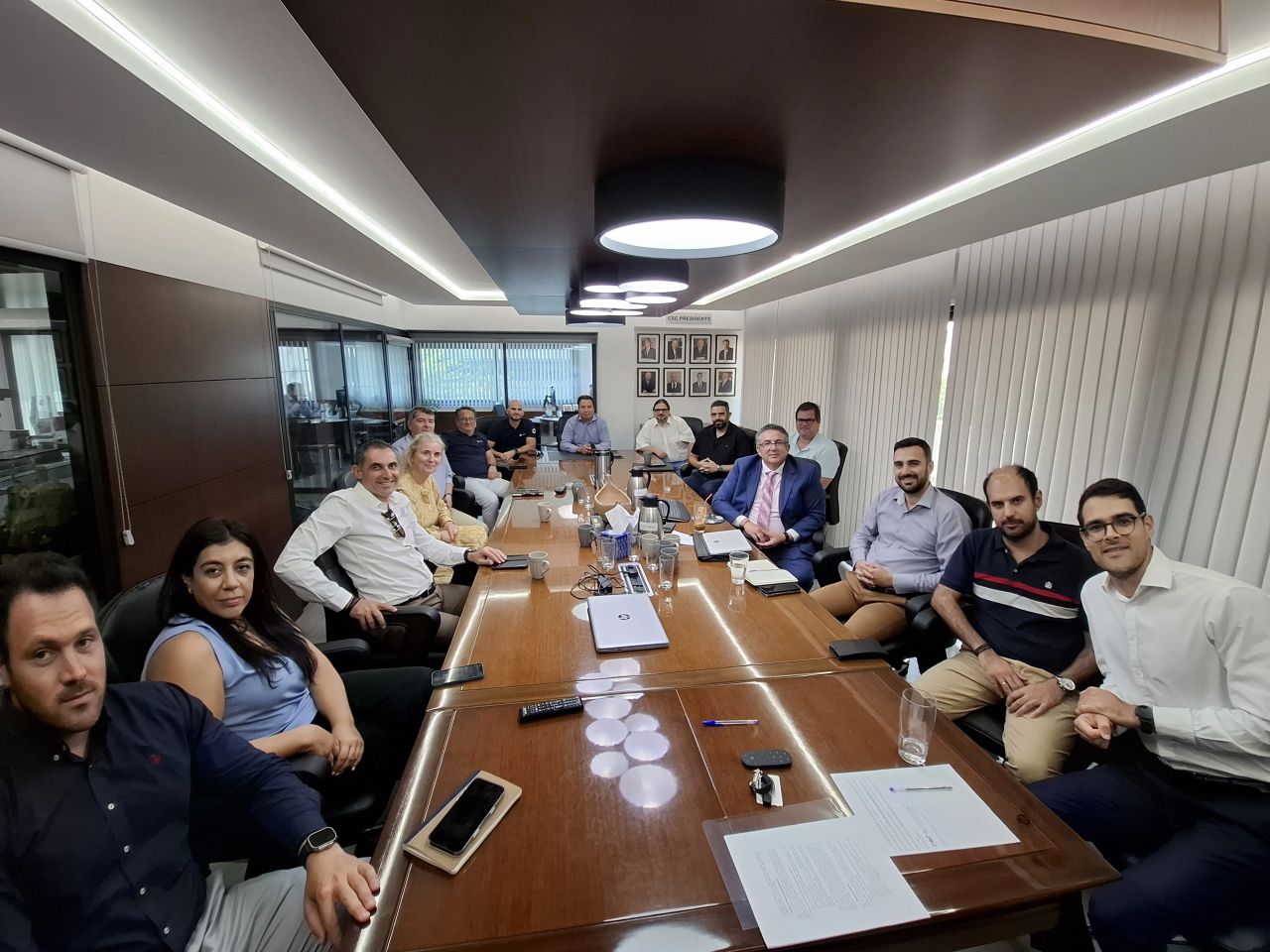
The Cyprus Shipping Chamber (CSC) has backed the proposed national artificial intelligence (AI) strategy, following a meeting with Chief Scientist for Research, Innovation and Technology Demetris Skourides.
During the visit to the chamber’s offices, Skourides presented the strategy to members of its Digitalisation Committee and heard their views on the proposals.
The chamber said it looked forward to continued cooperation with Skourides and the Deputy Ministry of Research, Innovation and Digital Policy towards its effective implementation.
The chamber’s Digitalisation Committee already examines technology and communications affecting shipping companies and vessel operations, including satellite links between ships and shore. The committee also follows the International Maritime Organisation’s (IMO) work on navigation, communications and search and rescue.
The discussions come as public consultation on the proposed National AI Strategy 2032 approaches its August 31 deadline. The document was prepared by the National AI Taskforce, chaired by Skourides, with members drawn from the public and private sectors, academia and research.
According to the government’s consultation notice, the ambition is for Cyprus to become a trusted AI centre in the eastern Mediterranean by 2032 and a European base for AI services linking the EU with neighbouring regions.
For shipping, the draft strategy sets targets of 10 to 20 per cent fuel savings and 30 to 40 per cent lower maintenance costs through better route planning, predictive maintenance and digital models of vessels.
The proposed routing tools would consider weather, currents, fuel prices and vessel performance, while digital models would analyse sensor data to help identify maintenance needs before equipment fails.
The draft also proposes AI tools to help crews and operators follow changing regulations, improve coordination between vessels and ports, and detect potential safety risks.
Alongside these applications, a shared maritime data space would allow companies to contribute anonymised datasets for AI training while protecting commercial knowledge. The plan also envisages supervised testing of autonomous surface vessels and drone inspections. A maritime centre of excellence could support the testing and wider adoption of these technologies.
However, qualified professionals would retain final authority over decisions. The draft calls for independent evaluation and clear grounds to withdraw systems that fail safety, compliance or performance requirements. The savings remain proposed targets, not results already achieved.
Beyond shipping, the government’s wider framework sets out eight strategic objectives, including higher productivity, better public services, stronger skills, secure data infrastructure and greater accountability in the use of AI.
Skourides had previously set out the principle behind the strategy, saying “AI must serve people. People must remain in control.” He also stressed that preparing Cyprus for AI required more than buying technology, with people needing to understand how to use and question it. Proposed measures include professional training, reskilling and practical support for employees, businesses and public servants.
Businesses, professional bodies, researchers and citizens can submit comments through the government’s e-consultation platform until August 31, 2026. The deputy ministry says submissions will be assessed and incorporated into the final strategy where appropriate.





Click here to change your cookie preferences