
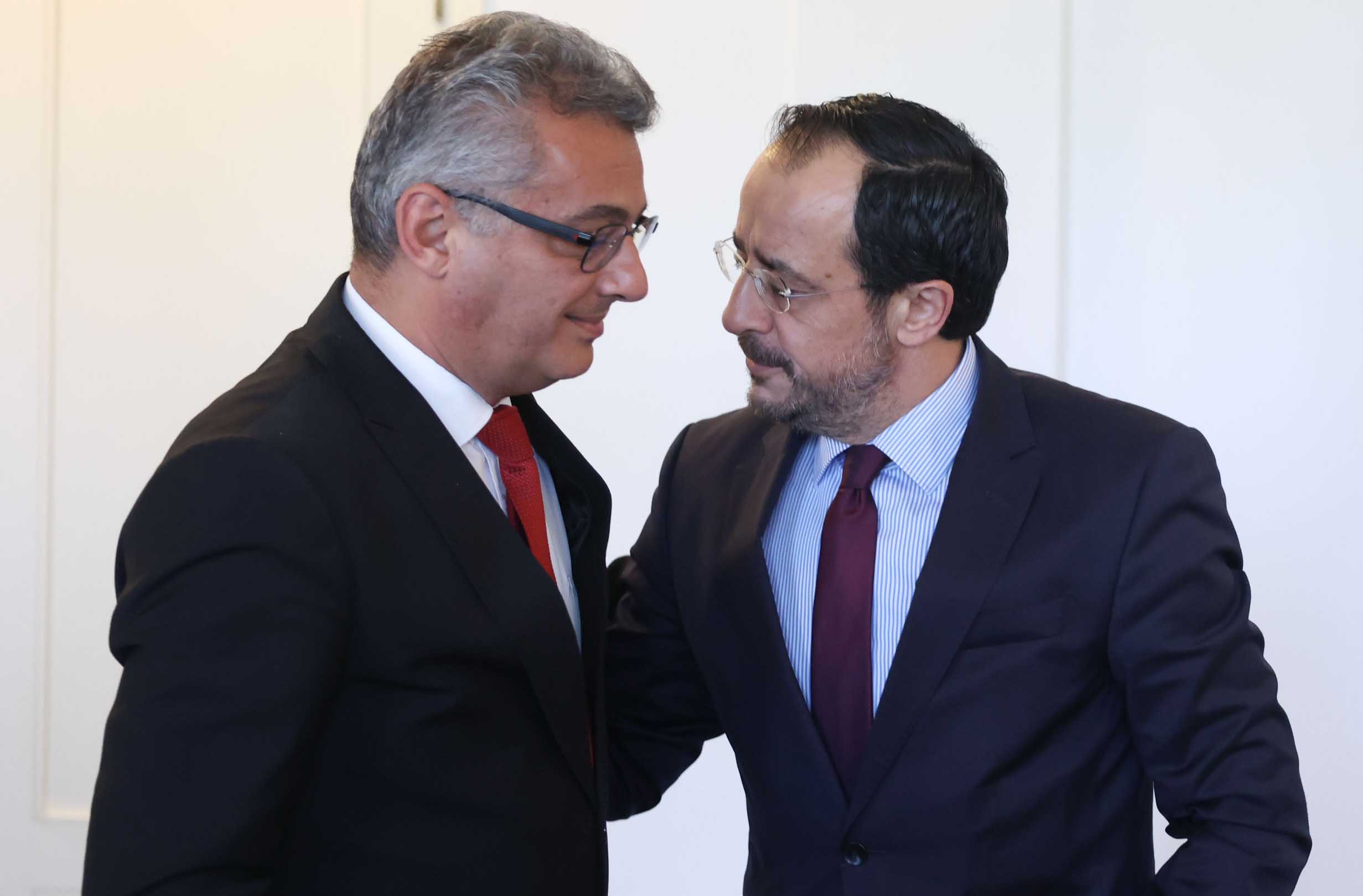
A rotating presidency between the Turkish Cypriot and Greek Cypriot communities in a post-solution Cyprus constitutes an “indispensable component of political equality”, Turkish Cypriot leader Tufan Erhurman’s undersecretary Mehmet Dana said on Friday, as disagreements abound between the island’s two sides over the meaning of political equality.
“Political equality forms the foundation of a structure requiring the joint exercise of a limited number of specific powers, shared competences, and this is not open to negotiation,” he told the Cyprus Mail.
He added that the “primary reason” for the collapse of previous rounds of negotiations on the Cyprus problem, and “specifically” those between Nicos Anastasiades and Mustafa Akinci at Crans-Montana in 2017, was that “political equality was made a subject of negotiation and subsequently used to cause a deadlock in the process”.
Therefore, he said, “guided by the [United Nations] secretary-general’s approach that ‘this time must be different’, acceptance of this issue in principle must occur prior to the commencement of the negotiation process”.
“Naturally, once the rotating presidency is accepted in principle, the specific terms, such as the duration of the respective tenures and other details, would be negotiated once the talks actually begin,” he said.
His comments come after deputy government spokesman Yiannis Antoniou had told CyBC radio that the Turkish Cypriot side “considers that political equality also implies sovereign equality”, and that this is “a position which cannot be accepted by the Greek Cypriot side”.
He argued that the answer to the question of whether a post-solution Cyprus should have a rotating presidency or not should be “the product of negotiation” and something which can be discussed at the two sides as and when negotiations recommence in earnest.
At present, he said, the Turkish Cypriot side is “insisting on a rotating presidency” instead of allowing negotiations to recommence.
Disagreements also persist over Erhurman’s four-point methodology
Differences of opinion have also been expressed regarding the fourth point of Erhurman’s four-point methodology, which stipulates that the UN guarantee that embargoes placed on the Turkish Cypriots be lifted if the Greek Cypriot side leaves the negotiating table again.
Antoniou argued that placing “pre-defined consequences” on both sides could disincentivise them from negotiating and instead incentivise them to aim to attempt to force the other from the negotiating table in the hope of achieving what they have to gain from the other side walking away.
“This point is the most problematic and it cannot be accepted,” he said.
Dana, however, insisted that the point stands as a backstop against the next round of negotiations ending with the Turkish Cypriots being left empty-handed, as happened both after Crans-Montana and after the 2004 Annan plan referendum.
“Despite the constructive attitude displayed by the Turkish Cypriot side throughout negotiation processes to date, most notably in 2004 and 2017, no agreement has been reached due to the Greek Cypriot side’s negative stance. Consequently, it has always been the Turkish Cypriot side which suffered the resulting grievances,” he told the Cyprus Mail.
He said that the Greek Cypriot side has up to now “relied on its international recognition” and as such “seen no issue in adopting an intransigent attitude during such processes”.
“This situation not only constitutes an injustice for the Turkish Cypriot side but also represents one of the greatest obstacles to achieving a solution,” he said.
As such, he added, “the methodology prepared by the Turkish Cypriot side, which incorporates lessons learned from past negotiation processes to ensure a successful outcome from any potential new round of talks, includes this element as well”.
Christodoulides and Erhurman will travel to New York for the UN’s “high-level week” next week, with Christodoulides set to travel on Saturday and address the UN general assembly on Wednesday, before meeting Guterres to discuss the Cyprus problem on Thursday.
Erhurman, meanwhile, will travel to New York on Wednesday, and will also meet Guterres.



Click here to change your cookie preferences