
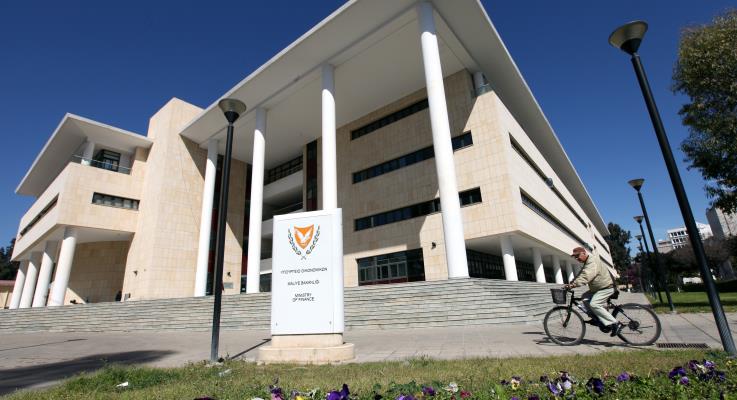
The finance ministry is “monitoring the situation” with the cost of fuel continuing to increase in recent weeks amid developments in the conflict in the Middle East, its spokesman Michalis Papadopoulos said on Friday.
“We are continuing to monitor the situation, and as and when it is judged to be necessary, we will take the requisite measures, as we have done in the past,” he told the Cyprus Mail, highlighting the 8.33-cent reduction on fuel consumption tax which was last week extended until the end of November.
On this front, one tool which may be made available to the government, is a potential temporary reduction in value added tax on fuel.
At present, as a European Commission spokesman has previously told the Cyprus Mail, cuts to VAT on fuel would not be compliant with European Union law.
“While we fully understand the need to support citizens during these difficult times, it is important to note that the EU VAT directive does not provide for the possibility to apply a reduced rate on supplies of fuel,” a commission spokesman said.
However, German Economy Minister Katherina Reiche had said on Wednesday that it would be “sensible” for VAT on fuel to be temporarily reduced amid rising costs.
“It could address the burden where it is felt directly, at the petrol pump, and it would take effect immediately upon introduction,” she said on the sidelines of a G20 energy ministers’ meeting in the United States.
As recently as May, the German government had flatly ruled out such a prospect, after Spain and Poland had both unilaterally reduced their own VAT rates on fuel, but now, with prices continuing to rise, and with German Chancellor Friedrich Merz facing calls to resign, the idea is now being revisited.
Sizopoulos had decried ‘unfair competition’ from Turkish Cypriots
On Thursday night, Greek Prime Minister Kyriakos Mitsotakis also spoke on the matter of fuel prices, and while he did not explicitly make reference to VAT rates on fuel, he did stress that “it is clear that the Greek reaction alone is not enough”.
“When we have such an extraordinary crisis, Europe must do something more. There are many options,” he told Greek public broadcaster ERT.
In Cyprus, former Edek leader Marinos Sizopoulos had in April called on the government to unilaterally reduce its fuel VAT rate, saying that while EU law does prohibit it, petrol stations in the Republic of Cyprus are subject to “unfair competition” from the Turkish Cypriot authorities, to whom EU law does not apply.
The Turkish Cypriot authorities have zeroed VAT on fuel since March 19, while five other fuel-related taxes have also been zeroed.
Since the spring, fuel tankers docking in the north are not subject to any docking fees, while no customs duty is paid on the fuel they import, and fuel retailers’ contributions to the Turkish Cypriot agricultural insurance fund and tourism incentive fund have also been zeroed.
In addition, municipal weighing fees – a tax paid by businesses to the municipality in which they are located based on the weight of goods sold – have been zeroed for fuel.





Click here to change your cookie preferences