
When Timur Turlov first entered the 2026 FIDE election, the contest was easy to frame as a change at the top of world chess. His more consequential argument, however, concerns what should change beneath it: how the international federation serves its members, distributes opportunity and measures whether its programmes work.
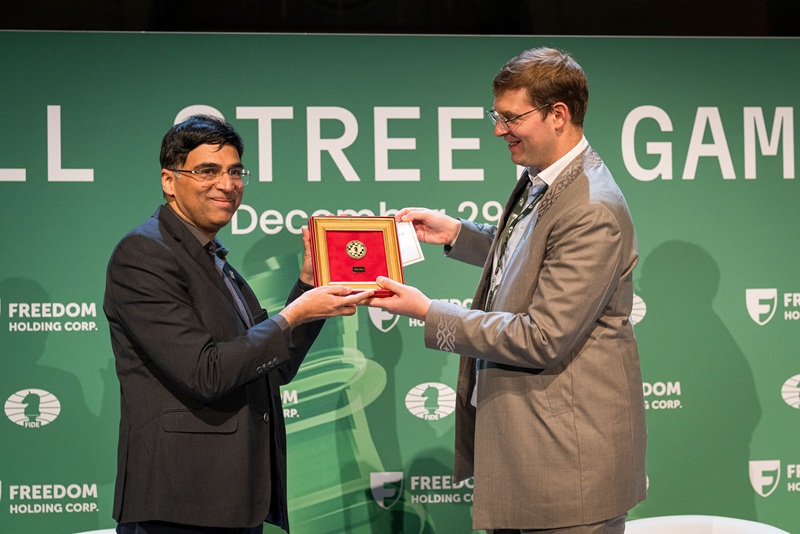
The 38-year-old founder and CEO of Nasdaq-listed Freedom Holding Corp., president of the Kazakhstan Chess Federation and president of the International School Chess Federation is running for FIDE president with five-time world champion Viswanathan Anand as his candidate for deputy president. The vote is scheduled for September 26-27 in Samarkand, alongside the 46th Chess Olympiad.
Turlov describes the ticket as a combination of institutional continuity and a different management culture. Anand brings elite sporting authority and first-hand knowledge of FIDE; Turlov presents himself as the builder: an executive accustomed to running international organisations, financing long-term projects and using technology to make complex systems more accountable.
His central proposition is that FIDE should operate less like a distant governing body and more like a service organisation for its more than 200 member federations. That means equal access to development resources, clearer grant mechanisms and practical support for federations that lack the administrative capacity, arbiters or tournaments required to develop talent.
From a national model to a global programme
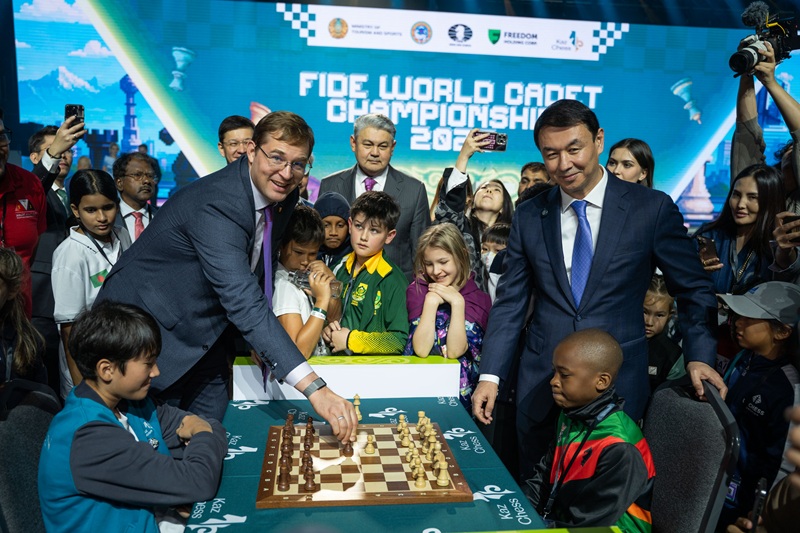
The record Turlov points to is Kazakhstan. Since he took over its federation, chess has been introduced in more than 1,500 schools, reaching over 60,000 children. The country has also hosted major international events and established a longer-term funding model involving private partners. The claim is not that every federation should copy Kazakhstan, but that support should begin with data about local players, clubs, coaches, events and resources, and then be adapted to local realities.
That philosophy sits behind the campaign’s four priorities: digital transformation, chess in education, financial sustainability and institutional development. A common digital infrastructure, Turlov argues, could reduce administrative burdens, connect players and federations, and offer better access to ratings, tournaments, training and services. Technology in this formulation is not a showcase project, it is the operating layer that makes resources easier to allocate and results easier to track.
Why the argument has a Cyprus dimension
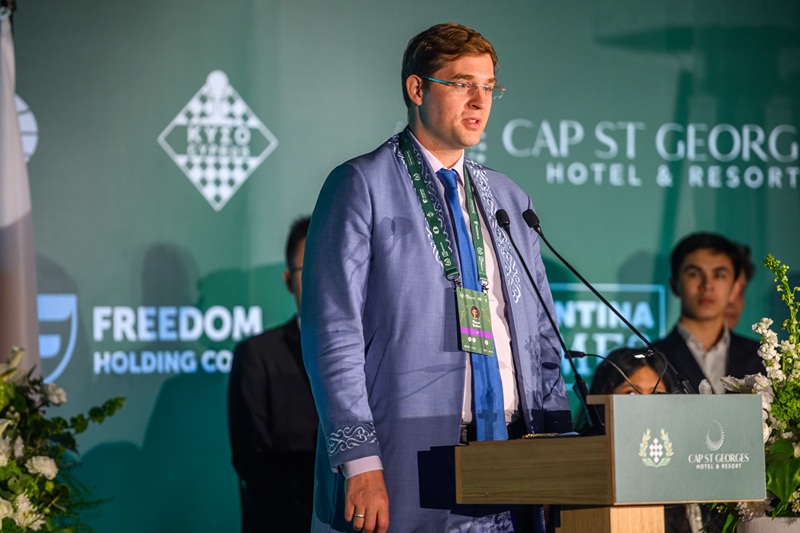
Cyprus has already become part of this wider chess story. Nicosia hosted stages of the FIDE Women’s Grand Prix supported by Freedom Holding, while the 2026 Candidates tournaments in Cyprus brought the world’s leading open and women’s contenders to the island with the group as a main sponsor. These events showed how a comparatively small country can become visible on the global chess map when organisers, institutions and commercial partners work together.
For Cyprus, the relevant question is therefore not simply who runs FIDE. It is whether the next leadership can create a system in which smaller federations can compete for events, funding, educational projects and international exposure on clearer and more equal terms.
Neutrality with rules
The election also takes place against a fractured geopolitical backdrop. Turlov says FIDE should remain open to the entire chess world and avoid becoming an instrument of political confrontation, while still respecting international sports regulations, legal obligations and decisions by competent bodies. He presents Kazakhstan’s “middle-power” diplomacy as useful experience for maintaining working relationships across competing blocs.
His funding argument is similarly pragmatic. One sponsor is better than none, he says, but dependence on a single benefactor is not a sustainable model. FIDE should help federations build transparent, professional partnerships that demonstrate value to sponsors and strengthen their own capacity over time.
The test of this candidacy will be whether delegates view Turlov’s Kazakhstan record as transferable to a federation of vastly different members. His answer is deliberately managerial: set realistic commitments, publish clear rules, use technology to follow performance and judge the leadership by delivery rather than rhetoric.
In an election often discussed through personalities and geopolitics, that may be the most distinctive element of his platform. Turlov is asking the chess world to treat FIDE not as a presidency centred on one individual, but as an institution whose success should be visible in stronger federations.
More information on the candidacy, programme and achievements: turlovforchess.com





Click here to change your cookie preferences