
In May 1968, weeks after the assassination of Martin Luther King Jr., Marlon Brando appeared on NBC’s The Tonight Show Starring Johnny Carson. Brando – arguably the most influential dramatic actor in the history of film – was not there to promote a picture.
He came to warn that Americans had to learn to live together. Expressions of sympathy were no longer enough; people had to “stand up and be counted”. He called on prominent figures to give at least one per cent of their income to initiatives carrying forward King’s commitment to nonviolence and pledged ten per cent of his own. Paul Newman, Barbra Streisand, among others and Carson himself each pledged one per cent.
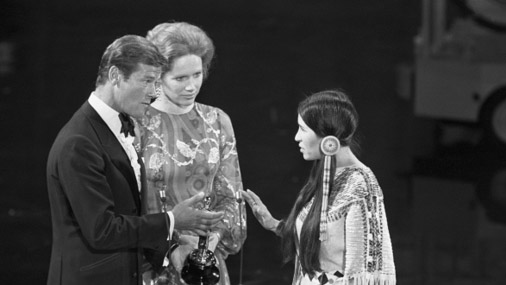
Five years later, Brando refused the Best Actor Oscar for The Godfather in protest at Hollywood’s treatment and stereotyping of Native Americans. His explanation reached beyond the film industry. Hollywood, he said, did more than entertain. Through repetition, omission and caricature, it taught audiences how to see others. What happens, he asked, to a child who repeatedly sees people resembling himself portrayed as primitive, treacherous or destined for defeat? Such images do not stay on the screen. They enter the child’s developing imagination and, at the same time, shape the prejudices of everyone else.
Brando was ahead of his time. He understood the power of misrepresentation, and his activism sought civil discourse and coexistence, not hatred or vengeance. The mechanism he identified is painfully familiar in Cyprus. Misrepresentation does not merely describe a conflict; it can perpetuate one.
Greek Cypriots and Turkish Cypriots are separated not only by territory and constitutional disagreement but by schoolbooks, newspapers, political speeches, commemorations and family narratives. Together these have produced two different moral worlds. Neither community’s memory is invented, but neither is complete.
Children absorb selective accounts of the other side long before meeting anyone from it. Many reach adulthood able to recite the catalogue of the other’s alleged deeds without ever having known an ordinary person from across the divide.
There have been courageous bicommunal initiatives, and some have succeeded. Too many, however, have remained isolated interludes rather than becoming part of the island’s civic culture. Their failures are cited as proof that coexistence is impossible; their successes are dismissed as exceptions.
Too often, collaboration has been staged. Joint efforts are announced, meetings convened and temporary cooperation presented as evidence of progress, while the underlying separation, and the absence of ordinary human contact, remain intact. The two communities resemble strangers passing each other in the dark—aware of one another’s presence, but unable to see one another’s face.
Opening crossing points is welcome, but enabling people to pass from one side to the other is not the same as enabling them to meet. Cyprus suffers from a peculiar condition: physical proximity without recognition. The phrase “confidence-building measures” is often invoked by the United Nations as though it were a substitute for confidence itself. Confidence is not created by repeating the vocabulary of confidence-building. It grows from sustained, visible opportunities for interaction. Even a constitutional settlement—were one miraculously achieved—could not compel a willingness to share civic life.
I therefore propose an independent, collaborative television and digital media space: Cyprus Connect. It would not produce parallel broadcasts for two separate audiences. Programmes would be jointly created on subjects of shared interest. The platform would be bilingual, editorially independent and available through television and social media.
Its range could encompass and highlight existing collaborations on literature, art, music, theatre, film, science, education, child development, public health, climate, technology and international affairs. Schools could produce science programmes and documentaries together. Artists and musicians could collaborate. Families, teachers, farmers, researchers, entrepreneurs and athletes could present their work. The overarching goal would be simple: what can be learned and created together?
Cyprus Connect should be constituted as a non-profit public trust, governed by a bicommunal board with membership drawn from civil society. Appointments should be transparent, and funding diversified so that no government, party or interest group could capture its editorial direction.
None of this would dissolve historical grievance or guarantee reconciliation. But that risk is not an argument for doing nothing. If Cyprus could establish and sustain such an institution, protected from political interference, it would be a remarkable first—not only for the island but as an example for divided societies elsewhere.
The Cyprus Mail deserves acknowledgement here. Its willingness to provide space for discourse without reducing every question to political confrontation helps prepare the ground for dialogue. But Cyprus Connect must go beyond commentary. It should engage people – above all children and young people – through shared experience.
As I wrote in “Cyprus Needs Mozart’s Magic Flute”, what the island needs is peace without vengeance, justice without domination and security without fear. Brando’s response to King’s assassination was not to glorify anger or dwell on grievance, but to turn moral conviction into constructive action.
Brando was right. Misrepresentations and mischaracterisations imprison people within identities constructed for them by others. A political settlement may open the door, but only sustained human contact will allow us to recognise one another and walk through it together.
King warned that “we must learn to live together or perish together as fools.” The more hopeful choice remains available: to create spaces in which to meet, listen and begin to imagine a shared future.
Time is short. The generations with direct memory of any shared life are passing. We may have one more meaningful opportunity to create habits of contact before separation hardens further. Inaction is not neutral.
To adapt the title of Youssou N’Dour’s song Wake Up (It’s Africa calling):
Wake up! Good morning – It’s Cyprus calling.
I will be waiting.



Click here to change your cookie preferences