

The main group representing the interests of businesses set out on Monday their concerns over the government’s planned pension reform, while talks continued among stakeholders on its details.
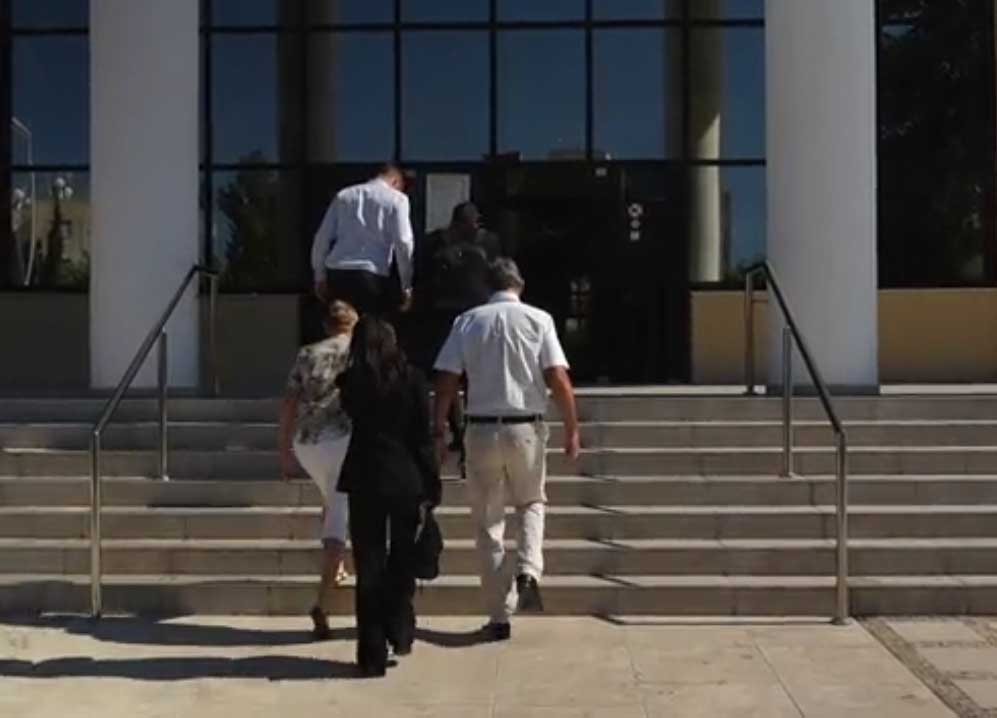
A delegation of the Employers and Industrialists Federation (OEV) held a meeting with President Nikos Christodoulides at the presidential palace.
Speaking to media later, OEV head Giorgos Pantelides described the meeting as “substantive and constructive”.
The federation’s key concern, he said, is that pensions as well as the Social Insurance Fund remain robust going forward.
Pressed for details, Pantelides said only that OEV did not lay out their ‘red lines’ to the president.
“We discussed our concerns,” he offered. “We talked about certain guardrails in the event of an economic downturn, and how we would ensure that pensions are adequate.”
He said OEV and the president saw eye to eye “on certain aspects, so that a balance is struck between the guardrails. I think that with the dialogue that’s in progress, solutions can be found so that we can move forward with the reform, at least the first phase of it.”
Asked if OEV were told the cost of the pension reform, Pantelides said no.
The government side, he added, committed to creating the necessary reserves across a specific timeframe.
Earlier, reports suggested that the federation’s so-called ‘red lines’ are two: no increases in employers’ contributions, and that provident funds should retain their voluntary character.
In Cyprus, provident funds are based on collective or private agreements between employers and workers. No legislation exists mandating that companies provide a provident fund.
Pantelides said OEV and the president agreed to “maintain open channels of communication”.
Responding to another question concerning the Redundancy Fund, he said the fund currently has €1.5 billion.
“We expect the president and the government to decide on reducing the contribution and the simultaneous adoption of safeguards in the event of readjusting the fund to €1.2 billion. We anticipate relevant announcements from the government.”
The Redundancy Fund is a special state mechanism that pays statutory compensation to employees who lose their jobs due to genuine redundancy, provided they have at least 104 weeks of continuous employment with the same employer. The fund is financed entirely by employer contributions set at 1.2 per cent of each employee’s gross insurable earnings.
Christodoulides also spoke of a good meeting.
He referred to the business world as “fellow travelers and partners in the drive to change our country, revamp the state of 1960, modernise it via continuous and bold reforms, such as the tax reform”.
He added: “At the moment another important reform is underway, one that has been pending since 1980 – pension reform.
“Our goal is twofold: to bring about more dignified pensions today, but also a more viable Social Insurance Fund for the future.”
Also on Monday, the labour advisory body – featuring trade unions and employers – met again to review and discuss the government’s pension reform bill.
The previous meeting, held last week, had left several questions unanswered. It was decided then to convene the body twice a week, so that stakeholders can get into the weeds of the proposed legislation, which the government intends to table to parliament in late September.
Monday’s meeting was expected to focus on what’s been dubbed ‘Pillar Zero’ – pensions for low-income earners.
At the previous get-together, Labour Minister Marinos Moushiouttas had said that no person on a small pension would receive less than what they do now.
The ‘small cheque’ would not be abolished with pension reform, he stressed.
The ‘small cheque’ is a supplementary financial bonus or complementary pension historically given to low-income pensioners. It’s provided to vulnerable or low-income pensioners whose total annual income falls below specific poverty-line thresholds.
The labour advisory body is next scheduled to meet on Thursday.
Meanwhile SEK trade union held a separate meeting with Disy sharing their views on pension reform.
Disy leader Annita Demetriou later outlined the party’s key positions – making pensions adequate, and ensuring that retirement age does not go up.
On Tuesday, Disy will hold talks on the same issue with the Chamber of Commerce and Industry (Keve).



Click here to change your cookie preferences