
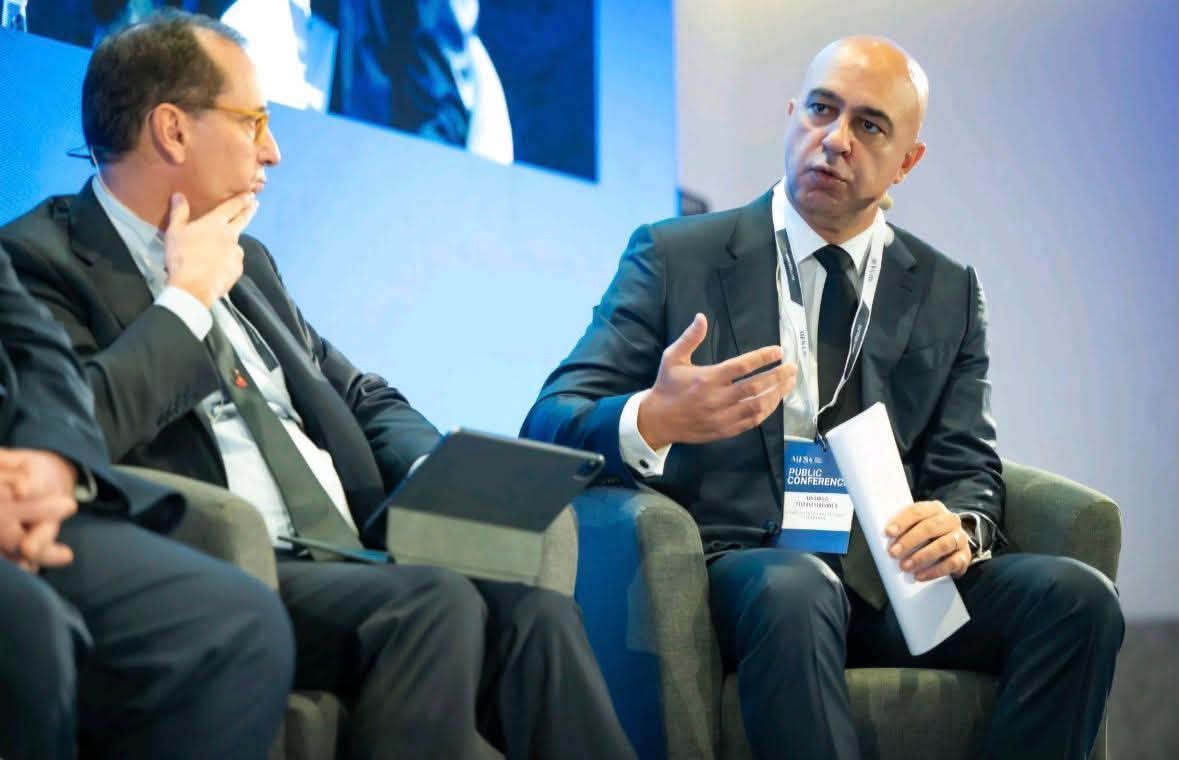
Outgoing Cyprus Securities and Exchange Commission (CySEC) chairman George Theocharides has singled out three changes which he believes defined his six years at the regulator, as a five-year review shows more than 4,000 supervisory checks and over €12 million in administrative sanctions during the period.
In what he described as his final post as CySEC chairman, Theocharides said a few days had passed since he was informed that he would not continue at the regulator, bringing to a close a period which began when he became vice-chairman in July 2020 and later chairman in September 2021.
“A few days have passed since I was informed that I will no longer continue at CySEC,” he said, before thanking those he worked with over the past six years, from market participants and service providers to government officials, MPs and colleagues at European and international regulatory bodies.
His strongest acknowledgement, however, was reserved for CySEC’s staff, whom he credited with much of the regulator’s development during that period, saying that “most credit for the establishment of CySEC as a strong, credible and forward-thinking organization goes to its people”.
Theocharides added that he had “a huge level of admiration for their expertise, knowledge and work ethic”, while also thanking those who originally entrusted him with leading the regulator.
Looking back at his time at CySEC, Theocharides identified three changes which, in his view, defined his tenure.
The first was “effective and outcome-based supervision”, an area in which CySEC’s review of the 2021-2026 period provides a clearer picture of the scale of the regulator’s work.
Over the five years, more than 4,000 on-site, remote and thematic inspections were carried out by CySEC’s supervision and anti-money laundering departments, while the regulator also examined large volumes of documents and other information submitted annually by supervised entities.
Its investigations department carried out hundreds of company visits and investigations over the same period.
That work resulted in more than €12m in administrative sanctions, including fines and settlements. More than €9m concerned Cyprus investment firms, while around €1m related to issuers, with the remainder imposed on other supervised entities. The money is paid into the Republic’s Fixed Fund.
Beyond fines, CySEC required corrective measures in more than 800 cases. Eight Cyprus investment firm licences were revoked, while another 47 firms voluntarily surrendered their licences.
The regulator also rejected 10 applications for investment firm licences, while another 22 applications were withdrawn by the applicants themselves.
Enforcement extended beyond administrative measures, with 20 cases referred to the attorney-general to determine whether possible criminal offences had been committed. Information was also passed to anti-money laundering unit Mokas in eight cases and to the police in another four.
The second major change identified by Theocharides was the “enhancement of our digital technologies and expertise, and preparation of the organization for the digital market and economy”.
CySEC said it developed or acquired specialised electronic systems and other supervisory technology during the five-year period, including tools used to strengthen monitoring of investment firms and identify aggressive or misleading marketing practices which could put investors at risk and breach MiFID II rules.
The regulator also expanded significantly in staffing terms. From 151 employees in 2021, CySEC now employs more than 200, with further recruitment expected to take the workforce above 250. A dedicated human resources and training department was also created.
Its technological push included the introduction of the central trust register system in 2022, the development of an enterprise risk management framework and the launch of its regulatory sandbox in June 2024.
The sandbox provides an organised framework through which CySEC can engage with innovative financial solutions and technologies, while its technological work has also extended to blockchain and artificial intelligence.
The third change highlighted by Theocharides was the “establishment of Cyprus as a credible and well regulated financial services jurisdiction”.
CySEC had 815 supervised entities as of June 2026, up 1.12 per cent from the end of 2021. Another 63 licensing applications covering different types of supervised businesses were under examination, which the regulator presented as evidence of continued interest in entering and expanding within the Cyprus market.
The five-year period also coincided with substantial changes in European financial regulation.
CySEC was involved in the preparation and implementation of the Markets in Crypto-Assets Regulation (MiCAR), the Digital Operational Resilience Act (DORA) and the EU’s Distributed Ledger Technology Pilot Regime.
It also implemented European frameworks covering crowdfunding service providers and Pan-European Personal Pension Products.
Meanwhile, Cyprus introduced a new legal framework for restrictive measures and sanctions, including the establishment of the National Sanctions Implementation Unit and a sanctions advisory committee involving the supervisory authorities.
CySEC has also been participating in the work of the EU’s Anti-Money Laundering Authority (AMLA), which began operations in 2025, including through its General Board, internal committees and working groups.
The regulator also pointed to Cyprus’ progress under Moneyval, noting that its 2024 progress report upgraded Recommendation 15 to “largely compliant”, reflecting measures taken by CySEC and other authorities, particularly in relation to crypto-assets.
Investor protection and financial literacy formed another major part of CySEC’s work over the five years.
The regulator carried out initiatives ranging from practical investor guides and international campaigns to lectures at schools and universities and cooperation with other bodies.
It also expanded its presence across digital media and educational platforms, developing material, tools and initiatives aimed at improving financial literacy and encouraging responsible investment behaviour.
CySEC participated in the development of Cyprus’ National Strategy for Financial Literacy and is a member of KECHAP, while it also ran public-awareness campaigns both independently and together with ESMA and other European supervisory authorities.
Perhaps the clearest measure of the scale of its online investor-protection work was the issuing of warnings concerning 517 websites which did not belong to entities authorised to provide investment services or carry out investment activities.
CySEC also introduced a new visual identity, including a new logo and upgraded website designed to improve navigation, mobile access and functionality.
At European and international level, CySEC’s role also expanded.
The regulator hosted the European Regional Committee of the International Organization of Securities Commissions (IOSCO) in Nicosia, with more than 52 representatives from 57 supervisory authorities taking part.
Discussions covered issues including retail investor protection, supervisory technology, sustainable finance and crypto-assets.
CySEC also launched an initiative aimed at reviving the Cyprus Stock Exchange, with the stated objective of strengthening its role as a driver of economic development.
In April 2026, the regulator hosted meetings of the European Securities and Markets Authority’s Board of Supervisors and Management Board in Cyprus as part of the country’s Presidency of the Council of the EU.
CySEC also marked 30 years of supervision with an anniversary conference broadcast live through its YouTube channel, with speakers including the President of the Republic, the chairs of ESMA and IOSCO and other European regulators. AI expert and author Huy Nguyen Trieu was also among those involved in discussions on developments in artificial intelligence.
Cyprus’ EU Presidency gave the regulator a further role in European policymaking, with more than 15 CySEC officials involved in negotiations and technical work at Council level.
Their work covered files including the Market Infrastructure Package, aimed at modernising and strengthening EU capital-market infrastructure, as well as the Retail Investment Strategy, which seeks to improve transparency, investor protection and the quality of information available on investment products.
CySEC was also involved in work linked to the Savings and Investments Union and the proposed revision of the Sustainable Finance Disclosure Regulation.
The regulator points as well to its wider involvement within ESMA, including Theocharides’ chairmanship of its Risk Standing Committee from 2022.
The five-year review describes a period shaped by geopolitical developments, macroeconomic uncertainty, the effects of the pandemic and rapid technological change, while maintaining that Cyprus’ capital market remained resilient and strengthened its position within the European financial landscape.
Theocharides’ departure now comes as George Karatzias takes over as CySEC chairman, with Loukas Lagoudis appointed vice-chairman.
Theocharides congratulated both on their appointments, saying they were taking over “an organization that is healthy, mature and vital for the growth of the sector”.
He added that the new leadership “should build on what has been achieved thus far”, while wishing them success in their new roles.



Click here to change your cookie preferences