
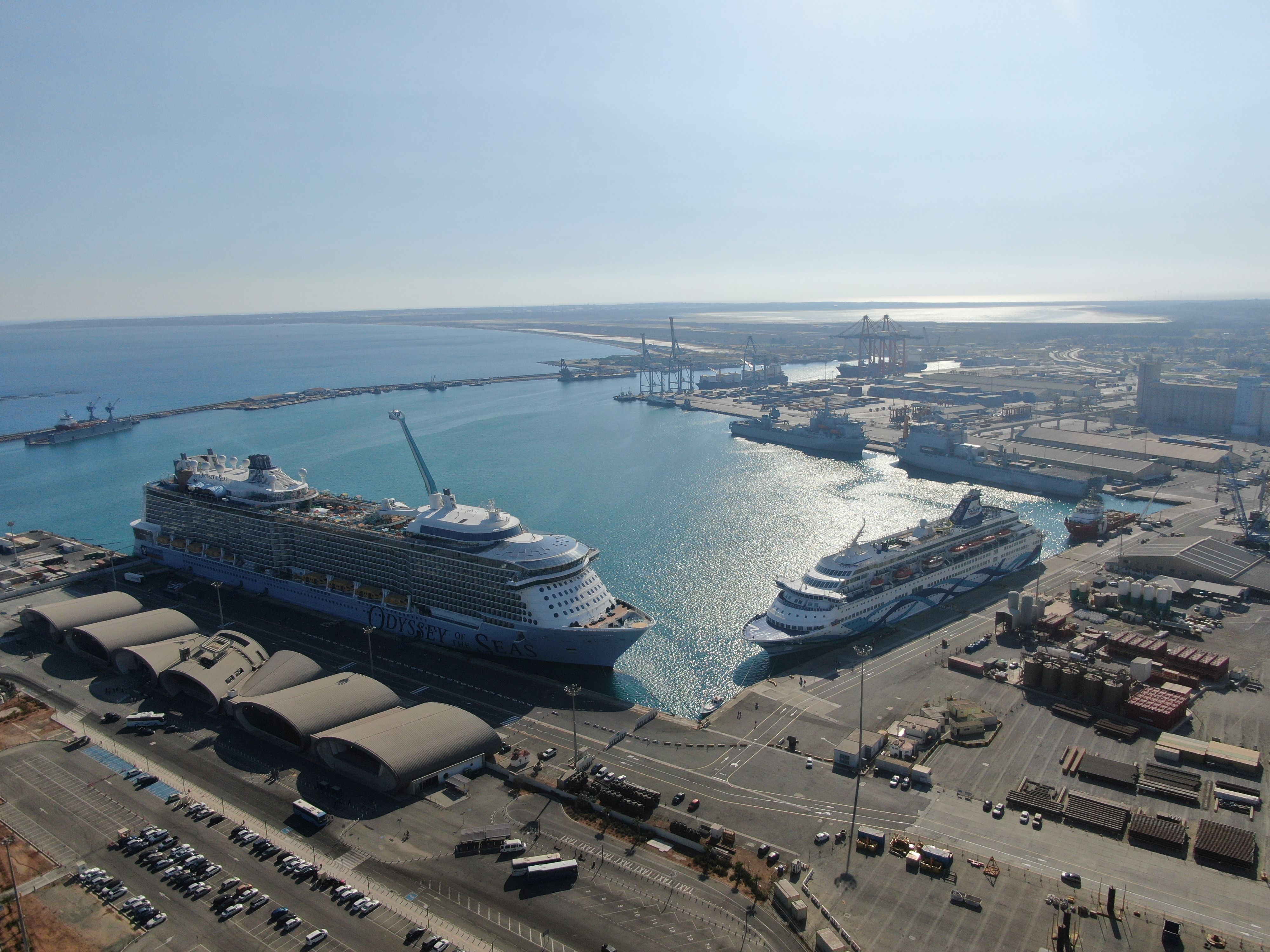
Cyprus Marine Environment Protection Association (CYMEPA) secretary general Michalis Iereidis has called on the public to take part in a survey examining how communities view shipping’s green and digital transition and the environmental challenges facing the Eastern Mediterranean.
Iereidis said the region was facing unprecedented environmental challenges, with climate change already affecting coastal communities, the economy and everyday life.
He argued that shipping, as one of the most important pillars of both the global and local economy, was undergoing a historic transformation as the sector moved towards alternative fuels, digital applications and technologies designed to reduce emissions.
“This shift is not simply a technical or business adjustment, but an imperative for the future of our environment,” Iereidis stated.
He stressed, however, that the changes taking place in shipping should not be viewed as an issue concerning shipping companies, ports and technical experts alone.
“This transition does not concern shipping companies, ports or technical experts alone. It directly concerns port cities, residents of coastal areas and society as a whole,” he wrote.
Iereidis maintained that a genuinely sustainable transition would have to take account of the people and communities affected by the changes.
“A truly sustainable green transition must, above all, be people-centred,” he added.
The issue forms part of the five-year METAVASEA project, in which CYMEPA participates as a partner under the coordination of the Hellenic Marine Environment Protection Association (HELMEPA), with support from the Lloyd’s Register Foundation.
The project aims to support the green and digital transition of shipping while putting people at the centre of the process, Iereidis explained.
It also aims to upgrade the skills of 1,500 seafarers and industry professionals and strengthen environmental awareness across the Eastern Mediterranean.
The first wave of the project’s survey involved 898 people from the shipping sector, ports and civil society, producing results that Iereidis described as particularly revealing.
According to the survey, 97 per cent of respondents said they were concerned about the impact of global warming on the local environment.
A further 78 per cent considered the decarbonisation of shipping to be of very high importance for the sustainability of the Mediterranean.
At the same time, however, the survey identified significant gaps in public awareness about the actual contribution of shipping to global greenhouse gas emissions.
Iereidis argued that the apparent contradiction pointed to a broader need for more reliable and accessible information about the shipping industry and its environmental impact.
“Society wants to protect the sea and cares about doing so, but it needs the right tools and knowledge to understand the changes taking place and to become an active participant in them,” he explained.
He said this was particularly important as the shipping industry moves towards new fuels, digital technologies and lower-emission operations, changes that will affect not only companies but also the communities surrounding ports and coastal areas.
Against this backdrop, CYMEPA is calling on citizens in Cyprus, particularly those living and working in coastal areas, to complete the anonymous online METAVASEA questionnaire.
“Every citizen in Cyprus, and particularly those who live and work in our coastal areas, is being asked to spend less than 10 minutes completing the questionnaire,” Iereidis stated.
He said the responses would help the project identify the actual education and information needs of communities in the region.
“Your perceptions, knowledge and concerns will help identify the real education and information needs in our region,” he wrote.
The findings are intended to give local communities a stronger voice in discussions over how shipping develops as the sector responds to environmental and technological pressures.
“Your participation gives a voice to local communities, helping to ensure that the shipping sector of the future is shaped with sustainable development, sustainability and respect for people and the environment at its core,” Iereidis maintained.
For Cyprus, where shipping is a major component of the economy and the country has a large maritime cluster, the issue extends beyond the technical challenges facing shipowners and operators.
The transition towards cleaner shipping will also affect seafarers, ports, coastal communities and the wider public, making awareness and understanding an increasingly important part of the process.
Iereidis concluded that responsibility for protecting the marine environment could not be left to governments, companies or specialist organisations alone.
“The protection of the marine environment is not the responsibility of a select few; it is both the responsibility and the right of us all,” he stated.




Click here to change your cookie preferences