
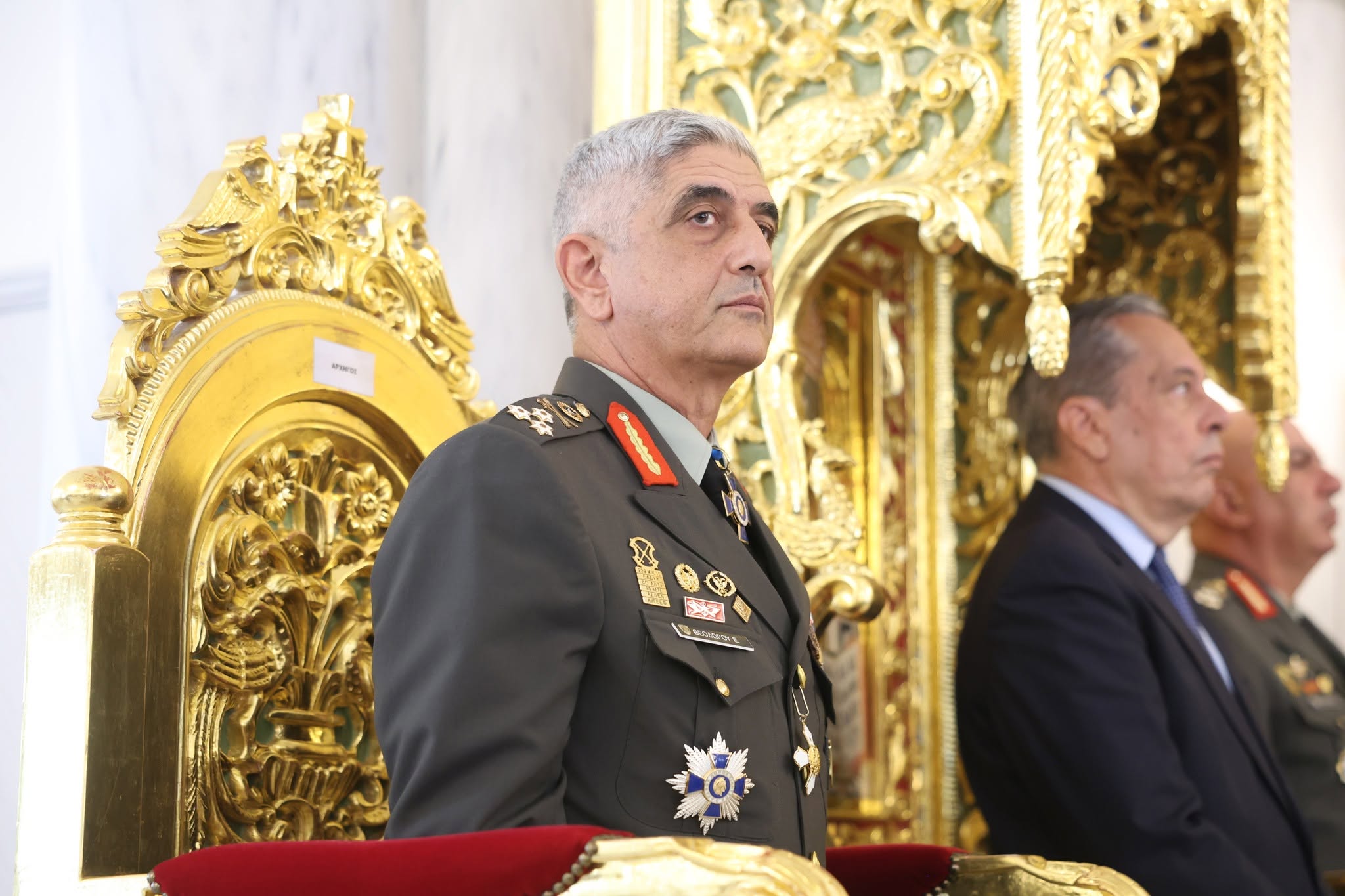
European defence readiness requires a comprehensive approach which takes into account challenges across all strategic regions directly affecting Europe’s security, National Guard chief Lieutenant-General Emmanouel Theodorou has said.
Theodorou was speaking at the second European Chiefs of Defence and National Armaments Directors conference, held in Rome on September 21 and 22.
According to the National Guard, the conference focused on adapting European defence industrial production to the changing defence requirements of member states, with military chiefs discussing lessons emerging from modern conflicts, capability requirements and whether Europe’s defence industry can meet them.
In his intervention, Theodorou said the new security environment required reducing the time between the design and production of defence systems and their eventual operational deployment.
Modern defence capabilities, he said, would also have to be adaptable and interoperable, while European readiness could not focus narrowly on individual areas but had to consider challenges across the strategic regions directly affecting European security.
His comments come as the EU seeks to accelerate defence investment and expand joint procurement under its Readiness 2030 plans.
A European Commission spokesperson told the Cyprus Mail that the €150 billion Security Action for Europe (Safe) instrument is intended to enable member states to jointly procure defence capabilities, primarily ammunition, missiles, air defence and ground combat systems.
Safe forms part of the Commission’s ReArm Europe/Readiness 2030 plan, which aims to mobilise more than €800 billion in defence investment across the bloc.
“Joint procurement ensures interoperability and predictability, reduces costs, and creates the scale needed to strengthen the European defence industrial base,” the commission spokesperson said, adding that it also supported European competitiveness and industry.
The spokesperson said Safe was designed to allow “swift, coordinated action”, improve the ability of European armed forces to operate together and strengthen Europe’s defence industry.
Under the instrument’s procurement rules, at least 65 per cent of component costs must originate in the EU, Ukraine or eligible EEA/EFTA countries, meaning components from other countries can account for no more than 35 per cent.
The commission stressed, however, that member states receiving the loans remain “in the driving seat”, having submitted national defence investment plans setting out their proposed investments.
For Cyprus, this has translated into an allocation of €1.2 billion under Safe, receiving its first payment of €177.2 million in June, equivalent to 15 per cent of its allocation.
According to the commission, the pre-financing allows Cyprus to move forward with defence investments, strengthen resilience and upgrade military capabilities in line with wider European objectives.
On the sidelines of the Rome conference, Theodorou also held a series of meetings with his counterparts, during which issues of mutual interest were discussed, the National Guard said.





Click here to change your cookie preferences