
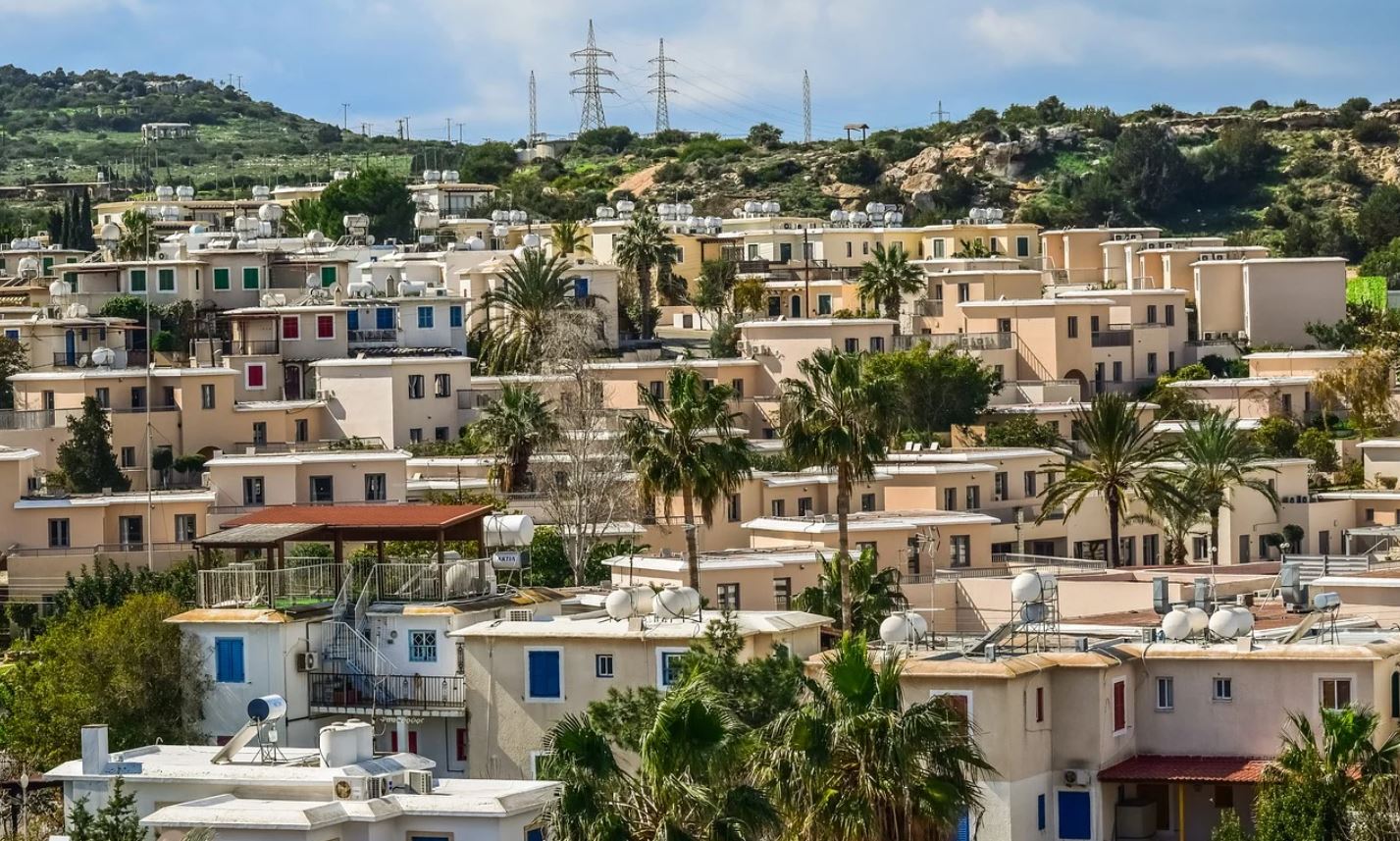
If, on your way to a restaurant in one of Limassol’s towers wearing your best shoes, you have to cross an empty field, it does not mean the market has somehow forgotten to develop it. It may simply mean that its owner has no compelling reason to be in a hurry.
Six years of collecting, processing and analysing data at Ask Wire have taught us something uncomfortable: the real estate market is not irrational. It follows, with remarkable consistency, the incentives we give it.
1. Sometimes, the best use of land is not to use it at all
The annual immovable property tax was abolished in Cyprus in 2017, while transfers from parents to children are not subject to transfer fees or capital gains tax. This does not mean that holding land comes at zero cost. It does mean, however, that a family can relatively easily retain a property from one generation to the next, waiting for the city, infrastructure and neighbouring developments to increase its value.
And when the building next door is eventually developed, the vacant plot becomes a car park until it is worth even more. It is therefore clear that the owner is not to blame; they are simply responding to the incentives we have created.
2. There is no single Cyprus real estate market
In the first quarter of 2026, 84 per cent of buyers in Nicosia were Cypriots. In Paphos, 75 per cent were foreign buyers. In Larnaca, the two groups were almost evenly balanced.
The same apartment is not simply marketed to different people. It is assessed on the basis of different incomes, different financing options and different reasons for buying. One buyer is purchasing a home close to work and needs a mortgage. Another is buying a lifestyle, an investment or a right of residence.
This is not one market with different prices. These are different markets that happen to exist on the same island.
3. We have homes, but not necessarily housing
The 2021 Census recorded 492,931 residential units in Cyprus. Of these, 138,113 — around 28 per cent — were vacant or used as temporary residences. Not all of them are immediately available for rent. The data does, however, demonstrate that housing stock and the actual supply of housing are not the same thing.
In Greece, the 2021 Census recorded approximately 794,000 vacant homes, while foreign demand, short-term rentals and remote working have changed the geography of demand. A country can therefore face a shortage of available housing while still being full of homes.
4. More permits do not automatically mean more affordable homes
During the first two months of 2026, the number of residential units approved through building permits in Cyprus increased by 79.2 per cent. Over the same period, apartment prices rose by 10.8 per cent year-on-year.
There is no contradiction. If new supply is in the wrong location, targets a different type of buyer or will only be delivered several years later, it does not address the immediate needs of local households.
The market does not simply need more units. It needs the right units, in the right place and at the right price.
5. We build the house before we build the city
In 2024, 85 per cent of Cyprus residents said they did not use public transport at all. This was the highest percentage in the European Union. In Greece, the corresponding figure was 61.3 per cent.
This is not merely a transport problem. It is a factor that directly affects the value and functionality of every property. It means more cars, greater demand for parking spaces and a stronger link between property values and proximity to schools, hospitals, workplaces and services.
It is not enough to know what will be built. We also need to know whether the city around it can support it.
6. We digitised the application, but…
Since July 2024, planning and building permit applications have been submitted electronically through the “Ippodamos” system. At the same time, certified signatures are still required. In certain procedures, such as hierarchical appeals, the same documents must be submitted both in hard copy and electronically.
The same pattern can be seen in business. In 2025, artificial intelligence technologies were used by just 9.27 per cent of businesses in Cyprus and 8.93 per cent in Greece, compared with 19.95 per cent across the EU.
The problem is not that we lack technology. It is that the success of the current model often reduces the incentive to change the way we work.
This is why we exist
Ask Wire’s purpose, therefore, is not to add yet another price index. It is to show who is buying, what is being built, what remains underutilised, which demand is being served and what incentive lies behind every seemingly irrational decision.
Because when the outcome of a market appears irrational, we usually do not need to blame the people. We simply need to measure the incentives.



Click here to change your cookie preferences