
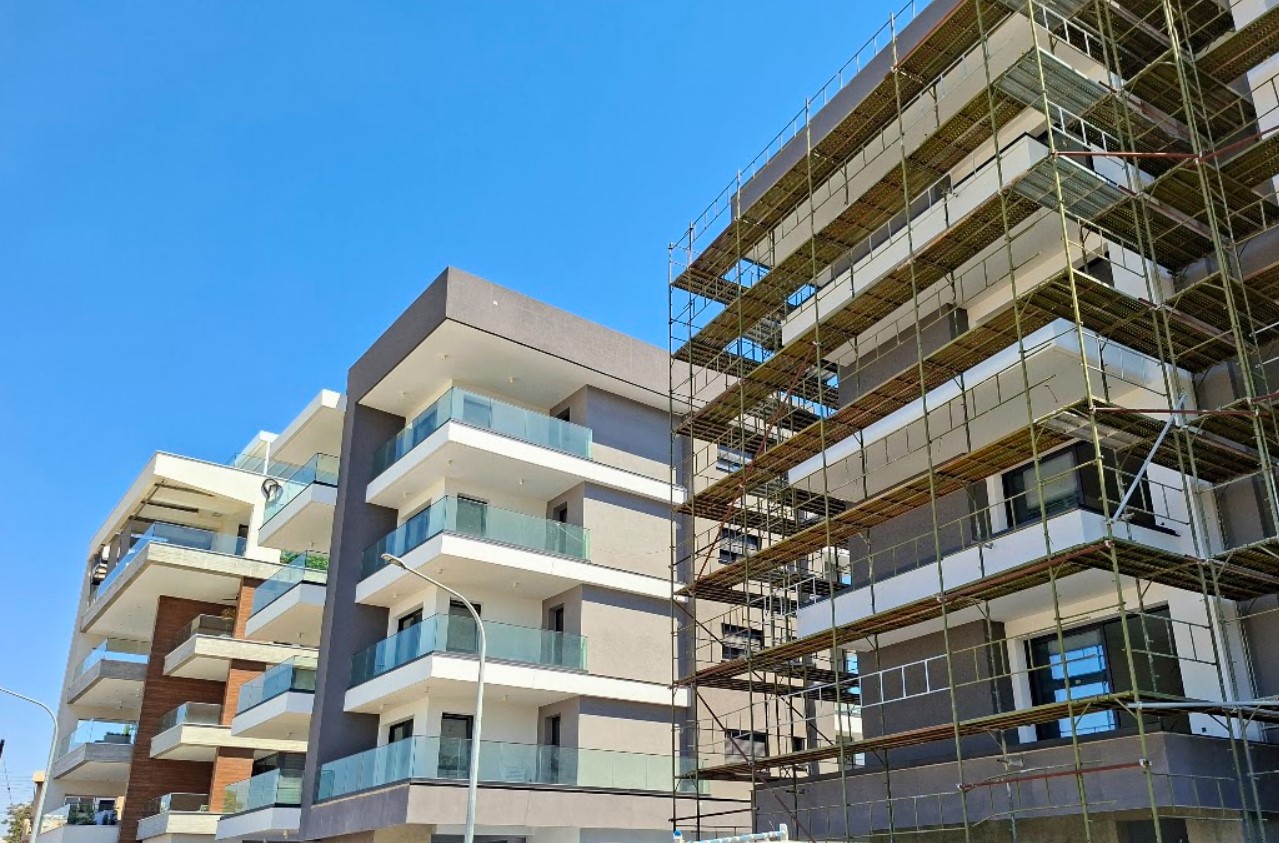
Construction production across the euro area and the European Union rebounded in August, with monthly output rising by 1.8 per cent and 2 per cent respectively, according to a report from Eurostat.
The increase followed more subdued performance in July, when production grew by 0.2 per cent in the euro area but fell by 0.1 per cent across the EU.
Compared with August 2025, construction output rose by 1.4 per cent in the euro area and 2.6 per cent in the EU, according to the EU’s statistical office.
The figures offer a mixed picture for Cyprus, where construction production increased by 1.1 per cent year-on-year in the second quarter of 2026, while output prices rose by 4.9 per cent, according to the Statistical Service (Cystat).
Construction costs have continued to climb, with Cyprus’ construction materials price index rising by 3.74 per cent year-on-year in September, reaching 123.41 points on a 2021 base of 100.
The monthly increase was 0.26 per cent, while prices during the first nine months of 2026 were 2.24 per cent higher than in the same period last year.
Metal products recorded the steepest annual increase among the main material categories, at 5.28 per cent, while the group covering wood, insulation materials, chemicals and plastics rose by 5.06 per cent.
In the euro area, August’s monthly improvement was driven by specialised construction activities, which increased by 2.5 per cent, while building construction fell by 0.4 per cent and civil engineering declined by 2.1 per cent.
Across the EU, specialised construction activities rose by 2.3 per cent, but building construction dropped by 1 per cent and civil engineering edged down by 0.2 per cent.
Hungary recorded the strongest monthly increase among member states with available data, at 14 per cent, followed by Germany at 9.3 per cent and Romania at 7.2 per cent.
The sharpest monthly declines were in Slovenia, where output fell by 5.1 per cent, Slovakia, down 4.9 per cent, and Italy, down 2.9 per cent.
On an annual basis, construction of buildings remained a weak point in the euro area, falling by 3.7 per cent, while civil engineering was unchanged and specialised construction activities increased by 3.1 per cent.
Across the EU, building construction fell by 4.1 per cent year-on-year, while civil engineering rose by 2.8 per cent and specialised construction activities increased by 2.9 per cent.
Romania recorded the largest annual rise in construction production, at 39 per cent, followed by Hungary at 22 per cent and Finland at 12.7 per cent.
France registered the steepest annual decline, at 7.8 per cent, followed by Slovakia at 4.9 per cent and Spain at 4.3 per cent.
In Cyprus, the latest quarterly figures showed construction production reaching 130.28 points in the second quarter, compared with 128.83 points a year earlier, while the output prices index rose to 132.48 points from 126.32 points.
Production during the first half of 2026 was up 1.4 per cent compared with the same period last year, while construction output prices increased by 4.7 per cent.
The figures suggest that rising construction costs remain a significant pressure for the Cypriot sector, even as activity continues to expand.
At the same time, Cyprus’ off-plan housing market expanded considerably in the third quarter, with recorded sales agreements increasing by 48.5 per cent to 1,956 and their combined value rising by 51.6 per cent to €606.4 million, according to Landbank Analytics.
Almost two-thirds of the transactions involved properties priced below €300,000, highlighting the continued importance of affordable and mid-priced homes.
Limassol accounted for 40.5 per cent of the total transaction value, while Paphos increased its share of recorded sales from 12.8 per cent to 17 per cent compared with the previous quarter.
The expansion comes as property valuation specialists call for measures to improve housing supply and market transparency, including faster building permit approvals, regular safety inspections and formal access to municipal property data.
The Cyprus Association of Real Estate Valuation Scientists, which is affiliated with the Cyprus Chamber of Commerce and Industry (Keve), recently urged greater digitalisation to make the permit process quicker and more predictable.
The association said secure access for licensed valuers to planning information held by district local government organisations would improve valuation accuracy and transparency for investors and citizens.





Click here to change your cookie preferences