
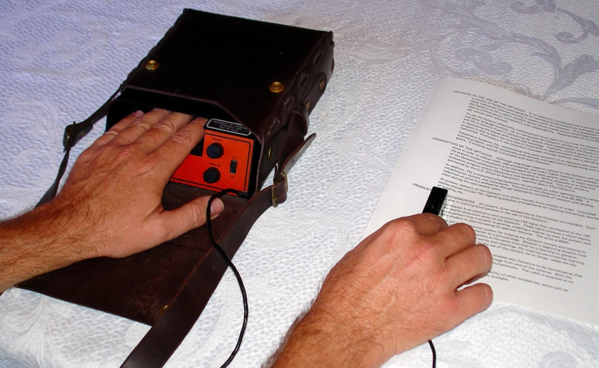
Part of the service a customer buys is now the document that comes with it. That includes contracts, statements, policies and onboarding forms, and all of them have to be read aloud by a screen reader.
Those documents in many offices are scans. A scan is a photograph, and with a photo the screen reader can’t find anything. Getting the text back out is the first step and the cheap one: Convertio’s online convert pages take a text-based PDF of up to 1 GB and return it as DOCX, TXT or EPUB, with the conversion running in the cloud instead of on the machine that uploads it.
There’s one more step for a scanned page, and Convertio keeps its OCR on a separate page, which turns a scan or a photograph into searchable PDF, DOCX, XLSX or TXT.
Contents: a study guide nobody could read · why Acrobat calls your file an image · where conversion ends · what Cyprus now requires
A study guide nobody could read
“I am currently enrolled in a Salesforce course tailored for individuals with disabilities, offered through the Blind Institute of Technology,” Dean Vasile wrote to the WebAIM accessibility list. “I’ve acquired a study guide, but unfortunately, I am unable to read or use it. I’ve received a quote ranging from $5.25 to $22.50 per page for remediation, which is a bit out of my budget.”
Steve Green, managing director of Test Partners, offered to look at the file and set out what the answer depends on: “I can’t promise anything because it depends on the size, content and why it’s not accessible. Does it just need to work with a screen reader? Or does it need to work in Reflow mode and support colour substitution too, which would take longer to fix?”
Jim Allan, from the same list, identified the file in one line: “The page in question was a pdf of a scanned (or printed to pdf) of the content.”
Dax Castro, an accessibility trainer, reported the ending a few days later. “I was able to help Dean. The PDF was a 9 meg image. LOL. It was just a checklist for the online modules they have in the actual study course.”
The guide had not come from the institute at all, Dean explained, but from a commercial course site, and the same material sat on that site’s own pages the whole time: “apparently all it is an outline. The course is actually on their website. And I was actually able to navigate that today once I figured that out your way.”
Why Acrobat calls your file an image
“Is it possible for documents to be scanned to PDF and be accessible?” asked Angela French, an internet specialist at a state board of community and technical colleges. “We are getting PDF documents to post on our website that have been scanned. They are failing the accessibility scan in Acrobat which sees them as images. How are documents like this remediated?”
The answer that came back described a sequence rather than a button. “I don’t find the on-board OCR in Acrobat to be useful,” wrote Karen of Karlen Communications. “I first take a scanned document into ABBYY PDF Transformer and make the text searchable,” the message went on. “I then take the document back into Acrobat and then perform the OCR. This gives me fewer errors. I can then work with the document, first adding links or form controls and then Tag the document.”
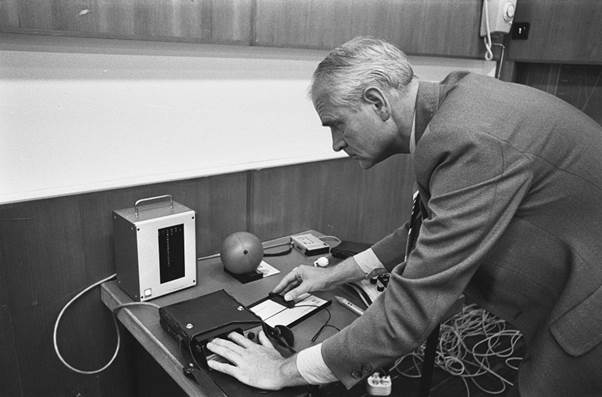
Jean-Pierre Jamous, a digital accessibility specialist, answered the same question with the opposite advice, and that version is the one plenty of offices will recognise:
“That’s always been an issue. That is why JAWS came out with the OCR engine for PDF files. Do yourself a favor. Open a Microsoft Word and start typing those pages. Lastly, save it as a PDF file. That’s the only way to making it accessible by screen readers. Remember, PDF is made to house images, sounds and videos.”
I think the instinct behind retyping a page is right – a document that began life as text can be rebuilt as text, and a photograph of a page cannot be argued with – but it isn’t a workflow.
“European law requires that all public sector websites meet WCAG 2.1 AA including all documents that can be downloaded from the website. The legislation does not mention PDF/UA.” That was Steve Green again, in an earlier thread, pointing at the source of the work rather than the standard. The regulation driving that work, the same message added, “is likely to do so as long as public sector organisations keep producing PDFs.”
Budgets tend to arrive the other way round. “My school just received some grant money to help with accessibility of materials for a new program,” Krystal Iseminger wrote to the list. “The materials are PDF, and they are intense and may even need to be made fillable.”
Where conversion ends
Conversion solves the text problem completely and the structure problem not at all.
| What you have | What a converter does | What still needs doing by hand? |
| Scanned PDF, no text layer | OCR returns searchable PDF, DOCX or TXT | tags, reading order, alt text, form labels |
| Photograph of a page | same OCR route, from JPG, PNG or TIFF | everything above, plus a decision about rescanning |
Convertio’s OCR page accepts PDF and the usual image formats and writes out searchable PDF, DOCX, XLSX, PPTX, TXT, RTF, CSV and EPUB. The first 10 pages are free, and the prepaid package after that works out at 8 cents a page, against the $5.25 to $22.50 a page Dean Vasile was quoted for full remediation.
Tagging is the part a format converter does not produce. It tells a screen reader which line is a heading, which block is a table and which image needs a description, and that structure gets added afterwards, in the order Karen described.
What Cyprus now requires
The duty itself is narrow: a file has to be perceivable through visual, auditory and alternative formats, and it has to work with assistive technologies. Banking, e-commerce, e-books, passenger transport and telecoms all sit inside the Accessibility of Products and Services Act, N. 57(I)/2024, which the European Commission’s AccessibleEU centre publishes in English, and the Deputy Ministry of Social Welfare is the authority responsible for it. Chrysses Demetriades & Co have outlined the price of turning a blind eye to it:
• fines up to €10,000, and up to €20,000 for repeat offenders, with criminal penalties reaching 3 years’ imprisonment or €30,000
• services offered before 28 June 2025 have until 28 June 2030, while anything launched after that date was supposed to comply from day 1
Where the obligations would be a disproportionate burden, they can be waived, and that is the clause every small firm will reach for. The cheapest moment to deal with a scanned archive is before a customer asks for a readable copy.
DISCLAIMER – “Views Expressed Disclaimer – The information provided in this content is intended for general informational purposes only and should not be considered financial, investment, legal, tax, or health advice, nor relied upon as a substitute for professional guidance tailored to your personal circumstances. The opinions expressed are solely those of the author and do not necessarily represent the views of any other individual, organization, agency, employer, or company, including NEO CYMED PUBLISHING LIMITED (operating under the name Cyprus-Mail).



Click here to change your cookie preferences