
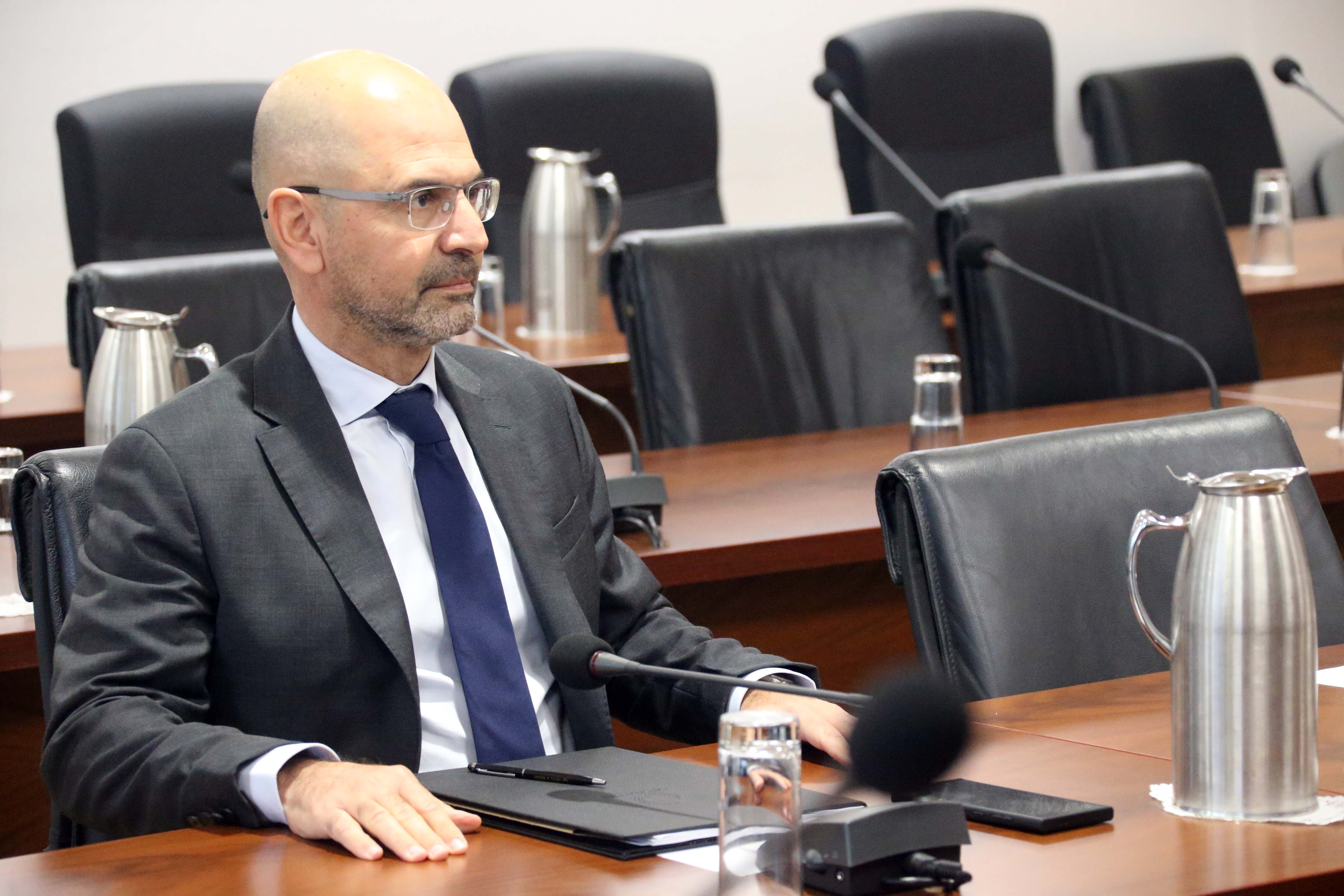
The Audit Office plans to introduce artificial intelligence to accelerate its work, identify potential irregularities and free up auditors to conduct more on-site inspections, auditor-general Andreas Papaconstantinou said on Friday.
Presenting the office’s 2027 budget to the House finance committee, Papaconstantinou said a major co-funded project, known as AuditAI, was being planned to allow AI to carry out preliminary assessments and identify potential warning signs, or “red flags”, requiring further investigation.
He said the technology would help speed up audits and the preparation of reports, allowing staff to devote more time to inspections and other substantive work.
The Audit Office has so far submitted 31 reports and five memoranda in 2026, with another 23 reports in progress. Papaconstantinou said the target was to publish between 45 and 50 reports by the end of the year, potentially releasing two reports a week.
The office’s proposed budget for 2027 stands at €12.06 million, an increase of approximately €810,000, or 7.2 per cent, compared with €11.26 million in 2026.
Personnel costs account for 82 per cent of the budget, while 7.5 per cent is allocated to consultancy services and five per cent to software purchases.
Funding has also been allocated for staff training in Cyprus and abroad to improve the early identification of risks, strengthen accountability and ensure more efficient management of public resources.
Papaconstantinou said the office’s budget focused on improving internal operations, strengthening cooperation, making better use of staff expertise and completing audits more quickly and to a higher standard.
Addressing staffing arrangements and salary scales, he said consideration had been given to practices elsewhere in the public sector, particularly the qualifications required of auditors.
He explained that auditors were required to obtain professional qualifications, including chartered accountant certification, and that the time needed to secure these qualifications had been considered when determining salary progression.
“We considered that there should be no unfair treatment, so we equalised the time component,” he said, adding that a similar approach was followed by the Transmission System Operator.
“Let us not exaggerate. They are auditors, and that is the reasoning,” he added.
On consultancy services, Papaconstantinou said the Audit Office preferred to retain expertise internally but that certain highly specialised areas required external assistance.
He cited the information systems of the national health scheme, Gesy, and the Ippodamos planning system as examples of areas requiring specialist technical knowledge.
Papaconstantinou also emphasised the importance of increasing on-site inspections, saying that the more inspections carried out, the better.
He explained that direct inspections allowed auditors to gain firsthand knowledge of the services they were examining, improving both the effectiveness of audits and staff performance.
On audits of municipalities and district local government organisations established under the local government reform, Papaconstantinou acknowledged concerns about the new administrative structures.
He said considerable time had been devoted to examining issues involving Paphos municipality and its suspended mayor.
The auditor-general also addressed the responsibilities of the assistant auditor-general, explaining that he participated in the management team and that efforts were being made to utilise his position effectively.
“I will not say anything more. He certainly needs to work, but let us leave it at that,” Papaconstantinou said.
He rejected suggestions by Alma MP and former auditor-general Odysseas Michaelides that the assistant auditor-general could assume the duties of a director, stressing that the two positions served different functions.
He said he did not accept the claims being made about the assistant auditor-general, explaining that the proposed director’s position was intended to fulfil separate management responsibilities.
“The position we are requesting is for a director’s work, and the assistant auditor-general has a different role,” he said.
In addition regarding a comment on the secondment of former civil defence commander Maria Papa to the Audit Office, Papaconstantinou said her role had been discussed with her and that, if she could not be effectively utilised, the possibility of returning her to her previous service would be considered. “If she cannot be utilised, we will look into having her return,” he said.
Click here to change your cookie preferences