
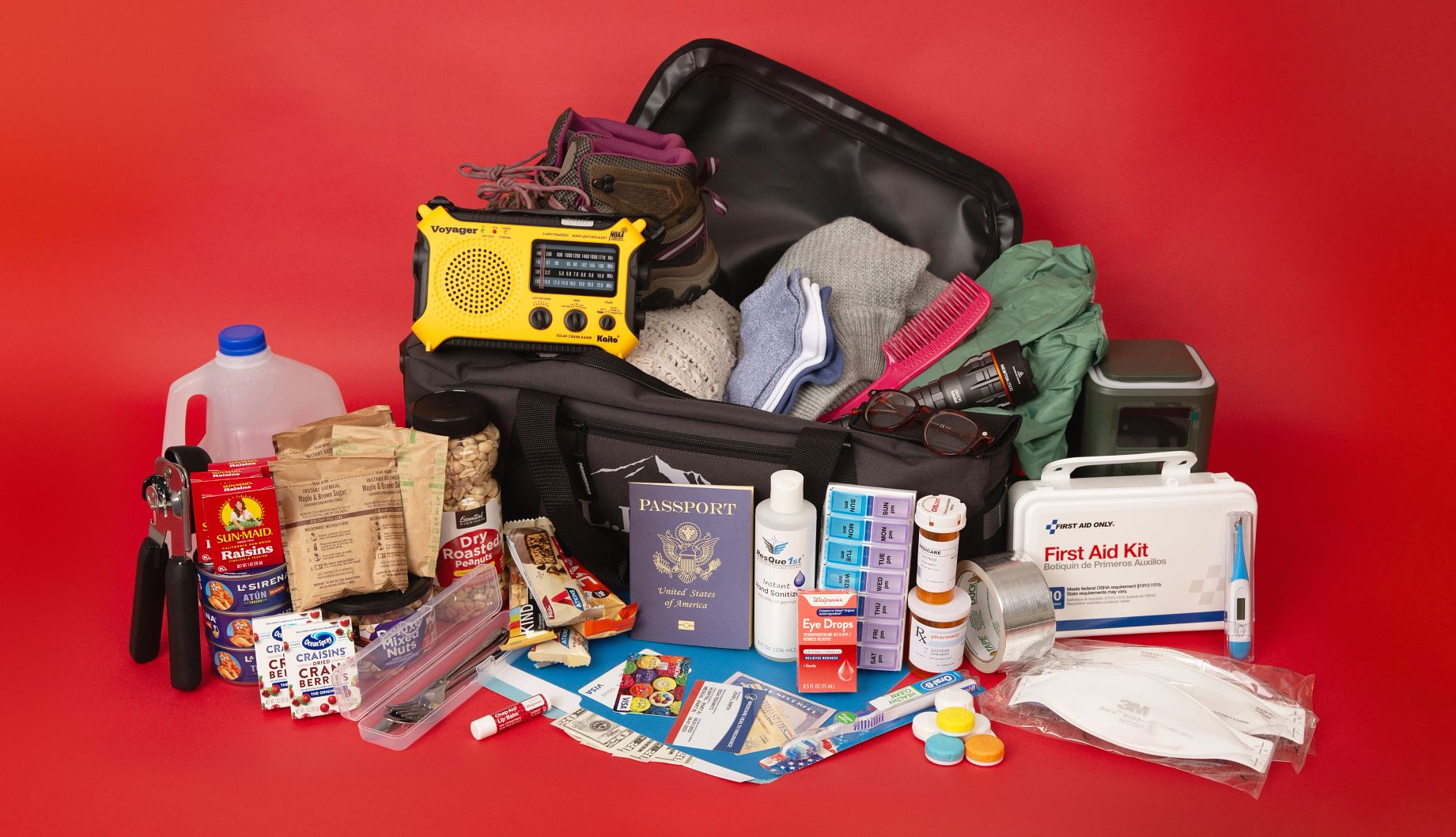
Civil Defence on Friday repeated its warning to households to keep an emergency backpack ready and maintain enough basic supplies to last at least 72 hours, stressing that preparedness should become part of everyday life rather than a response to an immediate crisis.
Spokeswoman Chara Lazarou told the Cyprus News Agency (CNA) that simple precautions could make a significant difference during emergencies, particularly when people need to evacuate their homes at short notice.
“Civil Defence has long recommended that citizens have an emergency backpack ready so that, if they need to leave home quickly, they can take the essential items they will need,” she said.
The recommendation is consistent with European guidance encouraging households to be self-sufficient for at least 72 hours in the event of a serious disruption.
Lazarou explained that the three-day period represents a practical minimum, allowing families to meet their immediate needs while emergency services concentrate on protecting lives and assisting those most urgently in need.
“In the first few days after a serious incident, access to drinking water, food or other essential services may become difficult,” she said.
Even a disruption lasting only a few hours, she added, could be easier to manage if a household had basic provisions available.
Civil Defence is now preparing a dedicated guide explaining how households can organise sufficient supplies for at least 72 hours and prepare for possible interruptions to essential services.
Lazarou said the emergency backpack should be lightweight, easily accessible and kept near the door so it can be collected without delay.
It is intended for situations in which residents must leave their homes quickly, such as an evacuation ordered because of a wildfire or flooding, or following an earthquake that has damaged a building.
“The backpack allows us to have the essentials with us from the moment we leave until we reach a safe location and organise our next steps,” she said.
The recommended contents include drinking water and a small quantity of non-perishable food that does not require cooking; essential personal medication and a small first-aid kit; a torch, portable radio and spare batteries; a mobile phone charging cable and a fully charged power bank; copies of important documents, some cash and basic personal hygiene products.
Lazarou recommended that every family member capable of carrying a backpack should have their own.
Staying at home for 72 hours
The recommendation to maintain household supplies for 72 hours serves a different purpose from the emergency backpack.
While the backpack is designed for evacuation, supplies kept at home should be sufficient to meet the needs of every household member for at least three days if access to shops, water or other essential services is temporarily disrupted.
These should include adequate drinking water and non-perishable food.
“In every incident, we follow the instructions of the relevant authorities on whether we should remain where we are or evacuate,” Lazarou said.
Families should also decide in advance who will assist children or relatives who require additional support.
“When we have thought about these basics beforehand, we can act more calmly when an emergency occurs,” she said.
No signs of panic buying
Despite recent public discussion about the possibility of a global blackout and European Commission recommendations concerning 72-hour emergency preparedness, retailers in Cyprus have reported no significant change in consumer behaviour.
Secretary-general of the Cyprus Retail Trade Association Marios Antoniou told CNA that there had been no indication of panic buying.
“We have not noticed any change in consumer behaviour or people’s purchases,” he said, describing conditions in the retail market as “business as usual”.
Executive secretary of the Cyprus Supermarkets Association Andreas Hadjiadamou said emergency survival kits were available on the market and might be stocked by some retailers.



Click here to change your cookie preferences