
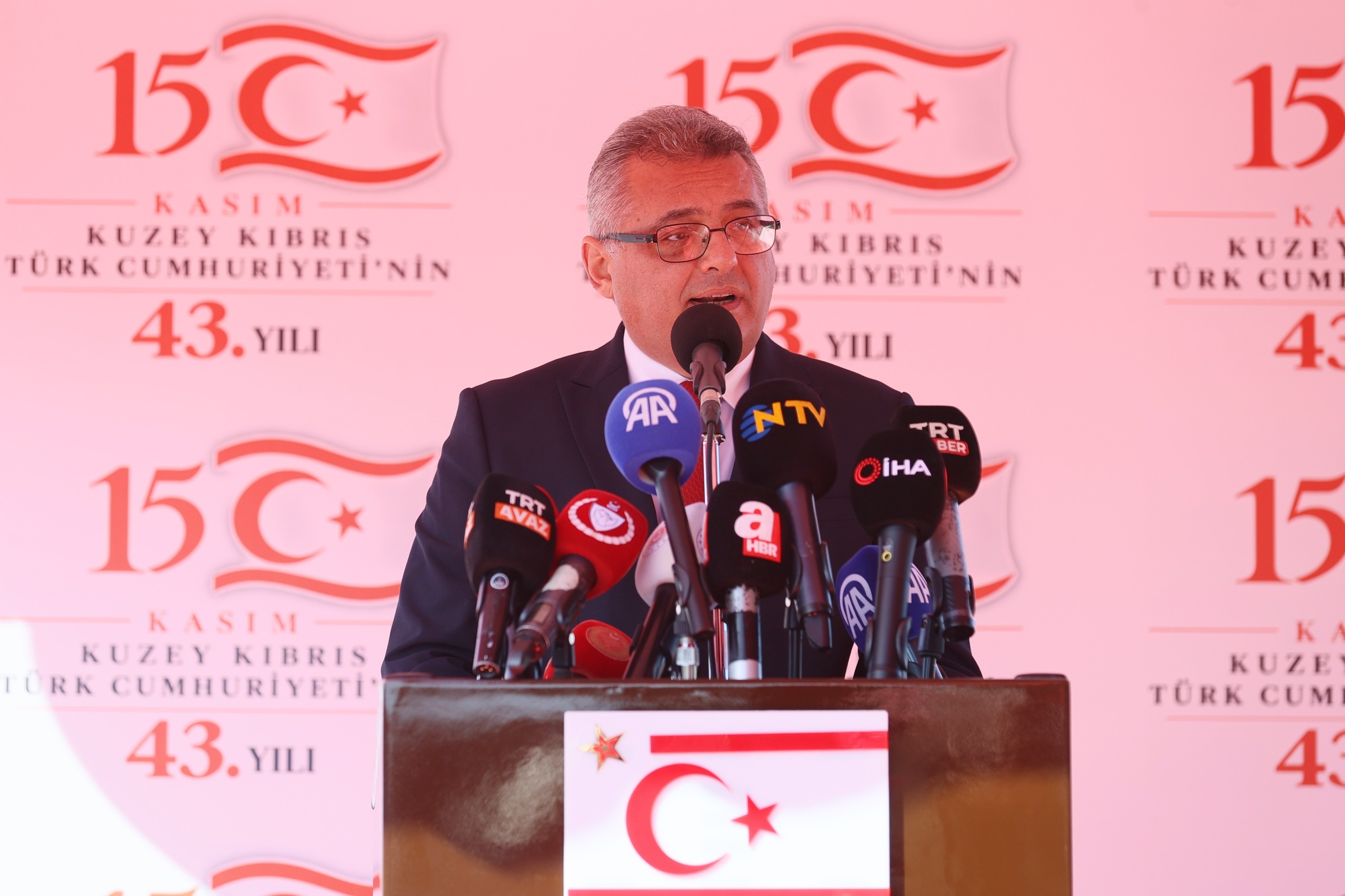
Turkish Cypriot leader Tufan Erhurman on Thursday held a telephone conversation with European Commission Cyprus problem envoy Raffaele Fitto, ahead of Fitto’s planned trip to Turkey on Friday.
No details of the conversation were immediately made publicly available, other than that it lasted around half an hour.
It is expected that Fitto will meet Turkish Foreign Minister Hakan Fidan on Friday to discuss both the Cyprus problem and Turkey’s ambitions for an upgrade to its existing customs agreement with the European Union, and its hopes to be included in the EU’s planned “Made in EU” scheme.
On this front, Cypriot government spokesman Konstantinos Letymbiotis said that Friday’s planned meeting will “undoubtedly address the linkage between progress in relations between the EU and Turkey … and the essential progress on the Cyprus issue”.
Fitto had said in his own most recent intervention on the Cyprus problem that he was “encouraged” by the results of last week’s meeting of Erhurman and President Nikos Christodoulides, in which the two leaders agreed to open two new crossing points and meet United Nations Secretary-General Antonio Guterres in the coming weeks for further discussions.
“This is a good step forward in the discussions for a comprehensive settlement of the Cyprus issue. The European Union remains fully committed to the reunification of Cyprus in accordance with the relevant UN security council resolutions and in line with EU principles, values and legislation,” he said.
EU ready for progress on customs union, Made in EU in line with Cyprus progress
Sources close to the matter have informed the Cyprus Mail in recent weeks that the EU may make way for progress on both the customs agreement and the “Made in EU” scheme should there be progress in efforts to bring about a resumption of negotiations in earnest on the Cyprus problem.
At present, Turkey has a customs union agreement with the EU, but given that Turkey is not a full EU member, it does not enjoy the full benefits of the union. As such, when the EU signs a trade deal with a third country, imports to Turkey from that third country can no longer be tariffed, but that third country can continue to place tariffs on Turkish exports.
The “Made in EU” scheme stems from the EU’s planned industrial accelerator act, which was proposed by the European Commission in March.
Part of the proposal includes a stipulation for “Made in EU” and low-carbon preferences in public procurement and public support initiatives taken by member states across the bloc, and by the EU itself.
As such, were the proposal to be passed into law, businesses based outside the EU, including in Turkey, could lose access to public procurement projects inside the bloc.
Kos: Clear interest from some EU countries in new customs union with Turkey
Fitto had told the European Parliament last month that “in further deepening the EU-Turkey cooperation, we attach particular importance to the resumption of the Cyprus settlement talks and Turkey’s constructive engagement in that regard”.
“This is in the strategic interest of the EU and in line with the mandate we have from the European Council. We must not forget that the whole of the island of Cyprus is part of the EU and that Turkish Cypriots are EU citizens,” he said.
Earlier this month, European Enlargement Commissioner Marta Kos said that “there is a clear interest from some of the European countries [which] want to update the customs union” as she presented the commission’s annual report on the country to the European Parliament’s foreign affairs committee.




Click here to change your cookie preferences