
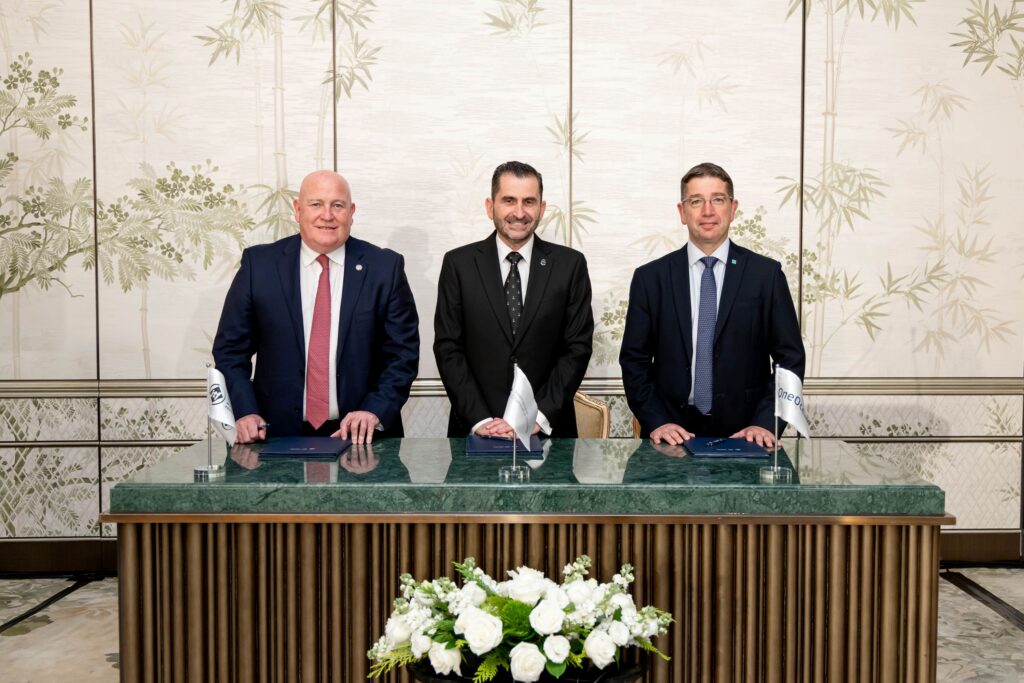
The International Transport Workers’ Federation (ITF) has joined the ISF Verify project to support the roll-out to the ITF’s seafarer network, reaching around 1 million seafarers across more than 100 countries.
The announcement, made in Hong Kong this week, builds on international collaboration to simplify verification and reduce administrative burdens associated with paper-based processes across the industry.
Two weeks earlier, the Directorate General of Maritime Administration, India (DGMA) joined ISF Verify in a major step that brings the platform within reach of countries representing around 30 per cent of the global seafarer workforce.
The announcement also follows a proof of concept with the Philippines MARINA, which has now concluded successfully, paving the way for the Philippines’ 460,000 seafarers to connect.
ISF Verify is a cloud-based platform developed by the International Chamber of Shipping (ICS) and Lloyd’s Register OneOcean (LROO), supporting the maritime sector’s transition from paper to digital seafarer certificates.
It connects seafarers, flag administrations, port state control and shipping companies, enabling efficient issuance, secure sharing, verification and endorsement of digital certificates in a way that is trusted and respects national jurisdictions.
A fundamental principle of ISF Verify is that the seafarer is in control. Seafarers decide who can access their data and can withdraw access at any time.
The announcement describes ISF Verify as “a connector, not a central database”. It connects to issuing administrations’ databases via real-time queries, so certificate data remains with the issuing authority. In its mobile app, it will maintain free access for seafarers to their certificates.
The cooperation will combine outreach through the organisations’ networks with practical input from the ITF and its inspectors to help inform the development of ISF Verify around seafarers’ needs.
On how that input will be gathered, Stephen Cotton, general secretary of the ITF, said, “Digitalisation must work for seafarers, and that means ensuring that seafarers’ voices are heard so that we know that this technology will make their working lives easier through straightforward, secure and accessible certification.”
Cotton pointed to the role of the federation’s inspectors, adding, “The ITF’s global network, specifically our Inspectorate, enables us to gather feedback from seafarers themselves. This is how we’ll know that ISF Verify can deliver the changes that seafarers need to see, including that they will always be in control of their own personal data.”
On working with the platform’s developers, he added, “We look forward to working with ICS and Lloyd’s Register OneOcean to ensure that the maritime industry’s digitalisation is based on trust and cooperation – and always putting seafarers first.”
Thomas A. Kazakos, secretary general of the ICS, linked seafarers’ control over their data to how certificates are verified.
He said, “The industry needs a single, trusted connector that respects national jurisdiction authority while removing needless paper burden. By simplifying digital seafarer certification, with seafarers in control of their own data every step of the way, ISF Verify provides the route to scalable, trusted digital certification.”
On the federation’s involvement, Kazakos added, “The ITF joining is a key milestone for ISF Verify and we are pleased to be working together to deliver a modern, trusted, frictionless way to prove certification which seafarers deserve.”
For Nick Brown, chief executive of Lloyd’s Register, the benefits come down to how seafarers manage their certificates.
He said, “It’s vital that digitalisation delivers practical benefits for the people who keep global trade moving, the seafarers. ISF Verify is about reducing the burden of paper-based certification and building confidence in a trusted digital alternative.”
Brown linked that work to the feedback the ITF will bring to the project, adding, “The ITF’s involvement brings seafarers’ experience directly into that work. Working together with ICS, we can ensure the development of ISF Verify reflects the needs of those who will use it, not simply the processes it replaces.”
Looking at the work already under way, Brown said, “The progress with India and the Philippines, alongside the ITF’s global reach, gives us a strong foundation to build on. Our focus now is on turning that collaboration into lasting improvements for seafarers and the maritime industry.”
The Memorandum of Understanding (MoU) signing ceremony took place at Hong Kong Maritime Week with Kazakos, Brown and Cotton.




Click here to change your cookie preferences