

Cyprus put a stronger ship register and better services for shipping companies at the centre of its pitch to Greek shipowners in Athens this week, as Shipping Deputy Minister Marina Hadjimanolis called for a gradual approach to cutting emissions that keeps European fleets competitive.
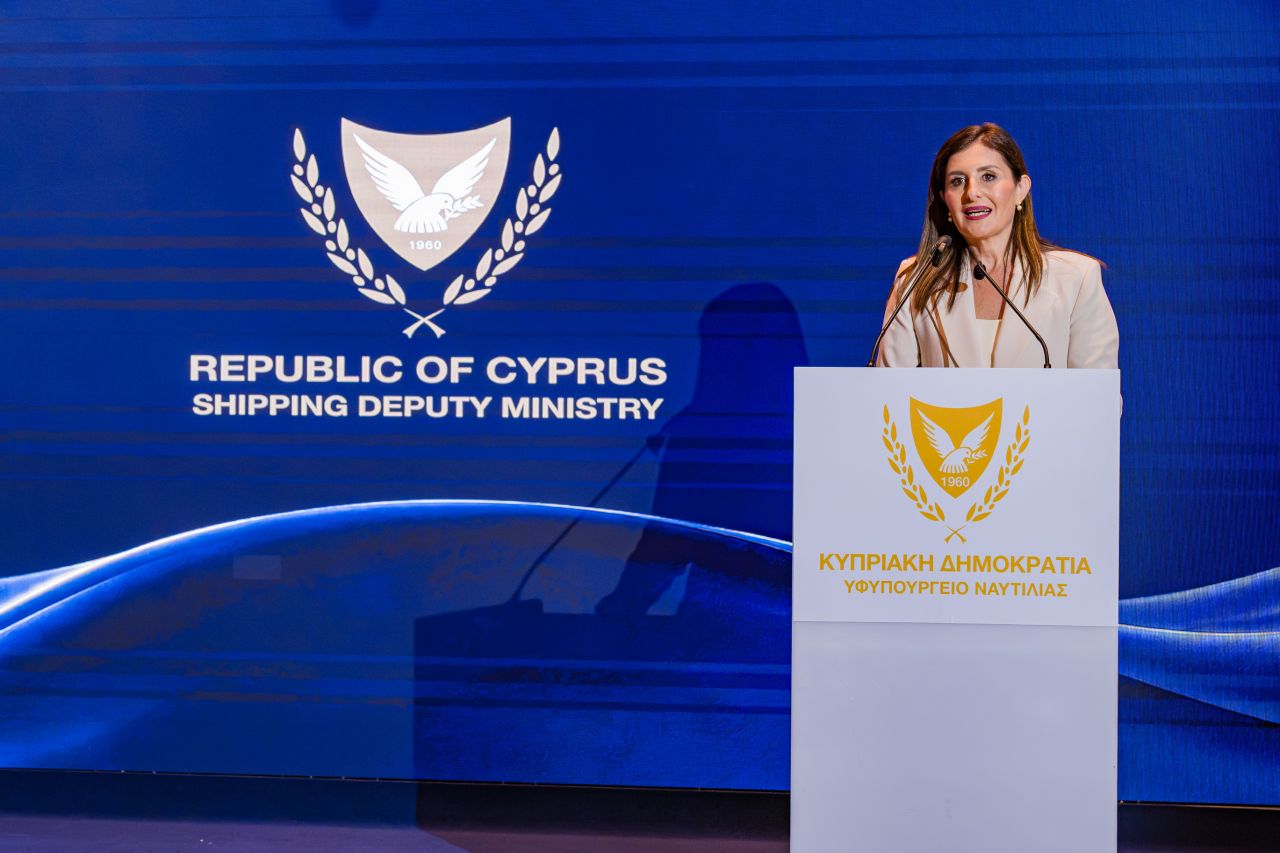
The Shipping Deputy Ministry hosted its annual dinner to thank Greek owners for their longstanding support for the Cyprus flag. Among those in attendance were George Procopiou, Panos Laskaridis, Polys Hajioannou, Marios Iliopoulos, Andreas Hadjiyiannis, George Pateras and George Alexandratos.
Hadjimanolis was accompanied by Cyprus’ ambassador to Greece, Stavros Avgoustides.
Hadjimanolis used the dinner to ask owners where the ministry’s services could improve. “We want to hear your views,” she told them, asking where they were running into difficulties and where Cyprus needed to respond faster. She put improving services alongside strengthening the register and attracting more maritime businesses to Cyprus.
That focus on competitiveness also ran through her remarks on decarbonisation. Hadjimanolis said the transition to cleaner shipping should proceed gradually, with measures shipowners can put into practice and afford.
“Europe needs a strong, competitive shipping industry that plays a leading role internationally,” she said, pointing to cooperation between Cyprus, Greece, Malta and Italy on emissions, maritime safety and seafarer welfare.
The fleet figures show how much is at stake in the relationship with Greek owners. In March, 253 Greek-controlled ships flew the Cyprus flag, nearly 6 per cent of the vessels tracked in the Greek Shipping Co-operation Committee’s annual fleet survey. The vessel count matched the previous March, while their combined gross tonnage rose by almost 229,000. Malta had 579 Greek-controlled ships on its register.
Across the Cyprus register as a whole, the ministry told MPs on November 2 that it had registered 119 vessels since the start of the year, with a combined gross tonnage of more than 2.4 million. The tonnage of the Cyprus-flagged fleet was up about 27 per cent since September 2023.
Hadjimanolis had already told shipowners in Tokyo in October that the register had reached its highest level in 25 years.
One recent addition was Safe Bulkers’ Kypros Island, the first methanol dual-fuel bulk carrier to join the Cyprus register. Hadjimanolis named the Kamsarmax at a shipyard in Zhoushan, China, in October. The vessel can run on methanol as well as conventional marine fuel.
Alongside the push to attract ships, the ministry is moving more of its services online. A November 17 circular addressed the rollout of digital registry services. At a maritime roundtable in Limassol the previous week, Hadjimanolis said the one-stop portal was designed to cut paperwork and speed up services for owners and ship managers. The ministry has also commissioned a study to identify gaps in the services available in Cyprus and ways to attract more maritime companies.
Cyprus is also reviewing which ships qualify for its flag. A public consultation that closed on October 9 covered proposed changes to ownership eligibility as part of an update to the law governing ship registration, sales and mortgages. The existing tonnage tax scheme, which taxes qualifying shipping activities on the basis of a ship’s net tonnage, has European Commission approval through the end of 2029.








Click here to change your cookie preferences