
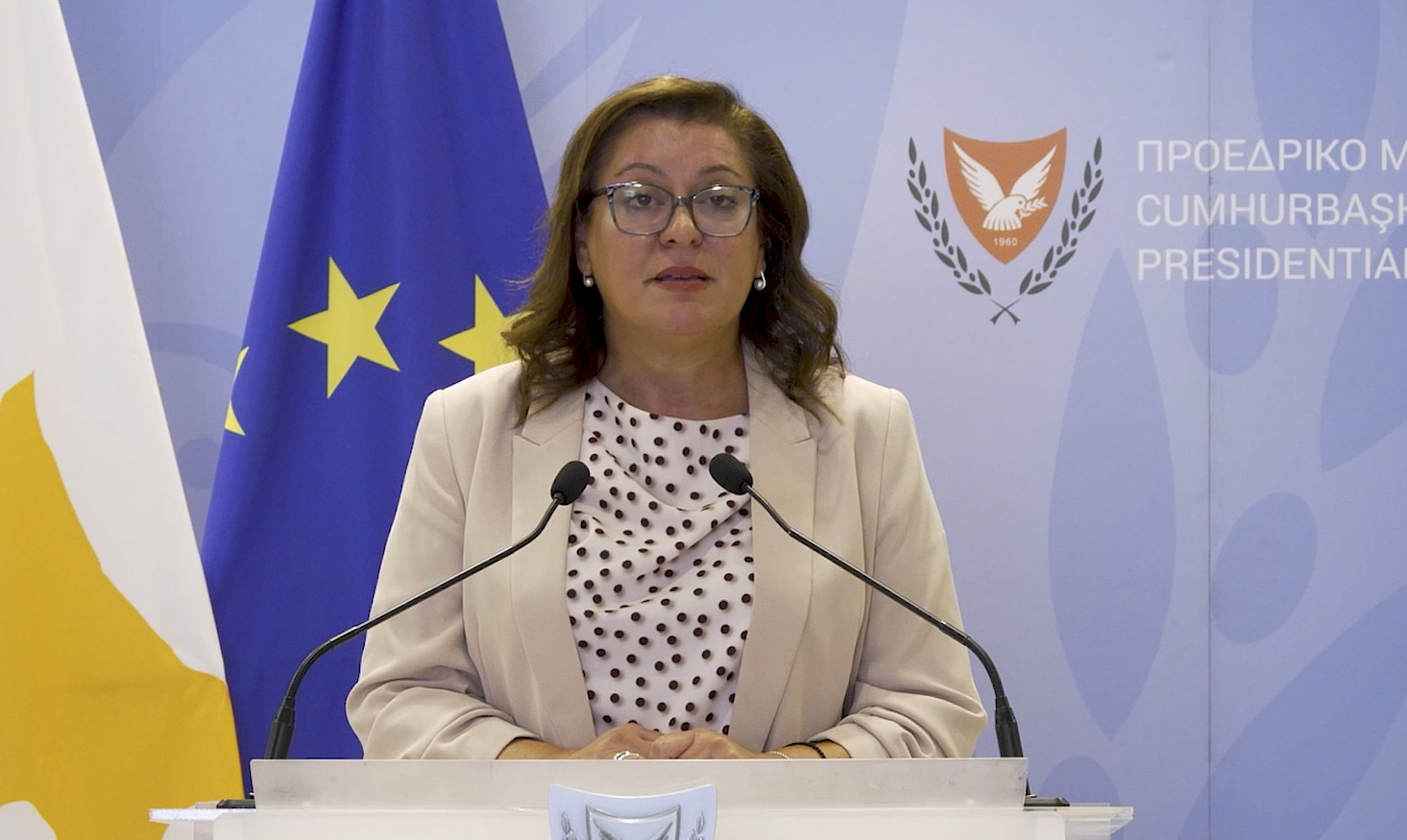
The issue of permanent appointments remains the main disagreement between the education ministry and teachers’ unions, Education Minister Athena Michaelidou said on Monday, following a meeting with union representatives to discuss proposed changes to the teacher recruitment system.
Michaelidou said the unions’ demands concerning permanent appointments raised constitutional and legal issues that the ministry could not disregard, although she welcomed the continuation of dialogue.
The meeting on Monday was expected to focus on the outstanding disagreements over the recruitment bill, particularly the implications of the proposed changes for teachers already working in public schools and their prospects of securing permanent positions. According to legislation passed in 2015, from September 1, 2027, all permanent positions will be filled by those who have passed exams.
She described the meeting as “extremely useful and constructive”, saying it had provided an opportunity to clarify the outstanding disagreements and explain further amendments to the ministry’s proposal.
“Public consultation was completed a few days ago, during which we received a large number of comments, which we have now reviewed and categorised,” she said.
“The purpose of the meeting was to explain what is being done at present and what additional adjustments we are making to our proposal so that it can be submitted to the Council of Ministers and subsequently to parliament for discussion.”
Michaelidou said the ministry had already made numerous changes in response to suggestions from the teachers’ unions and had offered further adjustments during Monday’s meeting, particularly concerning the teacher registration lists.
However, she made clear that the ministry would not accept changes that conflicted with constitutional or legal requirements.
“You understand that we cannot change matters that conflict with constitutionality and legality, and this mainly concerns permanent appointments, as is the case more broadly across the public sector,” she said.
“All employees on indefinite-term contracts must sit an examination. We understand that this remains the main disagreement with the unions, but it is very important that dialogue continues.”
The minister said communication channels remained open, with union representatives due to meet the directors of technical, primary and secondary education to exchange information concerning the registration lists.
She reiterated that the ministry’s objective was to submit its revised proposal to the Council of Ministers and parliament as soon as possible.
Asked whether discussions with the unions were progressing positively, Michaelidou said that, from the ministry’s perspective, they were.
“If the unions remain immovable on one or two issues concerning legality, these are not matters for negotiation as far as we are concerned,” she said.
She nevertheless argued that the ministry had made substantial concessions over recent months to accommodate union demands.
“Someone must recognise that over these months the ministry has taken enormous steps to satisfy requests. However, we are not here simply to satisfy specific union demands,” she said.
Michaelidou stressed that the proposed changes were intended to serve not only teachers currently working in schools but also those who had passed the required examinations and younger graduates seeking to enter the profession.
“We are working not only for teachers who are currently employed in schools or who have been working there in recent years. We are also working for teachers who have passed examinations, and I remind you that the legislation allows only these individuals to enter schools,” she said.
“We are also working for young people graduating from universities who want to enter the profession.”
The minister maintained that the government had put forward a balanced and fair proposal, adding that while adjustments could continue to accommodate requests, the ministry could not introduce provisions that conflicted with the law.





Click here to change your cookie preferences