
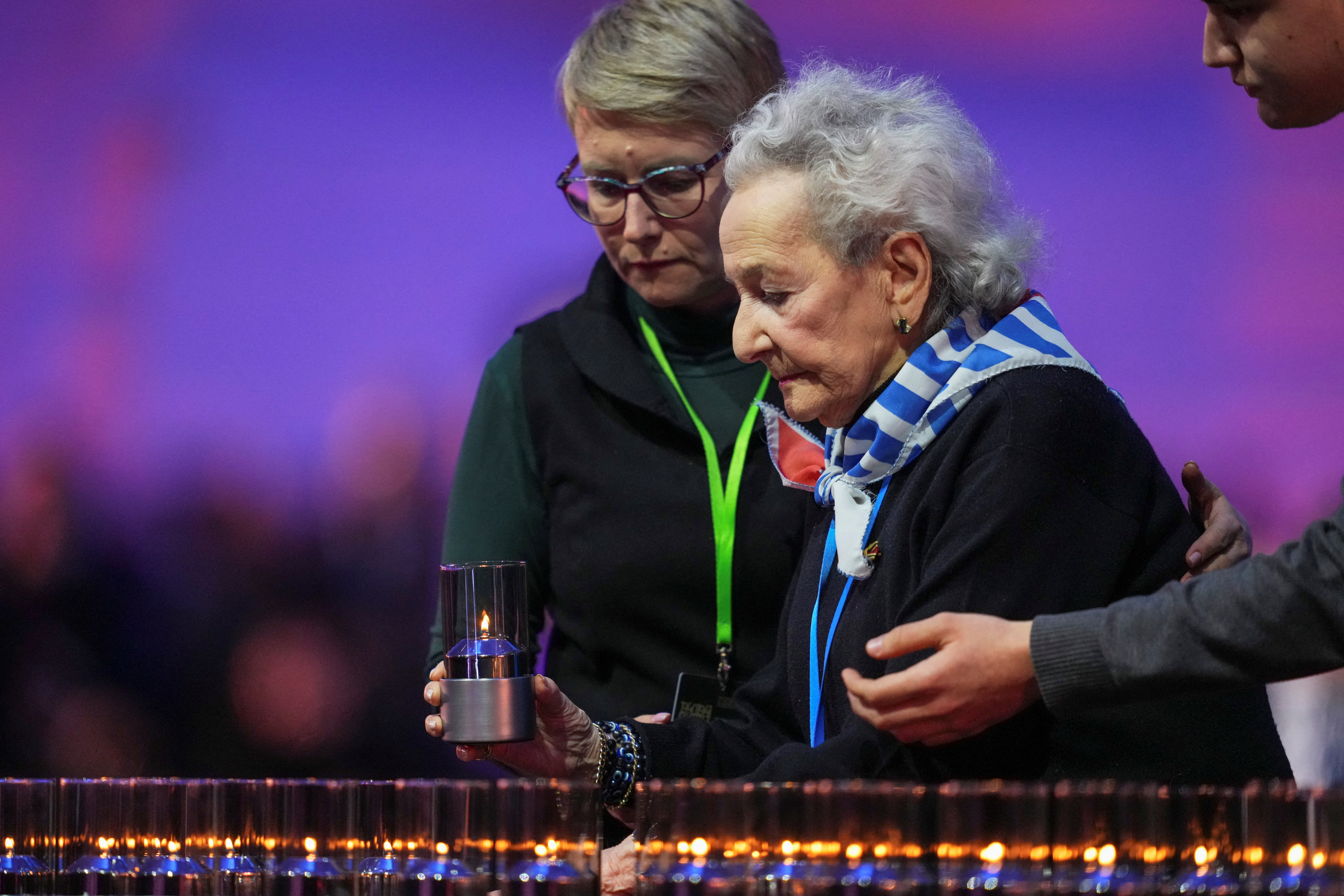
But the horrors of genocides continue to haunt us
Last week was the 80th anniversary of the liberation of Auschwitz concentration camp in 1945 when the true horror of the Nazi crimes against the Jewish people was exposed as the Soviet Red army swept across east Europe to Berlin where Adolf Hitler who was responsible for the holocaust committed suicide in his bunker in Berlin.
Except for propaganda minister Joseph Goebbels, who killed himself and his family, 22 Nazi leaders were arrested and tried between 1945-46 for crimes against peace, war crimes and crimes against humanity before an International Military Tribunal at Nuremberg. Eighteen were convicted and sentenced to hanging, two were sentenced to long terms of imprisonment and another two were acquitted.
Other Nazis who committed crimes in countries under Nazi occupation were liable to prosecution in those countries. Adolf Eichmann managed to escape to Argentina but was kidnapped by Mossad and taken to Israel to face justice. In 1962 he was tried and convicted for crimes against Jewish people, war crimes and crimes against humanity and sentenced to death by hanging.
The Genocide Treaty 1949 was ratified by states including Israel shortly after the Nuremberg trial as there was no international crime that matched the enormity of killing with intent to destroy a national, ethnic, racial or religious group. Since then, genocide was found to have been committed a number of times, the best-known being by the Khmer Rouge in Cambodia between 1975-79 and by the Hutus against the Tutsis in Rwanda in 1994.
Ironically, last week was also the week when thousands of Palestinians were shown on TV trudging back to their homes in northern Gaza in queues reminiscent of the queues in Nazi Germany – but for the blue Mediterranean en route that softened the imagery. They suffered a huge loss of life and limb and intolerable conditions of life for which Israeli Prime Minister Benjamin Netanyahu is wanted by the International Criminal Court (ICC) for alleged war crimes and crimes against humanity, which he vigorously denies.
There is also an application by South Africa pending before the International Court of Justice (ICJ) that Israel has been responsible for an alleged genocide of the Palestinian people in Gaza. Genocide has not been proved against Israel; what happened was that the ICJ ruled it was plausible enough to attract provisional measures designed to prevent genocide. More to the point, there was an order for Israel to punish incitement to genocide, which the Israeli judge of the ICJ Aharon Barak, himself a holocaust survivor, supported “to discourage damaging rhetoric”, he explained.
The holocaust was borne of hatred of Jewish people and, although both Jews and Palestinians are semitic people, antisemitism is primarily European racism against Jews. The animosity between Palestinians and Israelis is not motivated by racial hatred. It arose because the creation of the state of Israel in 1949 involved the killing and displacement of Palestinians to make way for a Jewish homeland. For Palestinians it was the Nakba or catastrophe whereas for Jews it was an historical return that coincided with the need for refuge from the holocaust and its aftermath.
Neither does the Muslim world have a tradition of antisemitism though most Muslims support the Palestinian cause. Islam regards the Jews as people of the book and Sephardic Jews in the Middle East and North African did not encounter the kind of antisemitism European Jews suffered down the centuries. The Ottomans for their part offered refuge to the Jews expelled from Spain in the 15th century, many of whom settled in Salonika (Thessaloniki) – then part of the Ottoman Empire – where they thrived until they were transported to the death camps of Auschwitz and Treblinka by the Nazis after they conquered Greece in 1941.
By contrast antisemitism had been brewing in Europe for centuries and reached its total genocidal phase during World War II. The killings began haphazardly after Hitler launched his invasion of the Soviet Union in 1941. As the German army advanced into the Baltic states, Belarus and Ukraine it was followed by specialist death squads known as einsatzgruppen that began to murder Jews by shooting and burying them in mass graves – often assisted by local antisemites – that was the culmination of the demonisation of Jewish people by the Nazis since they came to power in 1933.
The final solution to the Jewish question as Hitler conceived it became more organised in 1942. Heinrich Himmler’s deputy Reinhard Heydrich planned the implementation of the final solution at a conference of interested ministries at a country villa at Wannsee near Berlin in January 1942. The purpose of the conference was to systematise the total extermination of the Jewish people of Europe by the use of gas chambers, which had already been used for the forced euthanasia of the disabled – the destruction of “life unworthy of life” in Nazi eugenic jargon.
Apparently killing by shooting was thought of as crude and uncivilised whereas the death camps and gas chambers were a lot more “civilised” and efficient for killing at scale. Camp commandants even had classical music played that was performed by inmates – the banality of evil to the sound of music.
Europe assumed itself civilised until Nazi Germany proved otherwise; what the 20th century philosopher Hannah Arendt called the banality of evil – when immoral principles become normalised and poison the minds of ordinary people who are often cultured and not particularly wicked but who do evil deeds unthinkingly.
Another aspect of the holocaust which is as relevant today as it was between 1933-45 was that it was not easy for Jewish refugees to flee persecution. Initially, it was possible for them to flee to neighbouring European countries, but that became progressively more difficult and many perished in the death camps after the Nazis conquered most of Europe.
And neither was America as welcoming as her nation-of-immigrants reputation pretends. Well-known antisemites like Henry Ford and Charles Lindbergh set up “America first”, an Aryan supremacist body which was isolationist and campaigned to keep the US out of the war against Germany in Europe and exclude refugees escaping Nazi persecution.
As the French say, plus ca change – the more things change the more they stay the same
Alper Ali Riza is a king’s counsel in the UK and a retired part time judge
.




Click here to change your cookie preferences