
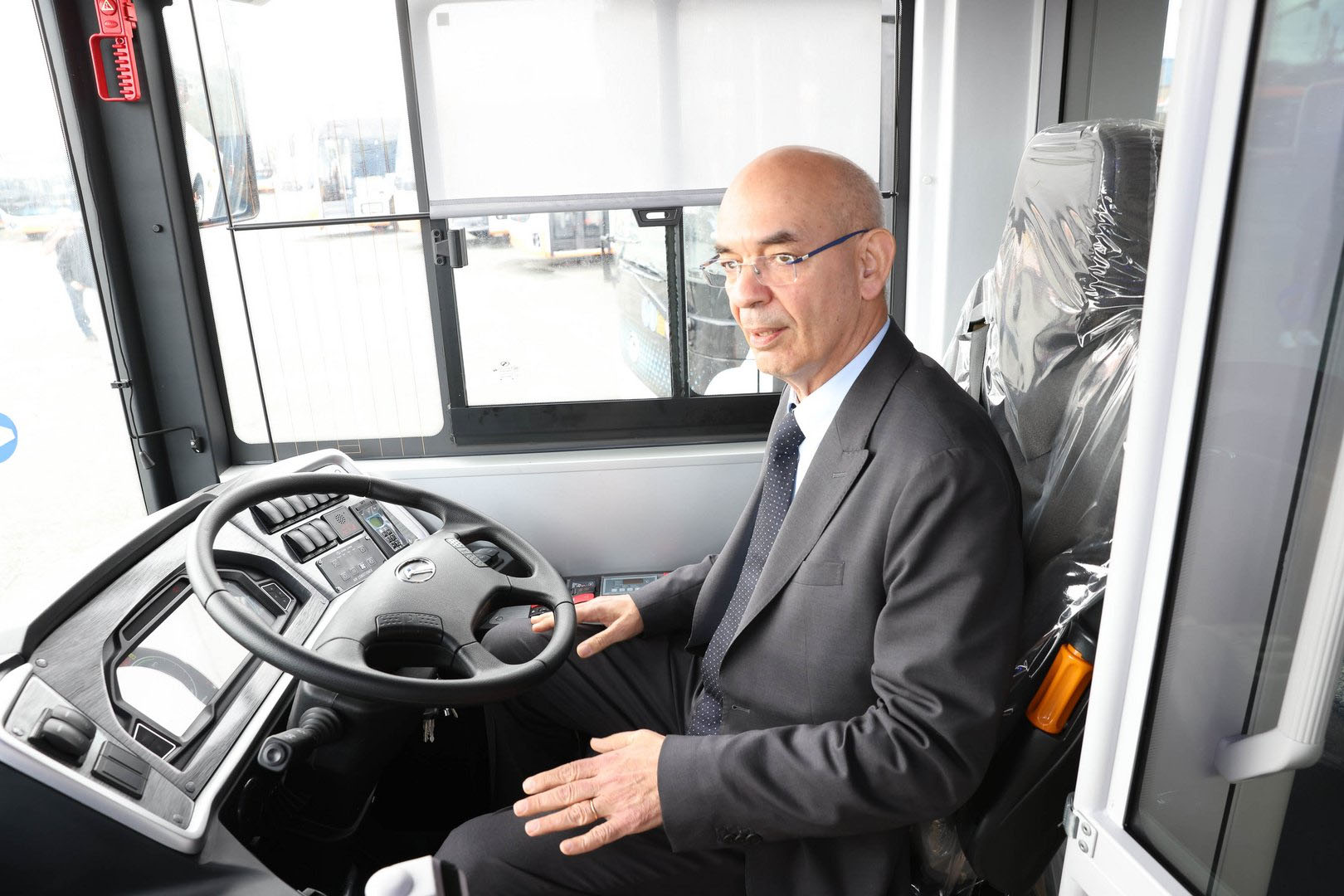
Accusations made by MPs over the planning and construction of smart bus stops are “very problematic”, Transport Minister Alexis Vafeades said on Friday.
Speaking to television channel Alpha, he said claims at Thursday’s meeting of the House transport committee that the matter was a “scandal” have been made without evidence and have left public issues “exposed”.
Akel MP Costas Costa had described the matter as a “huge scandal”, and later added that it is “a huge scandal worth tens of millions”.
However, Vafeades on Friday was keen to point out that the stops had been designed with people with disabilities in mind and said he had held a meeting with the Cyprus Confederation of Disability Organisations (Kysoa) on the matter.
He said the stops’ design and the placement of the controversial pillar on the right hand side of the bus stop as one faces the road, thus between those at the stop and traffic, was birthed with the aim of “allowing blind people to move independently”.
Additionally, he was eager to make clear that the stops were designed before he became transport minister in 2023.
“I was not involved in the design. I did not influence the design. I say let them finish, let’s see it work, and let’s listen to people with disabilities … I feel a little bad having to defend Karousos’ work. It is a shame he was not given the opportunity to defend his work himself,” he said, referring to Yiannis Karousos.
Karousos served as transport minister between 2019 and 2023, when the stops were designed, and is now Famagusta district governor, having been elected to the post last year.
Vafeades also said he welcomes the prospect of Auditor-General Andreas Papaconstantinou investigating the matter, saying, “when he gives his opinion that this was done correctly, the engineer who is currently accused of theft will be exonerated”.
“This is a great shame. Today he has been tried and convicted without any evidence. There are only questions, only suspicions,” he said.
Papaconstantinou said on Thursday that the audit office has received a complaint on the matter, which dates back to August last year, and that he had requested information on the matter from the transport ministry in January.
Public works department chief engineer Aristotelis Savva defended the stops and in particular the pillar on Thursday, saying that the stops have been correctly installed, and that similar systems in the same orientation exist in London, Edinburgh and Manchester in the United Kingdom, as well as in cities in Spain and in Poland.
“The pillar goes where the bus should stop for people to board and the shelter follows. If the bench with the shelter came first, people would get off through the back door and into the shelter,” he said, with this eventuality meaning that people would be getting off buses and walking straight into the place where people would be waiting to get on.
“With the shelter the way it is, passengers’ exits are not obstructed, and protection is provided against collisions, and thus the feeling of safety is increased,” he said.
Vafeades had defended the stops himself last month, saying that the pillar “protects waiting passengers from possibly being hit by a car”, but did not rule out a redesign should it be demanded, saying the concept is being constantly developed.
“The stops will evolve; they will not stay as they are for ever. We want to develop them into a multi-use tool. In the future, we want to add free WiFi, there will be information about what is happening in the area, free drinking water. We want to evolve them into a hub, a space which will provide services to people,” he said.




Click here to change your cookie preferences