
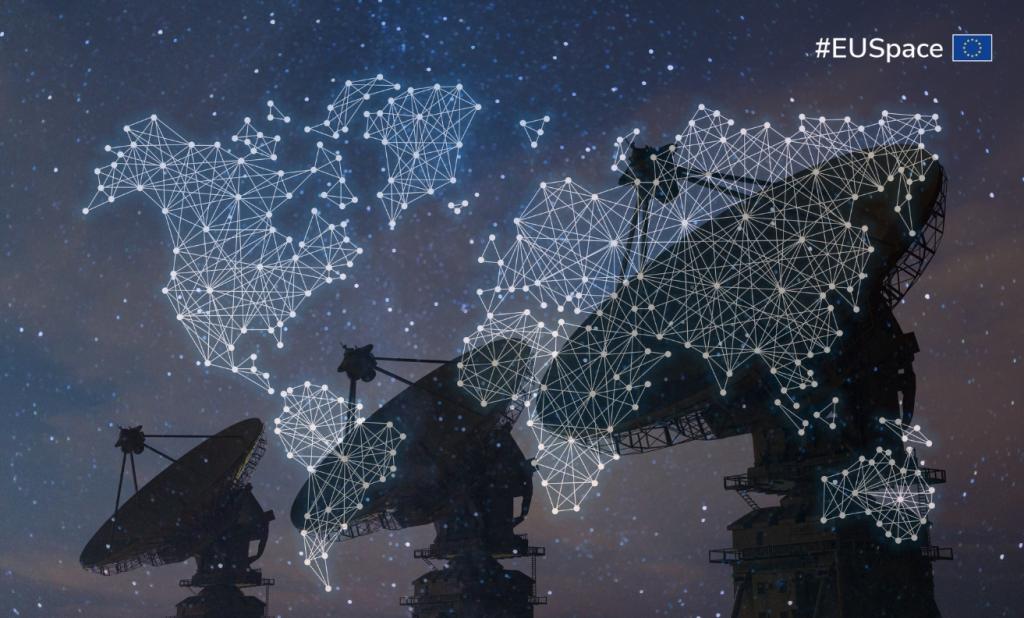
From fire-fighting to ship rescues to security: the importance of satellites
Until this week, if I heard the word “space”, I would probably have followed it up with something cliché like “the final frontier” or “beam me up, Scotty”.
Like many people, my associations are more of distant galaxies, astronauts, science fiction. In short, like you, I think about the future and matters that are mostly outside of our world.
Then I spent two days at EU Space Days 2026 in Nicosia and all those associations suddenly became a little earthlier.
It started with a search and rescue demonstration at the Joint Rescue Coordination Centre (JRCC) in Larnaca. The JRCC hosts Cyprus’ Mission Control Centre, one of 33 operational centres worldwide in the international Cospas-Sarsat satellite system, which detects and locates emergency distress beacons from aircraft, ships and people in danger and relays alerts to rescue authorities.
Standing there watching the exercise unfold, it struck me that we were talking about space, yet our feet were firmly on the ground. What appeared to be a rescue operation off the Cypriot coast depended on an invisible network of satellites orbiting thousands of kilometres overhead.
Over the next two days, that realisation kept resurfacing; as I listened to policymakers, EU officials and entrepreneurs discuss everything from wildfire response and telecommunications resilience to defence and security, a different picture began to emerge.
Space, it turns out, is no longer just the domain of science fiction or even the ambitions that inspired Reagan’s so called “Star Wars” strategic defence programme all those years ago. It is increasingly about something far less glamorous, it is quite simply infrastructure. Without it, emergency responders could find it harder to coordinate during disasters and countless services, like the navigation apps on our phones, that we take for granted every day would be disrupted. In short, it is one of the most important sectors in our everyday modern life and one of the least visible. That is true globally, but what does it mean for Cyprus?
Speaking to the Cyprus Mail on the sidelines of EU Space Days, officials from both the public and private space sectors argued that Cyprus has far more at stake in Europe’s space ambitions than most people realise.
Georgios Synnefakis, GovSatCom programme manager at the European Union Agency for the Space Programme (EUSPA), put it bluntly. “The EU space programme is not something abstract,” he said. “It affects everyday life, economic activity, security and crisis response.”
The EU’s space programme spans satellite navigation through Galileo, Earth observation through Copernicus, and secure government communications through GovSatCom.
Synnefakis described these as the three basic capabilities that underpin any crisis response, that is, knowing where you are, understanding what is happening around you, and being able to communicate.
As he explains to me, in a major wildfire, for example, terrestrial telecommunications infrastructure may be damaged or overloaded, leaving emergency responders struggling to coordinate. The problem becomes more complicated when international firefighting teams arrive from other EU countries with incompatible communications systems. “Reaction, coordination, cooperation and communication,” Synnefakis said. “That is what matters.” GovSatCom is designed to solve that problem.
The programme pools satellite communications capacity from participating EU states and approved operators, allowing governments to rapidly access secure communications during emergencies instead of spending weeks or months procuring services.
More specifically what that means for Cyprus is that firefighters or emergency authorities could maintain communications even if terrestrial infrastructure collapses. Satellite links could also connect drones transmitting live imagery of a wildfire back to command centres, allowing teams to respond based on real-time information instead of fragmented updates.
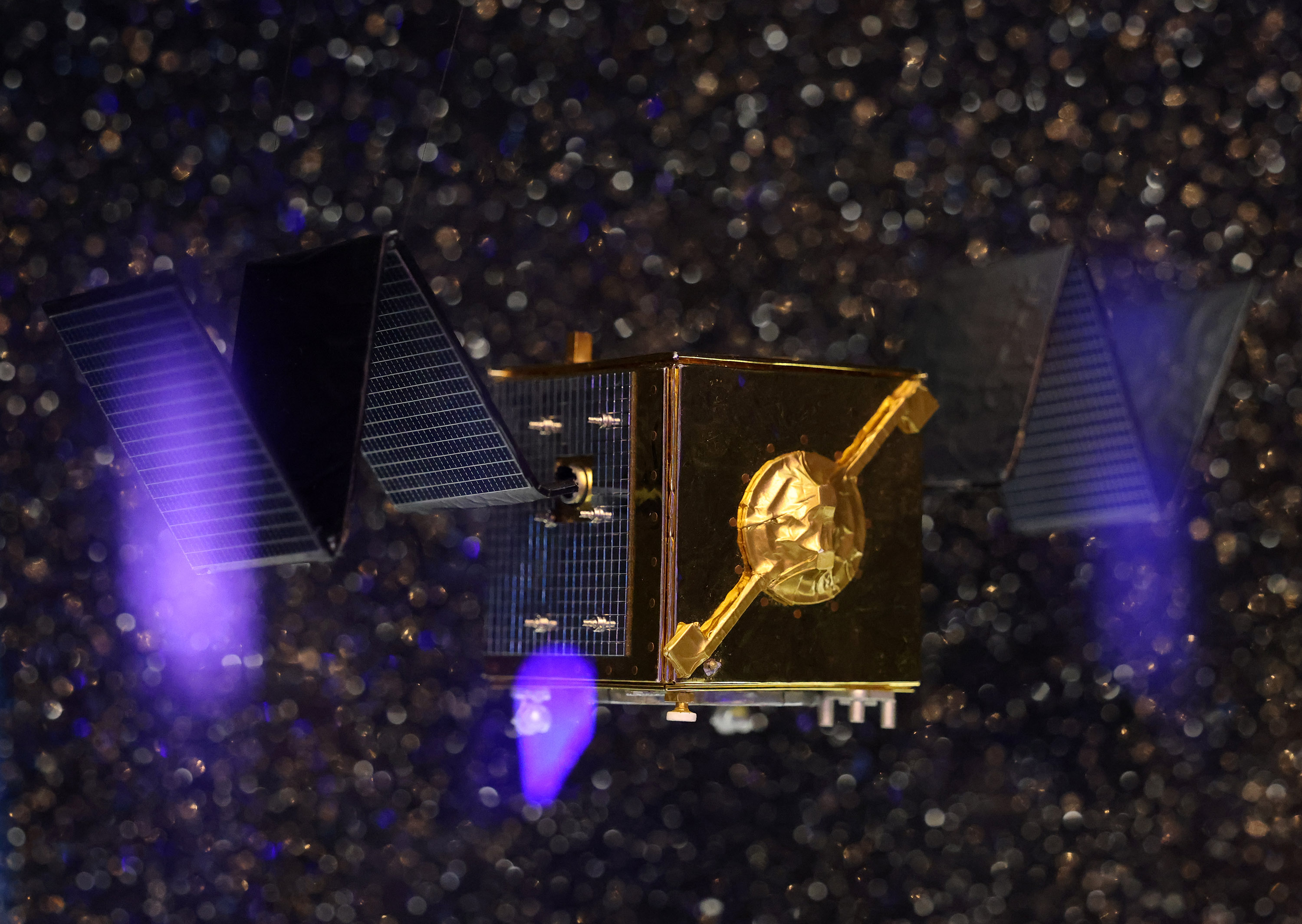
For a country that increasingly faces severe wildfire seasons, the relevance is quite clearly immediate but the opportunities and vulnerabilities go far beyond disaster response.
To fill in the gaps I spoke with Christodoulos Protopapas, chief executive of Hellas Sat, who told me that Cyprus’ geography makes space infrastructure strategically important in ways that we the public rarely consider.
“If submarine cables were disrupted, Cyprus could effectively be cut off from the outside world,” he said.
Cyprus relies heavily on subsea cable infrastructure for international connectivity, satellite communications provide redundancy – an alternative route when terrestrial systems fail, whether due to natural disasters, technical failures or geopolitical crises.
Protopapas said this is precisely why Europe’s push for strategic autonomy in space matters, from an operator’s perspective, he argued, sovereignty means not only having independent launch capability, but also maintaining control over communications infrastructure and the data flowing through it.
“If Europe depends entirely on non-European systems, then there are obvious questions about control, reliability and access in times of crisis,” he said.
Hellas Sat, founded in 2001 as the satellite operator of Greece and Cyprus, is already embedded in that ecosystem.
The company operates a major teleport facility in Cyprus, provides communications services across Europe and the Middle East, and participates in the EU’s GovSatCom programme, “closely cooperating with the Cypriot government, providing connectivity services to ministries and the Ministry of Defence” Protopapas tells me, but sees the next phase extending beyond connectivity.
Satellite imagery and Earth observation tools, he said, could support wildfire prediction, agricultural monitoring, land-use planning and environmental risk management.
Using satellite data, authorities can assess fire vulnerability in forests, monitor irrigation efficiency, track land development and improve emergency preparedness.
“These are practical tools, not futuristic ideas,” he said.
The company is also expanding its digital infrastructure footprint, including plans for a Tier IV data centre in Cyprus, positioning the island as a secure regional hub for disaster recovery and high-reliability digital services.
In the end the real “Star Wars” of the 21st century may not be about weapons in orbit at all, it may be in fact about who controls the satellites that keep societies running. And in that story, Cyprus is no longer just watching from the sidelines.





Click here to change your cookie preferences