
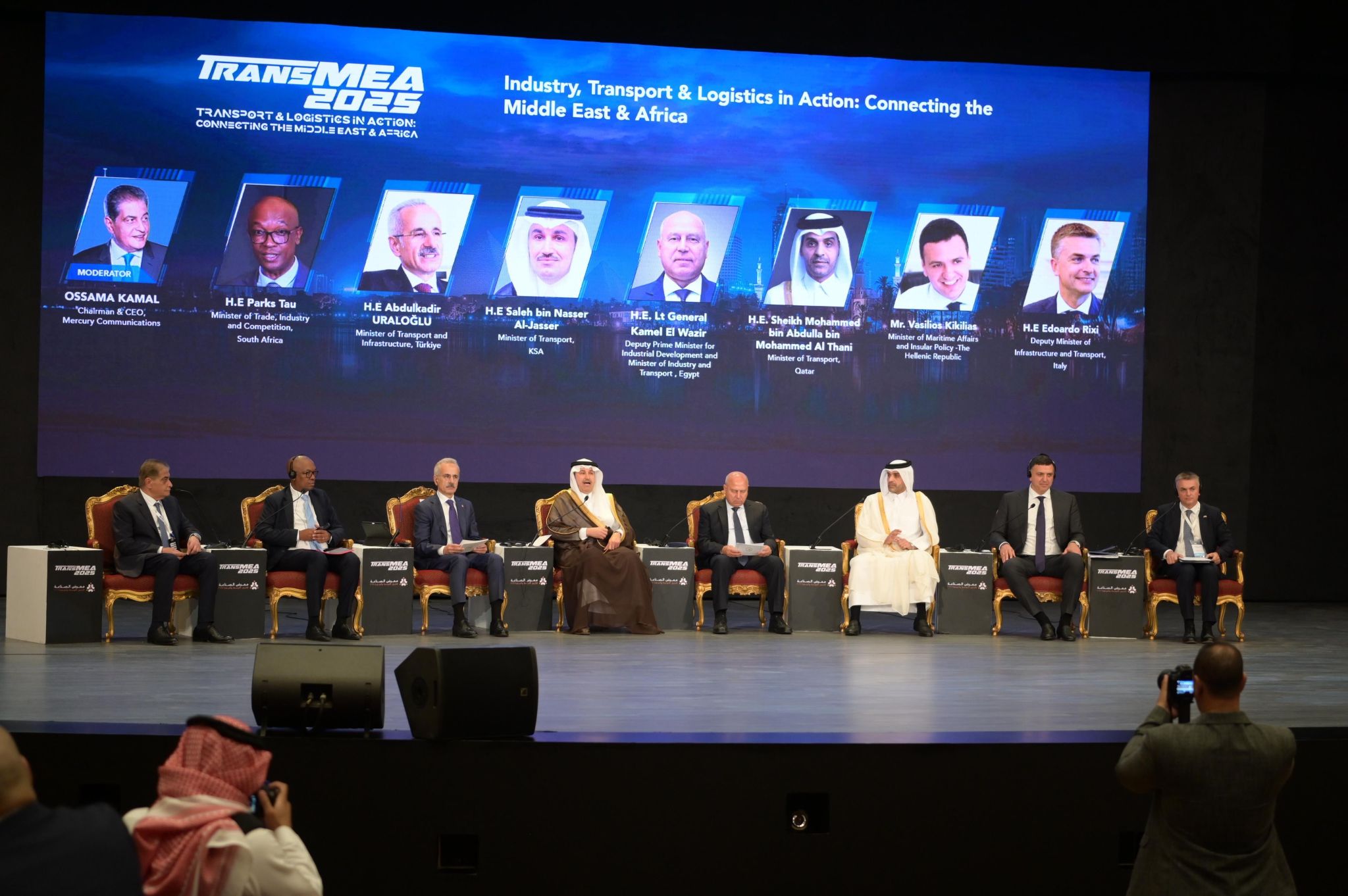
Greece’s Minister of Shipping and Insular Policy Vasilis Kikilias visited Cairo this week for the TransMEA 2025 international transport conference.
The event brought together ministers, regulators and senior industry figures from across the Middle East, Africa, Europe and Asia.
According to the ministry’s announcement, Kikilias took part in a ministerial panel and held a series of bilateral meetings on shipping, ports, energy and broader regional transport cooperation.
As part of his programme, the Minister met with Egypt’s Deputy Prime Minister and Minister of Industry and Transport, Kamel Al Wazir, on the sidelines of the conference.
The meeting, held in the presence of Greece’s ambassador to Egypt, Nikolaos Papageorgiou, took place in a particularly positive atmosphere, with Kikilias congratulating Al Wazir for the work carried out in Egypt’s infrastructure and transport sectors, as well as for the organisation of this year’s event.
During their discussion, both ministers underlined the historic maritime links between Greece and Egypt, shaped over centuries through Eastern Mediterranean sea routes.
These ties, they noted, remain strong and are gaining new momentum. In this context, particular reference was made to the long-standing presence of Greek shipping and entrepreneurship in Egypt, which continues to demonstrate the depth of relations between the two countries.
As emphasised during the meeting, the Greek-owned merchant fleet has historically been one of the most reliable means of transporting energy internationally, something that strengthens prospects for closer cooperation in the energy sector, especially following the recent agreements announced between Greece and the United States.
The strategic importance of the Suez Canal was also highlighted, with Greek companies already investing in pollution-control and environmental technologies in the area.
At the same time, the procedures for the planned electrical interconnection between Egypt and Greece continue to progress, adding another tangible layer to the bilateral relationship.
In this context, the two sides examined ways to expand cooperation in shipping, ports and international maritime organisations, with particular attention given to collaboration within the International Maritime Organisation (IMO).
Kikilias expanded on these themes during his public remarks at TransMEA. “Connection, cooperation and the promotion of investment and development agreements in shipping and port infrastructure will help the stability of the region, provide security and bring prosperity to our countries,” he stressed.
As he pointed out, “the strengthening of cooperation between Greece and Egypt in these areas is not only a matter of diplomacy, but a real need for the development of the Mediterranean.”
He added that “Greece has the strongest fleet in the world, has a long-standing relationship with Egypt and therefore, the two countries are jointly proceeding dynamically in investments and in the upgrading of ports, infrastructure and facilities.”
Continuing, he highlighted the significance of investment agreements in maritime transport, ports, infrastructure and energy.
Referring to the planned electricity interconnection, he said, “In the coming years, a major investment will be made between Egypt and Greece, the electricity cable from Egypt to Greece and then electricity will be provided to the rest of the European Union.”
In his concluding remarks, he emphasised the wider importance of cooperation. Kikilias in his statement said that “I hope that we can all work together, through trade, investment and energy agreements, which will help the two peoples to progress and improve their standard of living. Cooperation and interconnection can offer stability, security and development to both countries.”
This year’s TransMEA featured an extensive line-up of regional and international speakers. Alongside Al Wazir and the Egyptian leadership, the programme included contributions from the transport ministers of Saudi Arabia, the United Arab Emirates, Qatar, Bahrain and Jordan, while senior officials from Kenya, South Africa and India also participated.
Their presence reflected the event’s cross-continental reach and its role as a platform for policy alignment and infrastructure cooperation across the wider region.
In parallel, the conference brought together global executives involved in port operations, logistics, railway and metro development, aviation services, engineering, shipbuilding and mobility technology.
Many of the technical sessions focused on port digitisation, rail modernisation, supply-chain resilience, energy transition and large-scale infrastructure investment.
The strong corporate presence underlined TransMEA’s position as one of the region’s key venues for investment announcements and new partnerships in transport and maritime development.
TransMEA, held annually at the Egypt International Exhibition Center in Cairo, has evolved into a central meeting point for governments and industry.
This year’s edition was shaped by discussions on decarbonisation, digital connectivity and regional transport corridors linking the Mediterranean with the Gulf, Africa and Asia. Policy dialogue combined with extensive business meetings, allowing participating states to advance agreements and deepen cooperation.
Kikilias’ presence in Cairo places Greece at the centre of these regional discussions at a time when maritime transport, energy routes and port infrastructure are becoming increasingly interconnected.
His meetings, which conclude today as the conference wraps up, emphasise Athens’ intention to strengthen cooperation with Egypt and further consolidate its role in the Eastern Mediterranean.





Click here to change your cookie preferences