
U.S. President Donald Trump will preside over the first meeting of his Board of Peace on Thursday with unresolved questions on the future of Gaza hanging over an event expected to include representatives from more than 45 nations.
The disarmament of Hamas militants, the size of the reconstruction fund and the flow of humanitarian aid to the war-battered populace of Gaza are among the major questions likely to test the effectiveness of the board in the weeks and months ahead.
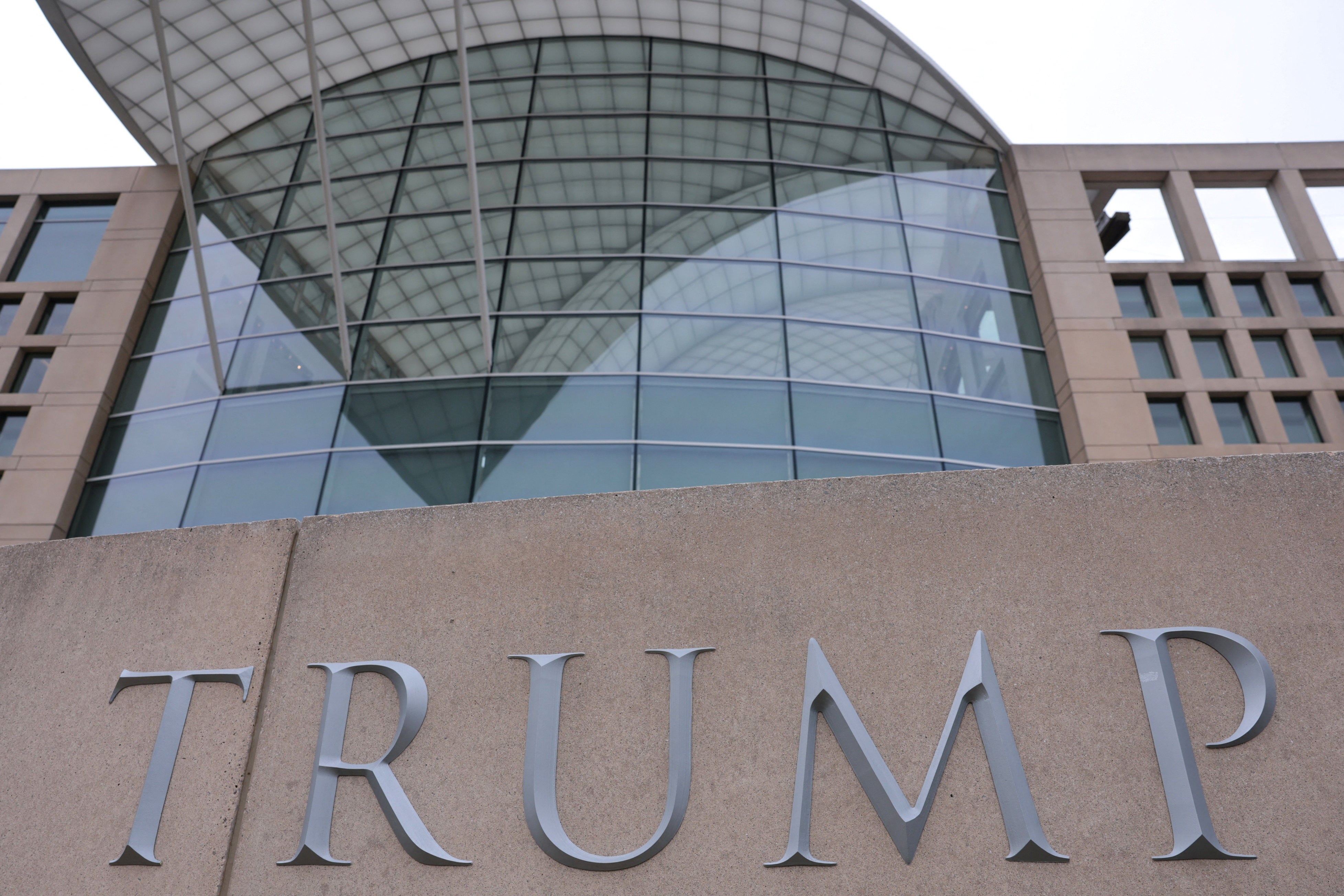
Trump is to address the group at the Donald J. Trump U.S. Institute of Peace – a building in Washington the president recently renamed for himself – and announce that participating nations have raised $5 billion for the reconstruction fund.
The money is expected to be a down payment on a fund that will likely need many more billions. Included in the $5 billion is expected to be $1.2 billion each from two of Washington’s Gulf Arab allies, the United Arab Emirates and Kuwait, a U.S. official told Reuters.
Trump’s Board of Peace has been controversial. It includes Israel but not Palestinian representatives and Trump’s suggestion that the Board could eventually address challenges beyond Gaza has stirred anxiety that it could undermine the U.N.’s role as the main platform for global diplomacy and conflict resolution.
Senior U.S. officials said Trump will also announce that several nations are planning to send thousands of troops to participate in an International Stabilization Force that will help keep the peace in Gaza.
Disarming Hamas militants in order for the peacekeepers to begin their mission remains a major sticking point, and the force is not expected to deploy for weeks or months.
What is Trump’s ‘Board of Peace’ and how have nations responded to it?
WHAT IS THE ‘BOARD OF PEACE’?
Trump first proposed the board last September when he announced his plan to end Israel’s war in Gaza. He later made clear the board’s remit would be expanded beyond Gaza to tackle other conflicts worldwide, with Trump as its chair. Such efforts have traditionally been a role for the United Nations.
Member states would be limited to three-year terms unless they pay $1 billion each to fund the board’s activities and earn permanent membership, its charter said.
The White House in January named U.S. Secretary of State Marco Rubio, Trump’s special envoy Steve Witkoff, former British Prime Minister Tony Blair and Trump’s son-in-law Jared Kushner as members of the initiative’s founding Executive Board.
WHICH COUNTRIES HAVE JOINED THE BOARD SO FAR?
The board’s official X account has listed over two dozen countries as founding members of the initiative, including Washington’s main Middle Eastern allies.
They include Israel and Saudi Arabia, along with Egypt and Qatar, which helped mediate talks for the Israel-Hamas ceasefire. Others in the region include Bahrain, Jordan, Kuwait, Morocco, Turkey and the United Arab Emirates.
From elsewhere in the world, there is Albania, Argentina, Armenia, Azerbaijan, Belarus, Bulgaria, Cambodia, El Salvador, Hungary, Indonesia, Kazakhstan, Kosovo, Mongolia, Pakistan, Paraguay, Uzbekistan and Vietnam.
WHICH COUNTRIES HAVE NOT JOINED THE BOARD?
Washington’s key Western allies as well as major powers of the Global South such as Brazil, India, Mexico and South Africa have not accepted an offer to join.
Leaders of Britain, the European Union, France, Germany, Norway and Sweden have said they will not join the board.
Trump rescinded an invitation for Canada last month after he took issue with Prime Minister Mark Carney’s speech in Davos.
Brazil and Mexico have said they will not join the initiative, citing Palestinian absence from the board. The Vatican has not joined, saying efforts to handle crisis situations should be managed by the United Nations.
China and Russia, both veto-wielding members of the United Nations Security Council, have not joined.
WHAT POWER WILL THE BOARD HAVE?
The U.N. Security Council passed a U.S.-drafted resolution recognizing the board in November, welcoming it as a transitional and temporary administration “that will set the framework, and coordinate funding for the redevelopment of Gaza” under Trump’s plan until the Palestinian Authority has satisfactorily reformed.
The resolution authorized the board to deploy a temporary International Stabilization Force in Gaza, while limiting its scope to only Gaza and only through 2027. The board is required to report on its progress to the 15-member Security Council every six months.
China and Russia abstained, saying the resolution did not give the U.N. a clear role in Gaza’s future.
Beyond Gaza, it remains unclear what legal authority or enforcement tools, if any, the board will have or how it will work with the U.N. and other international organizations.
Under the board’s charter, it will undertake “peace-building functions in accordance with international law.” Its chairman, Trump, will have extensive executive power, including the ability to veto decisions and remove members, subject to some constraints.
WHAT HAVE CRITICS SAID?
Rights experts said that Trump overseeing a board to supervise a foreign territory’s affairs resembles a colonial structure, and have criticized the board for not including a Palestinian representative even though it is meant to supervise the temporary governance of a Palestinian territory.
Critics also pointed out Blair’s inclusion, given his role in the Iraq war and the history of British imperialism in the Middle East.
The board has drawn scrutiny for including countries whose human rights track records have been widely condemned by rights groups, such as some Middle Eastern powers as well as Belarus and El Salvador.
There has been particular criticism over the inclusion of Israel on a board meant to oversee Gaza’s temporary governance, given the Palestinian territory has been left devastated by an Israeli military assault that killed tens of thousands, caused a hunger crisis, internally displaced Gaza’s entire population and led to accusations of war crimes and genocide.
Israel has called its actions self-defense after Hamas-led militants killed 1,200 people and took more than 250 hostages in a 2023 attack.
WHO WILL ATTEND THE MEETING?
Almost all nations who have joined the board will be at Thursday’s meeting.
More than 20 other nations will attend as observers, a senior U.S. official said. These include close Asian allies Japan and South Korea, along with India and Thailand from elsewhere in the region.
Other observers include Britain and the EU, along with individual member states Austria, Croatia, Cyprus, Czech Republic, Finland, Germany, Greece, Italy, the Netherlands, Poland, Romania and Slovakia.
Norway and Switzerland will also participate in that capacity, as will Mexico and Oman.
Topics to be discussed include Gaza’s reconstruction, humanitarian assistance efforts and deployment of a stabilization force.
The Palestinian group Hamas, fearful of Israeli reprisals, has been reluctant to hand over weaponry as part of Trump’s 20-point Gaza plan that brought about a fragile ceasefire last October in the two-year Gaza war.
“We are under no illusions on the challenges regarding demilitarization, but we have been encouraged by what the mediators have reported back,” a senior administration official said.
MOST SECURITY COUNCIL MEMBERS NOT ATTENDING
Delegations from 47 countries plus the European Union are expected to attend the event, U.S. officials said. The list includes Israel and a wide array of countries from Albania to Vietnam.
It does not, however, include permanent United Nations Security Council members like France, Britain, Russia and China.
Speakers at the event are expected to include Trump, Secretary of State Marco Rubio, U.S. envoys Steve Witkoff and Jared Kushner, former British Prime Minister Tony Blair, who is expected to have a senior role in the board, U.S. ambassador to the U.N. Mike Waltz, and High Representative for Gaza Nickolay Mladenov, among other attendees.
A member of the peace board, who declined to be named, said the Gaza plan faces formidable obstacles. Establishing security in the enclave is a precondition for progress in other areas, but the police force is neither ready nor fully trained, said the official.
The official added that a key unresolved question is who would negotiate with Hamas. The peace board’s representatives could do so with countries that have influence over Hamas – notably Qatar and Turkey – but Israel is deeply skeptical of both.
Another major issue is the flow of aid, which the official described as “disastrous” and in urgent need of scaling up. Even if aid surges in, it remains unclear who will distribute it, the official said.





Click here to change your cookie preferences