
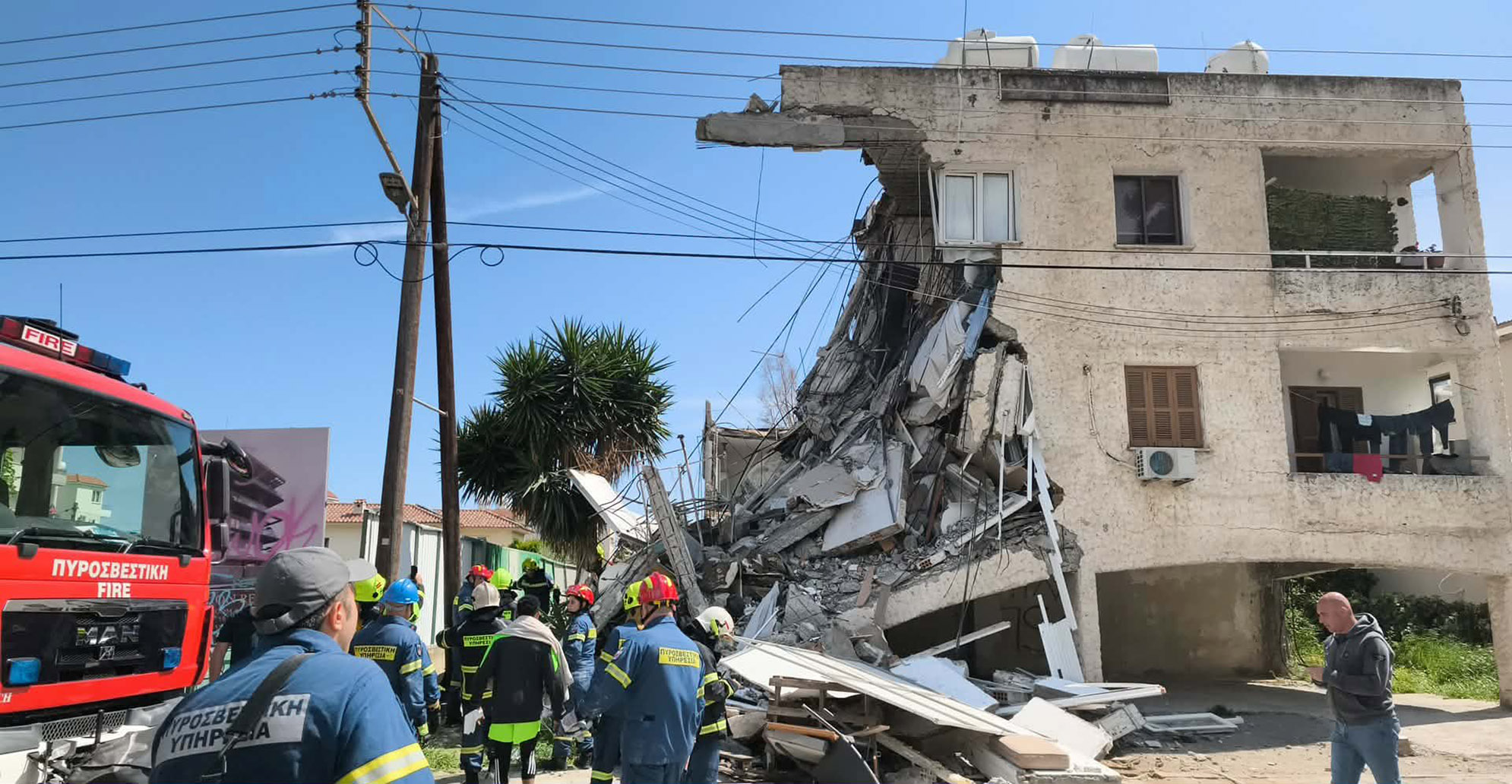
Limassol building collapse exposes tragic flaws in property management law
The collapse of a building in Limassol, which claimed the lives of two people, has exposed “in the most tragic way” the serious and long-standing weaknesses in Cyprus’ framework for managing co-owned buildings, according to Mersina Isidorou, general manager of the Cyprus Property Developers Association.
The incident, she said, confirmed that the existing institutional framework “does not meet modern needs” and does not sufficiently ensure risk prevention.
As discussions continue on the next steps, Isidorou said it is now clear that the absence of “substantial and timely interventions” has created an accumulated problem which “can no longer be ignored” and requires immediate and decisive action.
The issue, according to Isidorou, “is not new”.
On the contrary, she said, it is “a long-standing challenge” which has become more intense over time, turning the management of co-owned buildings into a matter of public safety.
Recent events, she added, together with the public debate that followed, have confirmed both “the extent and the criticality of the situation”, making the need for immediate, substantial and effective solutions more urgent.
At the centre of the problem, Isidorou said, lies the absence of “a modern, functional and applicable framework” for communal buildings.
This, she explained, creates serious gaps in their management, particularly in relation to the operation of many management committees, which often do not have the necessary tools or responsibilities to meet their obligations.
In practice, she said, this means an inability to take timely decisions on basic maintenance work, delays in carrying out necessary interventions, and serious difficulties in collecting common expenses from non-compliant owners.
The result, according to Isidorou, is “the gradual deterioration of buildings, the accumulation of problems” and, ultimately, the creation of conditions that can develop into serious risks for tenants and citizens.
For the association, she said, dealing with the problem requires “a set of targeted and substantial reforms”.
This is why, Isidorou added, the association has repeatedly stressed the need for the immediate promotion and passage of the Management of Co-Owned Buildings and Related Matters Law of 2023, “without further delays”.
A key part of that effort, she said, is the establishment of a supervisory authority, which would ensure transparency, compliance and effective control over the operation of co-owned buildings.
At the same time, Isidorou said, standard operating regulations are needed, so that there is “a clear and unified management framework”.
Strengthening the responsibilities of management committees is also crucial, she added, as they must be able to proceed without obstacles with necessary maintenance work and ensure the smooth operation of buildings.
Equally important, according to Isidorou, is the creation of mandatory reserve funds, which would cover extraordinary and unforeseen expenses and prevent delays in critical interventions.
She also said that the introduction of mandatory and regular building suitability inspections is “a basic safety requirement”.
For Isidorou, Cyprus must now move “from identifying the problem to making decisions”.
“Delay is no longer an option,” she said, adding that political will, coordinated action and a clear timetable are needed for the implementation of the necessary reforms.
The association, she said, has consistently and systematically raised the issue of co-owned buildings over time, submitting “specific and applicable suggestions” and actively taking part in the public dialogue with all competent bodies.
Today, Isidorou added, the association remains committed to supporting every initiative aimed at shaping “a modern, effective and applicable institutional framework”.
Such a framework, she said, must ensure the protection of human life, strengthen the safety of citizens and contribute substantially to the sustainable management and upgrading of the country’s building stock.





Click here to change your cookie preferences