
Turkey says it ‘will not hesitate’ to act over Cyprus as regional conflict continues
By Tom Cleaver
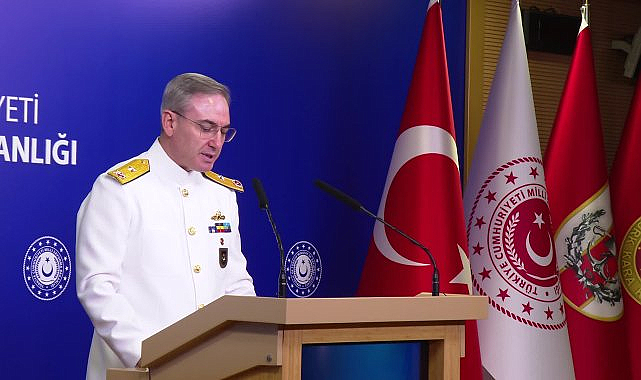
Turkey “will not hesitate” to act against “hostile attitudes” shown towards the Turkish Cypriots as the conflict in the region widens, the country’s defence ministry’s spokesman rear admiral Zeki Akturk said on Thursday.
“Turkey, as it was yesterday, is today by the side of and a supporter of the TRNC. Turkey will not hesitate to use the powers granted to us by our guarantor status against hostile attitudes which threaten the security of the Turkish Cypriots,” he told a press conference.
Those comments seem to be an apparent warning to Iran, which fired a drone at Cyprus’ British Akrotiri air force base on Monday, with Turkey’s position on Cyprus, at least with regard to the two defence ministries’ response to the regional conflict, seeming now to be heading towards alignment with that of Greece.
To this end, Akturk had earlier in the same press conference announced that a delegation from the Greek air force will visit Turkey next Monday “within the framework of bilateral relations and regional developments” – the same Greek air force which stationed four F-16 fighter jets in Paphos on Monday
Akturk described the Greek delegation’s planned visit of as a “confidence-building measure”.
In addition to the fighter jets, to the island two frigates, including the Kimon, described by Greek Prime Minister Kyriakos Mitsotakis on Wednesday as the “pride of the Greek fleet”, in response to the firing of an Iranian-made drone at the island on Monday.
The country’s Defence Minister Nikos Dendias was asked about Turkey’s presence in the region and in Cyprus after the frigates and the fighter jets were deployed, and said that “Turkey understands the need that Greece has to defend its territory”.
“The presence of Greek planes and ships is to protect the entire population of Cyprus. We offer a comprehensive service,” he said.
He added that he had “no contact” with his Turkish counterpart Yasar Guler prior to the deployment of the frigates and the fighter jets earlier in the week, and that he is unaware of whether Greek Foreign Minister Giorgos Gerapetritis and his Turkish counterpart Hakan Fidan discussed the matter.
Later on Thursday, it became apparent that Gerapetritis and Fidan had likely not spoken about the matter in advance, with Turkish foreign ministry spokesman Oncu Keceli pouring scorn over Dendias’ comments, pushing back on the Greek minister’s assertion that he aims to “protect the entire population of Cyprus”.
“We wish it to be known that Turkish Cypriots and the TRNC are capable of ensuring their own security, with the support of their motherland and guarantor Turkey, and are in need of no one else,” he said.
On Wednesday, Turkey’s defence ministry had indicated that it may be bolstering its own military presence in Cyprus, posting a photograph of Turkish soldiers arriving at the north’s Ercan (Tymbou) airport to social media.
At the same time, while Cyprus was targeted by a drone on Monday, Turkey was on Tuesday the target of a ballistic missile which was fired from Iran.
The missile was shot down by Nato forces in the region and fell to the ground in Turkey’s Hatay province, which is located northeast of Cyprus’ Karpas peninsula.
It had been reported in some quarters that the missile had been aimed at Cyprus, but Intelligence and diplomatic sources in both Turkey and Cyprus confirmed to the Cyprus Mail that the missile was aimed at the Incirlik airbase.
The airbase is jointly operated by the Turkish air force and that of the United States, and is located in Turkey’s southeastern Adana province.
Fears have as such arisen that the firing of a missile at Turkey could see Nato’s second-largest standing army become a party to an already widening conflict





Click here to change your cookie preferences