
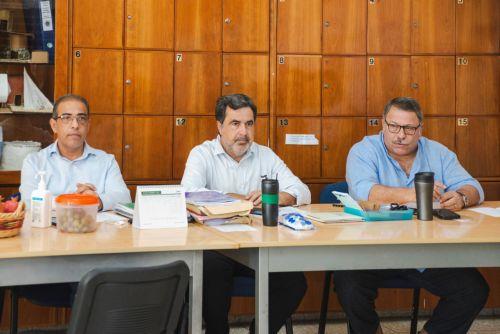
What a relief that reason prevailed at the House education committee on Wednesday and the discriminatory bill that would have made passing a Greek language exam a requirement for attending a public primary school, was withdrawn. This was the idea of Diko deputy Pavlos Mylonas who also happens to be the president of the House education committee – not because of any great expertise in educational matters.
If this proposal was forwarded to the plenum and approved, every six-year-old with a “migration biography” would be obliged to sit an exam to establish the level of their Greek; if they failed, they would not be able to attend a public primary school. After criticism of the proposal by the representative of the Paedagogical Institute, a teaching union boss and the commissioner for the rights of children, Mylonas withdrew his proposal.
During the exchanges, the Diko deputy claimed that his proposal was not intended to exclude children from school, but that they would have the necessary language skills to be able to follow lessons. The problem is that the exam would exclude children with a “migration biography” (even this description sounds discriminatory) and do the exact opposite of helping their integration into the education system.
If Mylonas had asked a couple of educationalists before drafting his proposal, he would have been told learning a language is easier in a school environment, through socialisation and daily contact of children of “migration biography” with local children. This was pointed out by the commissioner for children’s rights at the meeting and was shared, to an extent, by the Poed union boss, who said there were support programmes for children with a “migratory biography.” There were programmes at schools offering from five to 10 periods of Greek lessons per week.
To be fair, Mylonas was probably concerned about the difficulties created in classrooms when students do not have a command of the language. Not only are they unable to participate in class, but they could also distract other children. This is why it is vital to have support programmes for learning Greek in primary schools. Once children with “migration biography” learn Greek at primary school they will have no difficulty going through the public school system. This must be the objective of the authorities.
Guests at the committee meeting conceded that there was no rounded policy for dealing with the matter. One educationalist said that while support programmes and educational actions had been developed, dealing with the problem was slapdash. The union boss spoke about distortions in the implementation of policies. In a way, Mylonas’ proposal brought attention to a serious problem that needs to be dealt with. It is clear now, that what is needed is a Greek language course in the first and second years of primary schools which have many children with “migration biography,” to ensure they have a good command of the language early in their education.





Click here to change your cookie preferences