
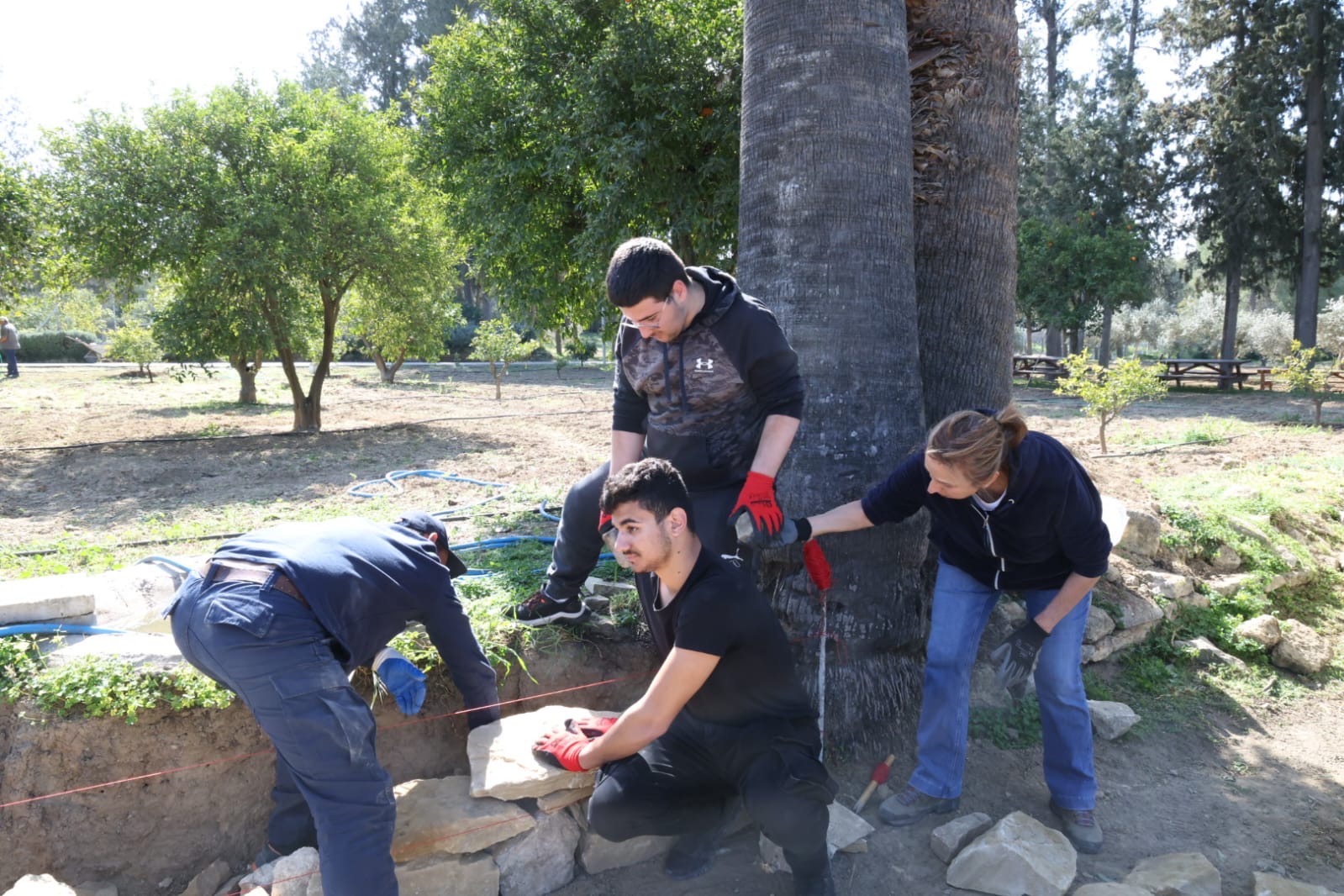
Students from the technical school of Nicosia took part in a practical dry stone building workshop in the gardens of the presidential palace on Thursday, an initiative aimed at strengthening technical education and preserving traditional construction knowledge.
The one-day workshop was organised by the environment commissioner, Antonia Theodosiou, and involved first-year students from the architectural and civil engineering department and second-year students from the structural design specialty.
Technical school teachers as well as instructors from the post-graduate vocational institute (Mieek) also participated.
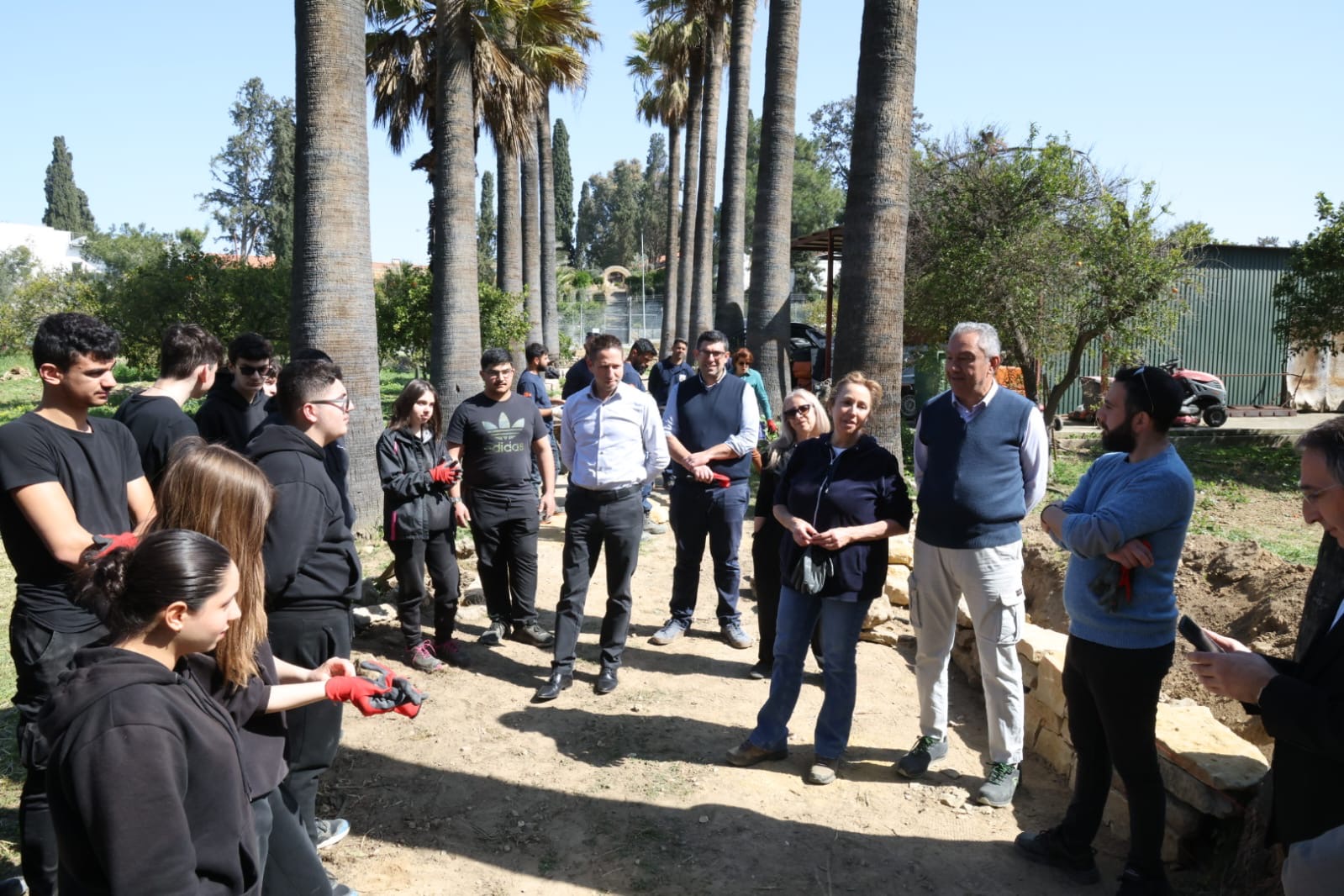
Theodosiou introduced the students to the cultural and environmental value of dry-stone construction before the practical work began.
“Dry stone building forms part of the traditional architecture and cultural heritage of Cyprus,” Theodosiou said.
“At the same time, it contributes to the sustainable management of the landscape and the protection of the environment.”
Dry stone walls and domed structures are built entirely from stone without mortar.
The technique, widely used historically, helps stabilise soil, control rainwater and create small habitats for plants, insects and animals.
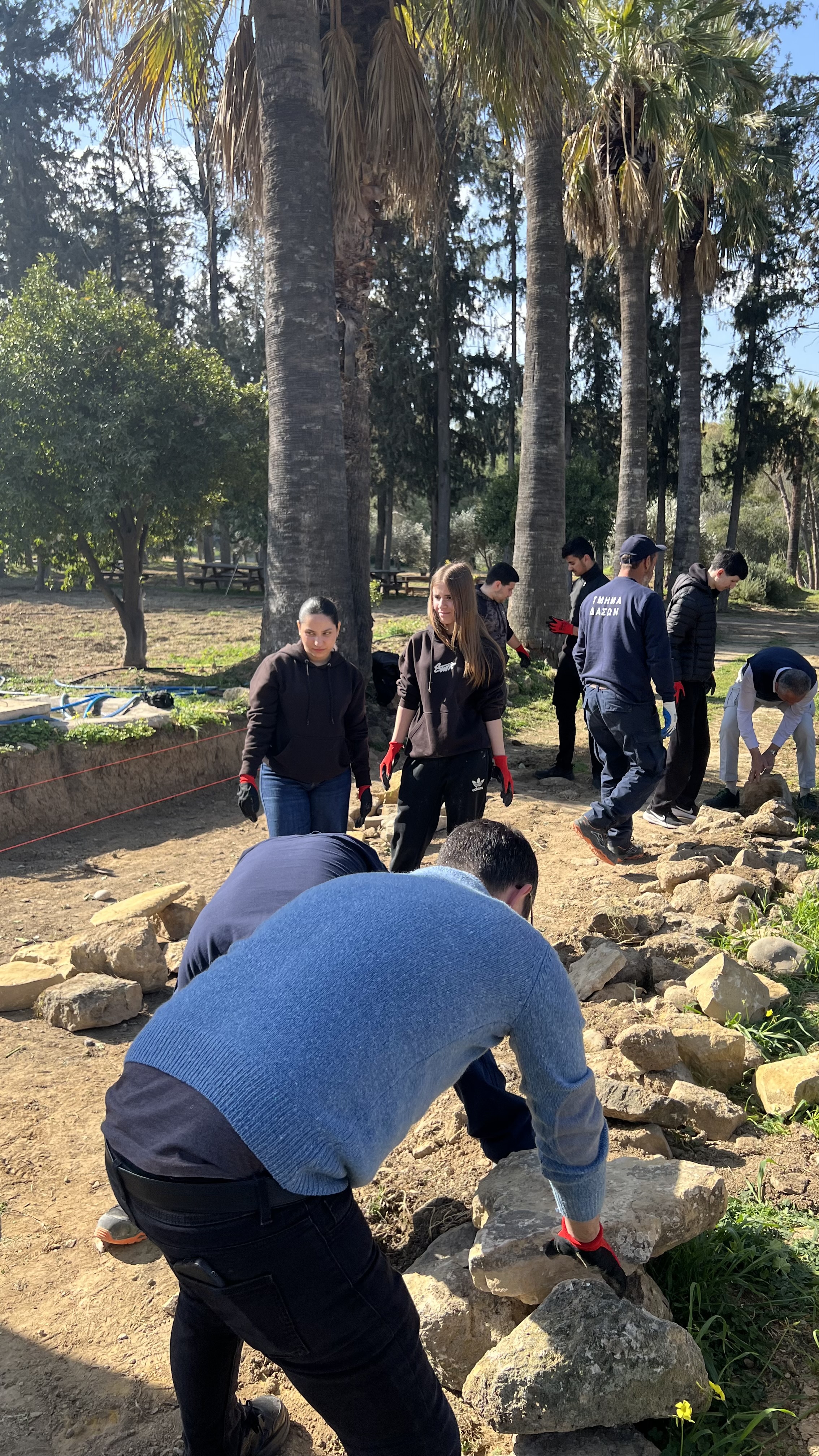
“These structures protect the soil from erosion and enhance biodiversity by creating micro-ecosystems,” Theodosiou remarked.
Following the introductory briefing, students worked on site wearing protective gloves and applying the basic principles of the craft as they constructed and restored sections of stone structures in the garden.
The activity forms part of a wider sustainability programme to transform the presidential palace gardens into a model of environmental management and education.
First lady Philippa Karsera Christodoulides attended the workshop and welcomed the students, describing the garden as an important educational space.
“The upgrading of the garden will allow it to function as an educational urban farm and a model of sustainable agriculture,” she said.
Restoration work on existing structures within the garden is being carried out by forest firefighters under the coordination of the commissioner’s office.
A survey of the site identified three distinct types of dry-stone construction already present in the garden.
Structures in poor condition are now being reconstructed using stones with similar geological characteristics to the original material.
Rather than quarrying new stone, the materials are being sourced from landfills, reflecting traditional practices where stones cleared from agricultural fields were reused in construction.
Theodosiou said the reuse of materials highlights the environmental benefits of the technique and aligns with modern sustainability goals.
The art of dry-stone construction is recognised internationally and has been included on the UNESCO representative list of the Intangible Cultural Heritage of Humanity, placing emphasis on preserving the craft and passing knowledge to future generations.
To support this effort, the commissioner’s office is working to develop a construction standard for dry stone structures and paving.
Plans are also under way to introduce certified training courses.
“The aim is to create an organised training framework and cultivate a new generation of craftsmen in dry stone construction,” Theodosiou affirmed.





Click here to change your cookie preferences