
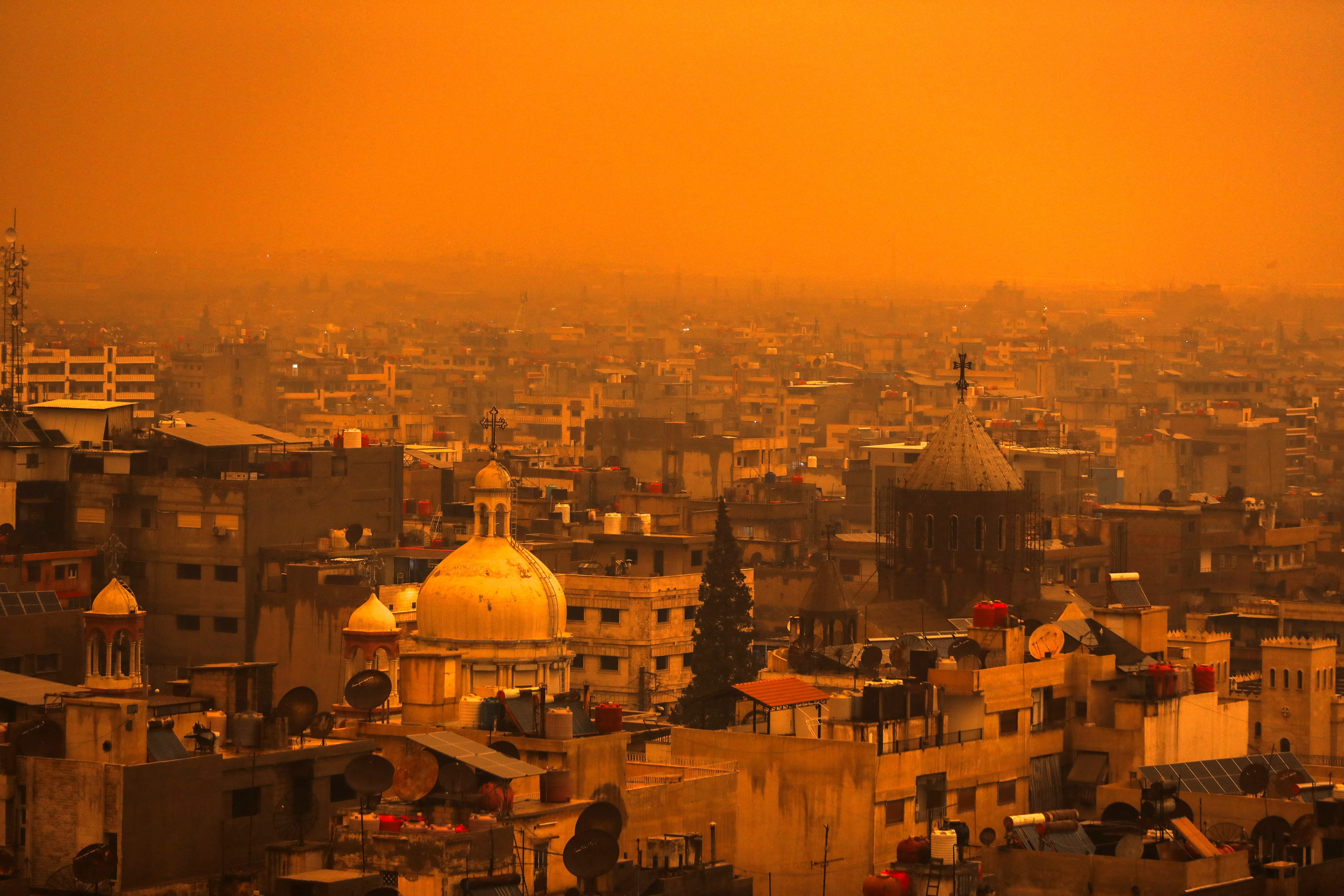
The likelihood of air quality in Cyprus being affected by chemicals from regional hostilities is minimal, air quality control officer Chrysanthos Savvides said on Wednesday.
Savvides explained that dust reaching Cyprus from the Middle East as a result of bombing is highly unlikely to contain chemical emissions.
Speaking to the Cyprus News Agency, he said that scientific data and analyses from past conflicts in Syria and Israel had not detected concentrations of substances associated with chemical weapons.
The labour inspection department, responsible for air quality monitoring, collects atmospheric dust samples and sends them to the National and Kapodistrian University of Athens for analysis.
The samples are tested for around 40 substances typically linked to the use of chemical weapons.
Savvides said that even if such substances were present, they would likely fall below detectable limits, meaning concentrations would be negligible and would not affect air quality.
“The explanation is simple and scientifically sound,” he said.
He explained that the specific chemical substances were short-lived pollutants in the atmosphere and could not travel in the form they were released over such large distances.
This, he added, is even more relevant in the case of Iran, which is located further from Cyprus than Syria and Israel.
For Cyprus to be affected, two conditions would need to occur simultaneously: hostilities near desert areas and a dust storm carrying particles towards the island.
Savvides said that no such conditions had been observed in recent days and that there was currently no dust in the atmosphere.
Dust episodes, he said, were being monitored as a meteorological phenomenon, by the met service and the labour inspection department.
He added that the department recorded atmospheric pollution measurements on ground level, that is at the height people breathe, with station installed at a height of 1.5m to 2m from the ground, with the aim of protecting human health.
Regarding last week’s dust in the atmosphere, Savvides said it did not affect Cyprus and that rainfall had “washed” the air clean, without any pollution being picked up by the instruments.





Click here to change your cookie preferences