
Leading nations in Europe, with Japan, said on Thursday they would act to stabilise energy markets and join “appropriate efforts” to open the Gulf’s oil chokepoint after tit-for-tat strikes on energy plants dramatically escalated the U.S.-Israeli war on Iran.
Major economies have been scrambling to cushion the impact of soaring oil prices after state oil giant QatarEnergy reported “extensive damage” from Iranian missile strikes on the Ras Laffan Industrial City in response to Israel’s bombing of Iran’s major gas field.
Ras Laffan processes about a fifth of the world’s liquefied natural gas. Saudi Arabia’s main port on the Red Sea, where it has been able to divert some exports to avoid Iran’s closure of the Gulf’s Strait of Hormuz, was also attacked.
The seemingly precise strikes underscored Iran’s continued ability to exact a heavy price for the U.S.-Israeli campaign, and the limits of air defences in protecting one of the Gulf region’s most valuable and strategic energy assets.
They also suggested a lack of coordination of strategy and war aims almost three weeks into the war. U.S. Defense Secretary Pete Hegseth, however, told a briefing that U.S. objectives in the war were “unchanged, on target and on plan”.
The leaders of Britain, France, Germany, Italy, the Netherlands and Japan issued a joint statement urging “an immediate comprehensive moratorium on attacks on civilian infrastructure, including oil and gas installations”.
“We express our readiness to contribute to appropriate efforts to ensure safe passage through the Strait,” they added.
“We will take other steps to stabilise energy markets, including working with certain producing nations to increase output.”
INTEREST RATES AND ENERGY PRICES WORRY EUROPE
The European Central Bank and Bank of England held rates steady, citing inflation risks. The ECB now sees 2026 inflation at 2.6% in a “baseline” scenario, above the 1.9% predicted in December. Investors who once expected cuts were pricing in hikes by year-end.
At a summit in Brussels, European Union leaders were set to try to offset the jump in energy costs, with few easy options available.
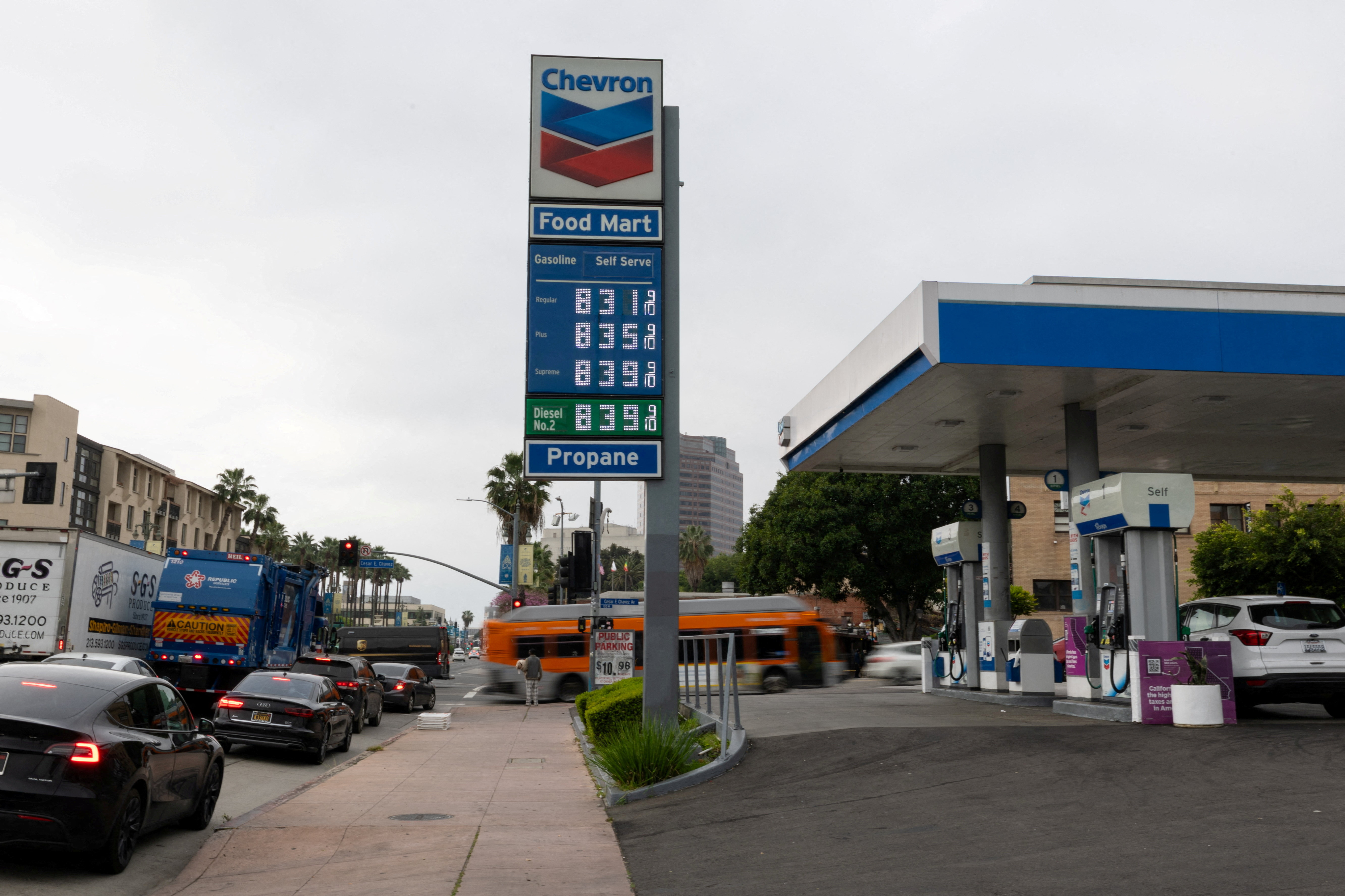
European gas prices were up 25% and Brent crude oil futures LCOc1 nearly 6% at $113 at 1300 GMT after briefly surging about 10%. European gas prices have leapt by over 60% since the war began on February 28. O/R
Japanese and South Korean stocks fell around 3% while the pan-European .STOXX index was down 2.5%, around its lowest in more than three months. Wall Street was set to open lower. .NMKTS/GLOB
Iranian aerial attacks since Wednesday have also forced the UAE to shut its Habshan gas facility and set off fires at Kuwait’s Mina Al Ahmadi and Abdullah Port oil refineries.
Perhaps just as significantly, Saudi Arabia intercepted a ballistic missile launched towards Yanbu, the port city that is the kingdom’s only outlet for crude exports since Iran in effect closed the Strait of Hormuz, through which around a fifth of the world’s crude oil and liquefied natural gas normally passes.
A drone also fell on the Aramco-Exxon refinery, SAMREF, in Yanbu, the Saudi defence ministry said, though an industry source said the impact was minimal.
Iran’s armed forces command said strikes on Iran’s energy infrastructure had led to “a new stage in the war” in which it had attacked energy facilities linked to the United States.
“If strikes (on Iran’s energy facilities) happen again, further attacks on your energy infrastructure and that of your allies will not stop until it is completely destroyed,” spokesman Ebrahim Zolfaqari said, according to state media.
Hegseth told reporters that the U.S. objectives remained to destroy Iran’s missile launchers, as well as its defence industrial base and navy, and never to allow it to acquire a nuclear weapon.





Click here to change your cookie preferences