
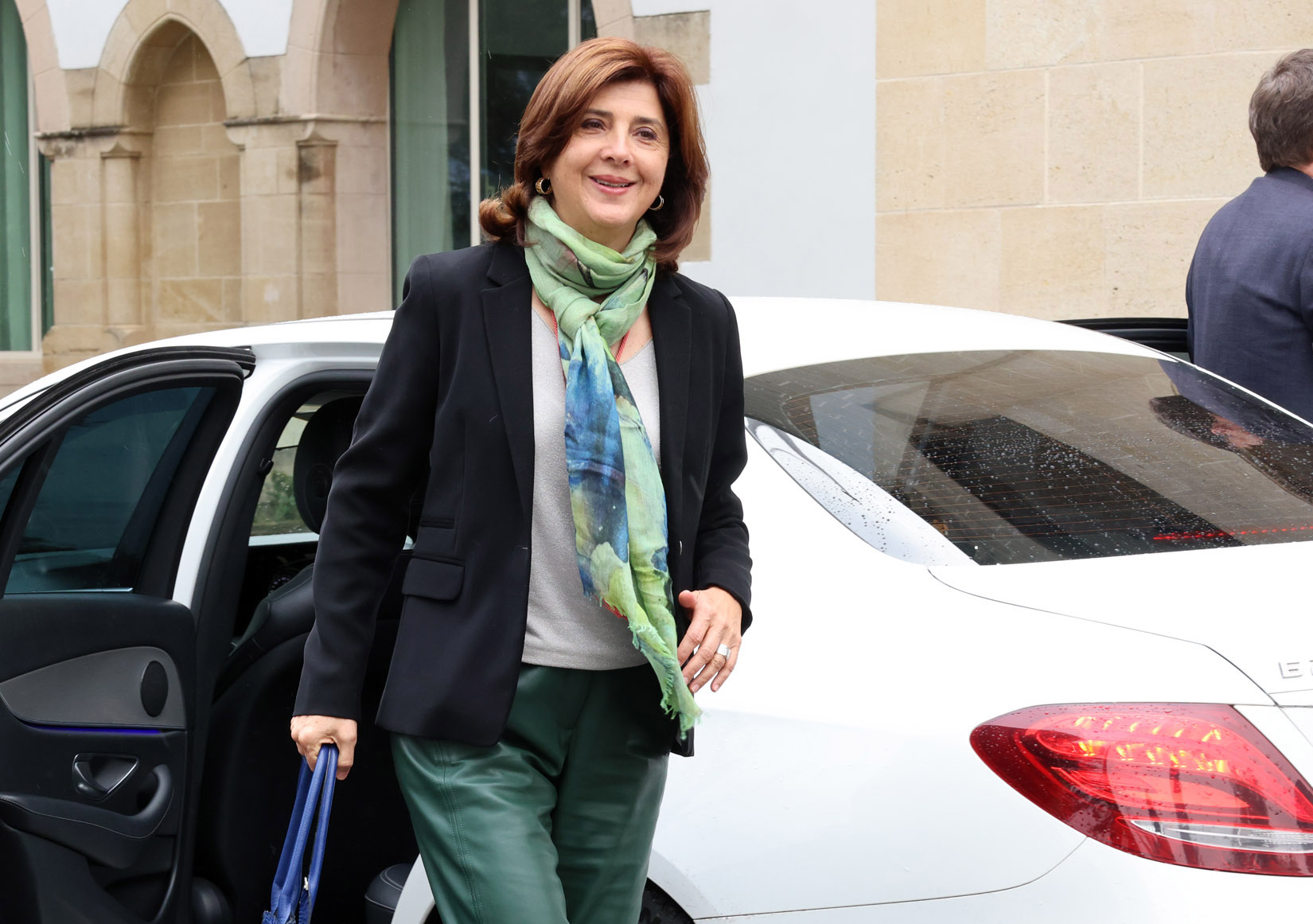
After a four-month absence, the UN Secretary-General’s personal envoy, Maria Angel Holguin, will arrive next week on what appears to be yet another exploratory visit. Holguin, who was last on the island in January, will meet the two leaders separately on June 8 and then travel to Turkey and Greece for consultations.
If we were looking for a positive take on the visit, we could say that the UNSG, Antonio Gutterres remained committed to his pledge to help the two side reach an agreement before the end of his term at the end of the year. He has seven months left, but considering the complete lack of movement in Cyprus – the sides have shown in the last 18 months they cannot agree on the opening of a crossing – it seems very unlikely there would be a settlement before he steps down.
It could be argued, however, that everything is going according to plan. Holguin had said in January that the UN would wait until Cyprus’ presidency of the EU Council was over at the end of June, before stepping up its initiative, and next week’s visit may be intended as preparation for what will take place in July. President Nikos Christodoulides was not happy with this delay, claiming he was ready to attend an enlarged meeting, under Guterres a week after Holguin had spoken.
Christodoulides has been calling for an enlarged meeting for months now, even though he has never explained why he is so keen for it to be arranged. The last enlarged meeting in which the guarantor powers took part was held last July and came to nothing, Gutteres telling the two leaders to agree on confidence-building measures, including the opening of crossings which never happened. This was a time when Turkey and the Turkish Cypriot leader were calling for a two-state solution, but there now appears to be a change of stance. New leader Tufan Erhurman has repeatedly made clear his support for a federal settlement.
Erhurman has argued that an enlarged meeting would be pointless before there was progress on confidence-building measures. He had a point and Holguin also appeared to share his view. How would there be a resumption of talks and a structured process when the two sides could not reach agreement on the opening of a crossing? Christodoulides, in contrast, still views the holding of an enlarged meeting as the key to a resumption of the talks. He has never explained how he has arrived at this conclusion, which seems the product of wishful thinking rather than a rigorous assessment of the situation.
We will probably have a clearer idea about the “window of opportunity” that Christodoulides has identified, after Holguin’s meetings with the two leaders, but under the current conditions it is extremely difficult to be optimistic. Perhaps things will happen in July.





Click here to change your cookie preferences