
Governments must act collectively, rather than through fragmented responses, to protect seafarers operating in one of the world’s most volatile maritime regions, according to Intertanko managing director Tim Wilkins.
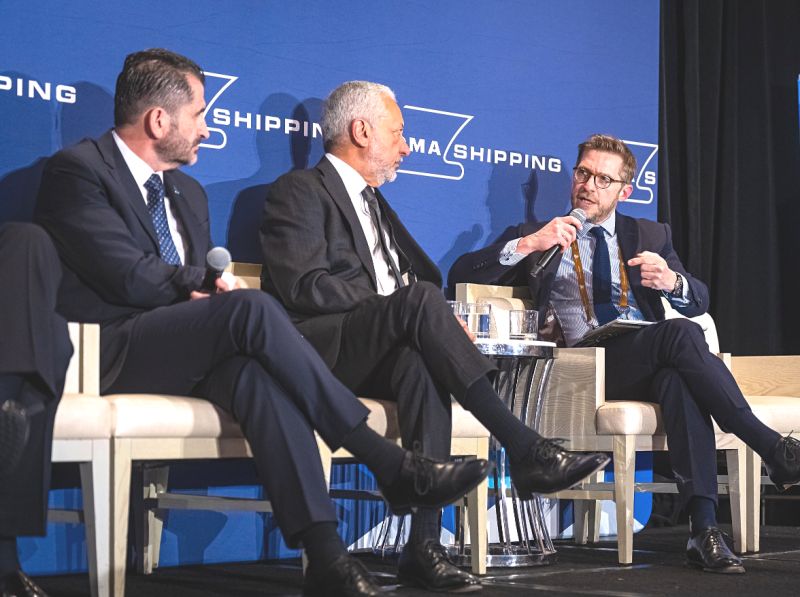
Speaking during a keynote panel at CMA in Stamford, Connecticut, Wilkins said the industry needed a coordinated response to the crisis in and around the Strait of Hormuz and the wider Gulf, warning that seafarer welfare must not be treated as a secondary issue.
He said crew safety should remain the primary concern for shipowners, charterers and governments alike.
Wilkins set out three immediate priorities for governments.
The first, he said, is seafarer repatriation and welfare, as authorities must work together to ensure crews are not left stranded, welfare support remains available, and ships in the area continue to receive stores and provisions.
The second priority, he added, is the safety of navigation. With threats to ships in the area making transit through the Strait of Hormuz untenable, Wilkins said guidance on when navigation can resume must be clear and consistent, while also taking into account the fatigue and operational pressure already facing crews.
He added that GNSS jamming and spoofing were compounding those risks and that any messaging to mariners should reflect that reality.
A third priority is internationally coordinated military support. Wilkins said Intertanko is calling on governments and military partners working across the Red Sea and Gulf region to ensure that responses are shaped by collective maritime security priorities, rather than by national interests alone.
Emphasising those points is the joint position of Intertanko and OCIMF, which says operational decisions should be based on verified information from authoritative sources, detailed risk assessments covering every stage of a voyage, and proper recognition of the human element.
The two organisations said workload, fatigue and communication pressures are not minor concerns, but safety-critical factors that should be central to any decision involving vessels operating in the region.
Wilkins also said Intertanko holds daily meetings with the Joint Maritime Information Centre to maintain situational awareness and support members operating under exceptionally difficult conditions.
Other panellists included International Chamber of Shipping (ICS) secretary general Thomas Kazakos, IBIA executive director Alexander Prokopakis, INTERCARGO technical committee chairman Dimitris Monioudis, and Panama Canal Authority administrator Ricaurte Vasquez. The discussion was moderated by CNBC Business News journalist Lori Ann LaRocco.
In a joint statement, Intertanko and OCIMF said their focus remained on the safety of seafarers and all those affected as the situation across the Middle East and its waterways continues to evolve.
They said seafarers are operating in a complex and uncertain environment and that their safety and wellbeing must remain a priority.
The organisations also urged members and the wider industry to rely only on verified information from authoritative and trusted sources, adding that operational decisions should be supported by company-led due diligence and comprehensive risk assessments covering all stages of a voyage, including port calls and ship-to-ship (STS) operations.
They further said that, alongside existing security measures and Best Management Practices (BMP), the human element must remain part of decision-making, since workload, fatigue, communication pressures and planned crew changes can all affect safe outcomes and should be managed accordingly.
Finally, they said they would continue working with industry partners and governments while monitoring developments in support of safe and responsible marine operations.



Click here to change your cookie preferences