
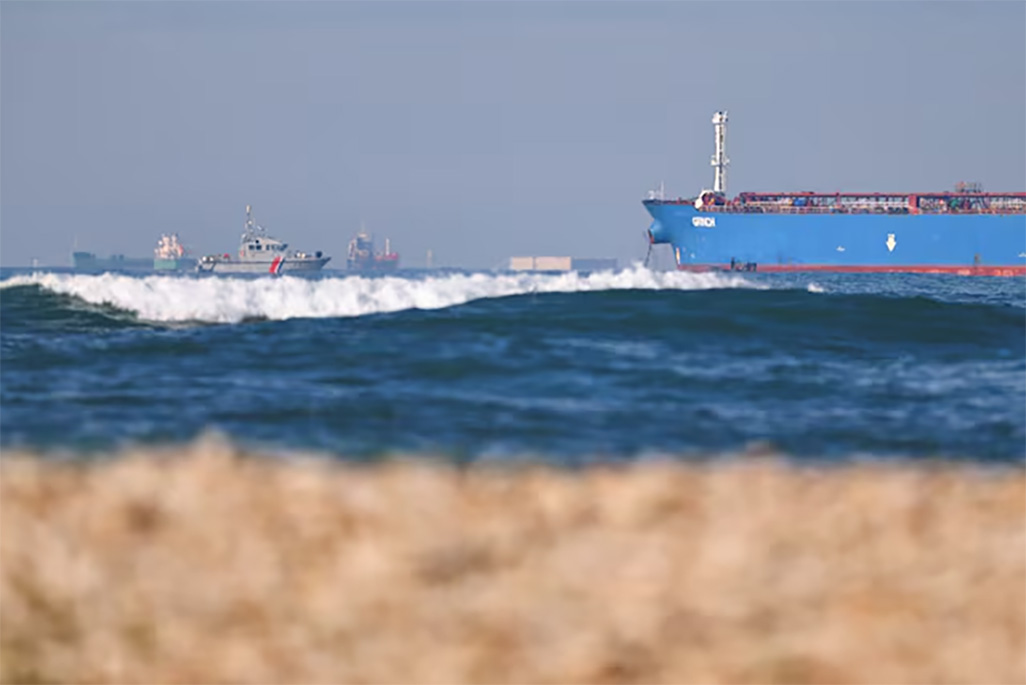
Prime Minister Keir Starmer said on Thursday he had authorised the military to board and detain Russian ships in British waters to disrupt a network of vessels that his government says enables Moscow to export oil despite Western sanctions.
The decision comes as other European nations, including France, Belgium and Sweden, have stepped up efforts to detain Russia’s so-called shadow fleet of tankers used by Moscow to fund its four-year war against Ukraine.
Starmer said he approved the more aggressive action against the vessels because Russian President Vladimir Putin was likely “rubbing his hands” over the sharp rise in oil prices driven by the U.S.-Israel war against Iran.
“That is why, in my strong view, we should go after the shadow fleet even harder,” Starmer said at a meeting of the Joint Expeditionary Force Summit in Helsinki on Thursday. “Together we must close off critical sea routes to this vital trade to keep up the pressure on Putin.”
Britain provided intelligence and logistics support this year to the French and U.S. military, who detained Russian vessels. But Starmer’s announcement is the first time that British forces have been authorised to board Russian ships.
MOVE COULD FORCE RUSSIAN SHIPS TO TAKE LONGER JOURNEYS
Downing Street said British military and law enforcement officials have been preparing to board Russian vessels that do not surrender, are armed, or use high-tech pervasive surveillance to evade capture.
Once the ships are boarded, Downing Street said criminal proceedings may be brought against the owners, operators and crew, for breaches of sanctions legislation.
A British official said at least a dozen Russian sanctioned vessels had been passing through the Channel – the narrow stretch of water separating Britain and France – each month, on average, over the last year.
The British authorisation to board Russian ships may mean these vessels will avoid the Channel, one of the world’s most vital shipping lanes, forcing them to take longer, more expensive journeys, the official said.
Russia’s reliance on the shadow fleet has allowed it to keep exporting oil without complying with Western restrictions imposed after its full‑scale invasion of Ukraine in 2022.
European efforts to keep up pressure on Russia were undermined this month when U.S. President Donald Trump’s administration gave countries a 30-day waiver to buy sanctioned Russian products currently stranded at sea to stabilize global energy markets roiled by the Iran war.
Britain has placed sanctions on 544 Russian shadow fleet vessels.
About three-quarters of Russia’s crude oil is transported by these ships, Britain estimates.
In January, British forces helped the United States seize a Russian-flagged oil tanker in the North Atlantic and later that month it provided tracking and monitoring support for a French operation to board a sanctioned Russian oil tanker in the western Mediterranean.
Russia’s shadow fleet vessels typically have opaque ownership structures and have raised concern about environmental risks, with poorly regulated, ageing tankers prone to spills, mechanical failures and leaks, threatening marine ecosystems.




Click here to change your cookie preferences