
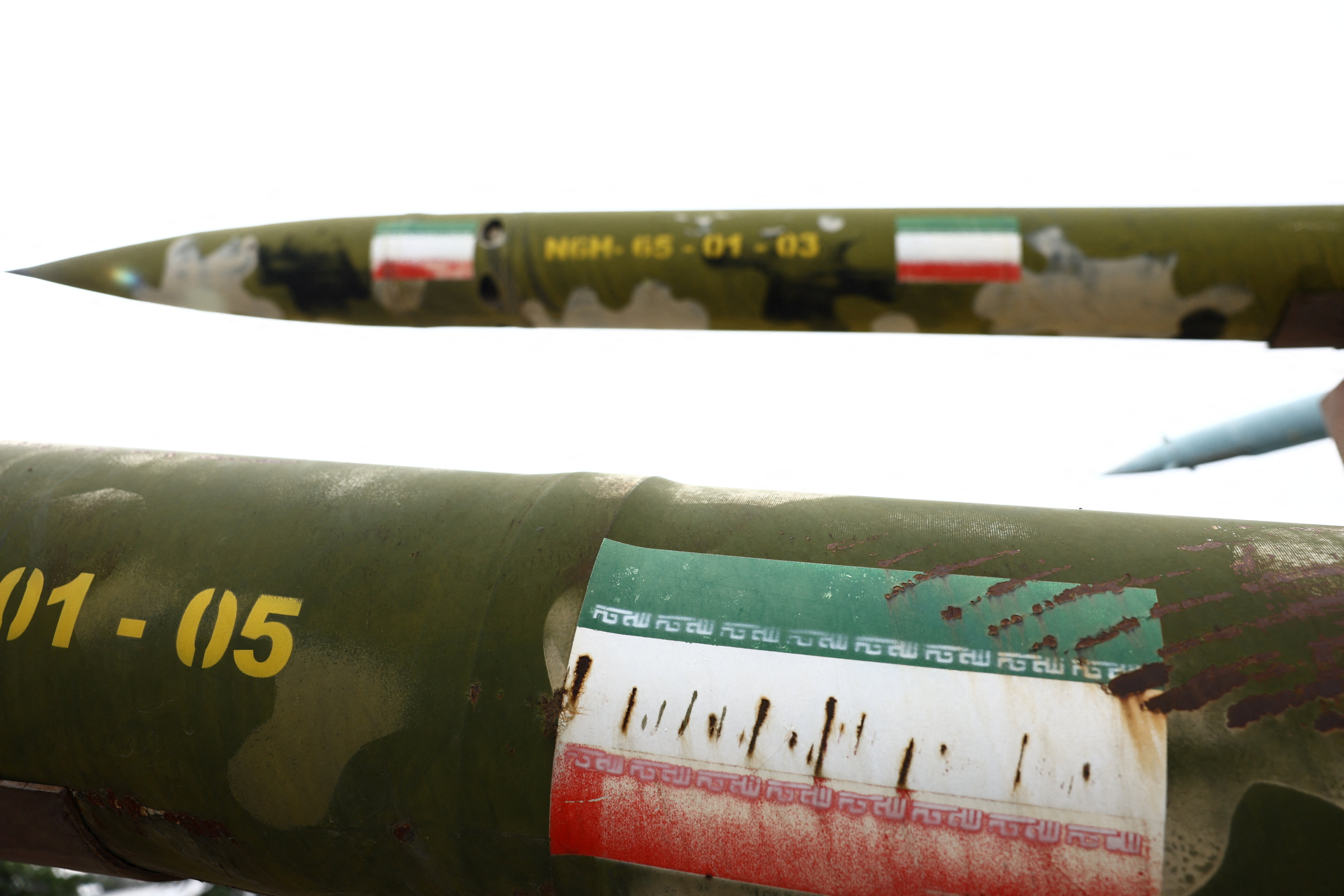
The United Kingdom’s defence ministry has refuted reports that an Iranian missile intercepted over northern Lebanon was aimed at British bases in Cyprus, as new regional developments add further context to the incident.
Speaking to the Cyprus Mail on Thursday, a UK defence ministry spokesperson said, “our intelligence is of the highest calibre and does not suggest the missile in question was aimed at the bases,” while declining to comment on reports that a US naval vessel in the eastern Mediterranean may have intercepted it.
The ministry did confirm that the missile was not intercepted by British defence systems.
Regional media had reported that the missile, which broke apart mid-air over northern Lebanon on Tuesday, may have been targeting British military installations on the island.
Israel’s Channel 12, citing a senior US official, said the missile disintegrated in flight, scattering debris across towns north of Beirut and causing minor injuries.
Lebanese outlets, including Al-Jadeed, quoted security sources indicating it was intercepted over the eastern Mediterranean.
American analysts cited by Israeli journalist Barak Ravid had earlier signalled that US military estimates pointed to the British bases in Cyprus.
Subsequent findings from the Lebanese armed forces suggested the missile’s target lay outside Lebanese territory without specifying a destination.
Analysis of debris indicated that the projectile, identified as an Iranian-made Qadr-110 medium-range ballistic missile, broke apart outside of Lebanese airspace, either due to a technical fault or interception.
On March 24, Lebanese foreign minister Youssef Raggi ordered the expulsion of Iran’s designated ambassador, Mohammad Reza Shibani, declaring him persona non grata.
The Lebanese foreign ministry cited violations of diplomatic norms, including alleged interference in domestic affairs.
The paramilitary organisation, Hezbollah, described the decision as “a strategic error and national sin”.
Early claims in Lebanese and Israeli media suggested the missile may have also been directed at targets such as the US embassy in Beirut or Hamat airbase.
Hamat airbase, while used periodically by US personnel supporting the Lebanese armed forces, is crucially not a US-controlled installation.
The Pentagon declined to comment when contacted by the Cyprus Mail, stating only that it does not comment on intelligence matters.
The Israeli embassy and defence ministry were also approached for clarification.
Earlier in March, a drone launched from Lebanon struck an aircraft hangar in RAF Akrotiri.
Furthermore, a senior commander of Iran’s Islamic Revolutionary Guard corps (IRGC) General Sardar Jabbari, warned of intensified missile attacks on Cyprus, exclaiming on state television that “the Americans have moved most of their aircraft to Cyprus. We will launch missiles at Cyprus with such intensity that the Americans will be forced to leave the island.”
Concurrently on Tuesday, the same day as the missile incident, three Turkish F-16 fighter jets were reported to have taken off from Tymbou (Ercan) airport in the north, though their purpose remains unclear.
No official statement has been issued by the Republic of Cyprus regarding the missile.





Click here to change your cookie preferences