
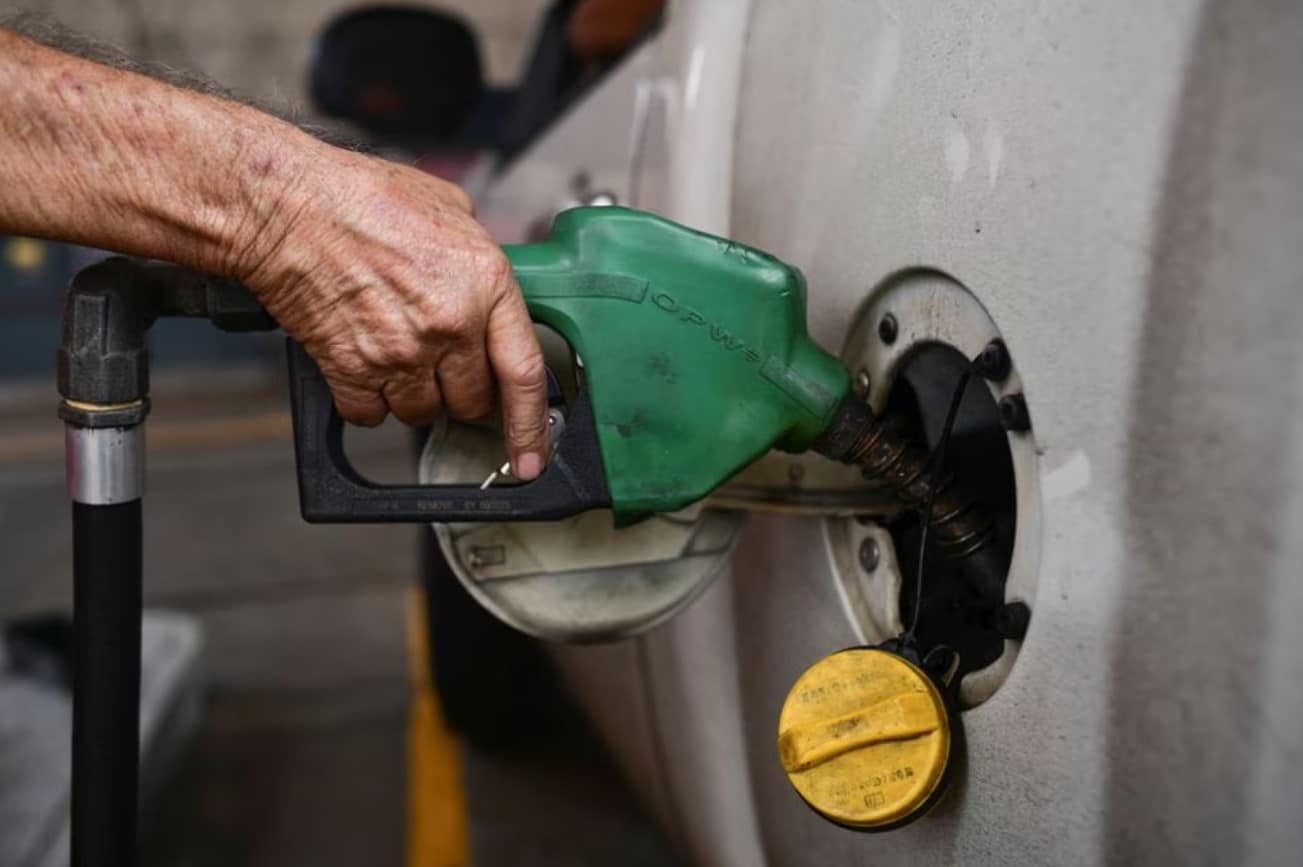
Parliament on Thursday approved the government’s plans to temporarily reduce the fuel consumption tax in light of rising prices amid the ongoing war in the Middle East.
The rate has now been set at 8.33 cents per litre for petrol and six cents per litre on diesel from Saturday until the end of June, with it being forecast that the reduction will cost the government €18.6 million in lost tax revenue.
It is expected that the possibility of the reduced tax rate being extended will be “reviewed” closer to its currently planned expiry date.
During a brief debate on the measure, Diko MP Christiana Erotokritou, who chairs the House finance committee, described it as a “significant intervention”, but said that it may be “exploited by the cunning”, warning that petrol station proprietors may engage in profiteering, leaving retail prices high and pocketing the difference induced by the reduced rate.
Edek MP Marinos Sizopoulos, meanwhile, said that while the measure is “in the right direction”, he agreed with Erotokritou that there is a need for “substantial supervision and control”.
He complained that “price increases are passed on immediately, while reductions are delayed” by petrol station proprietors, before calling on the government to reduce value added tax on fuel.
A European Commission spokesman had confirmed to the Cyprus Mail on Wednesday that such a move would be illegal, but Sizopoulos said that petrol stations in the Republic of Cyprus are subject to “unfair competition” from the north, where European Union law does not apply, and VAT on fuel has been zeroed since March 19.
Like the other speakers, Akel MPs Christos Christofides and Andreas Kafkalias and Disy MP Onoufrios Koulla called on the government to take action to prevent profiteering on the part of petrol station proprietors.
Kafkalias also said that the fact that the fuel consumption tax reduction was announced on March 26 – ten days before the reduced tax rate will come into force – “created room for exploitation by the market”.
The bill was swiftly debated and passed at Thursday’s parliamentary plenary session, having been rapidly taken through the House finance committee earlier in the day.
At the committee session, the finance ministry’s tax policy unit chief Nayia Symeonidou had said that the decision to wait until Saturday for the reduced tax rate to be applied will ensure that “companies are given time to adjust their prices”.
She added that the extension of the reduced five-per-cent rate of value added tax on electricity through May next year is already in force, as it was brought about by decree.
Asked by committee Erotokritou how it will be ensured that the savings will be passed on to consumers and not pocketed by petrol station proprietors, she said that the consumer protection service will “monitor … the implementation of the measures”.
She was then asked whether there could be “punishments” for those found to be profiteering, and said that it is the commerce ministry, which is “responsible” for this matter.
Erotokritou said that she will as such call on the commerce ministry, which is headed by Michael Damianos, who belongs to the same party as her, to “increase checks” in this regard.
The measure is one of eight announced by the government last week, with others including a zeroing of the rate of VAT on meat, poultry, and fish until the end of September, and the non-implementation of “green taxes” on fuel, which had been set to raise the retail price of fuel by nine cents per litre.
Additionally, the government will also offer to cover 30 per cent of the wages of all workers in the hotel sector during this month, and will draw up a “special plan for more support for airlines to secure the seamless connectivity of the country with important destinations for the attraction of tourists”.
The government will also subsidise 15 per cent of the cost of all fertiliser and agricultural supplies for farmers this month and in and May. The subsidies for farmers are counted as two separate measures.





Click here to change your cookie preferences