
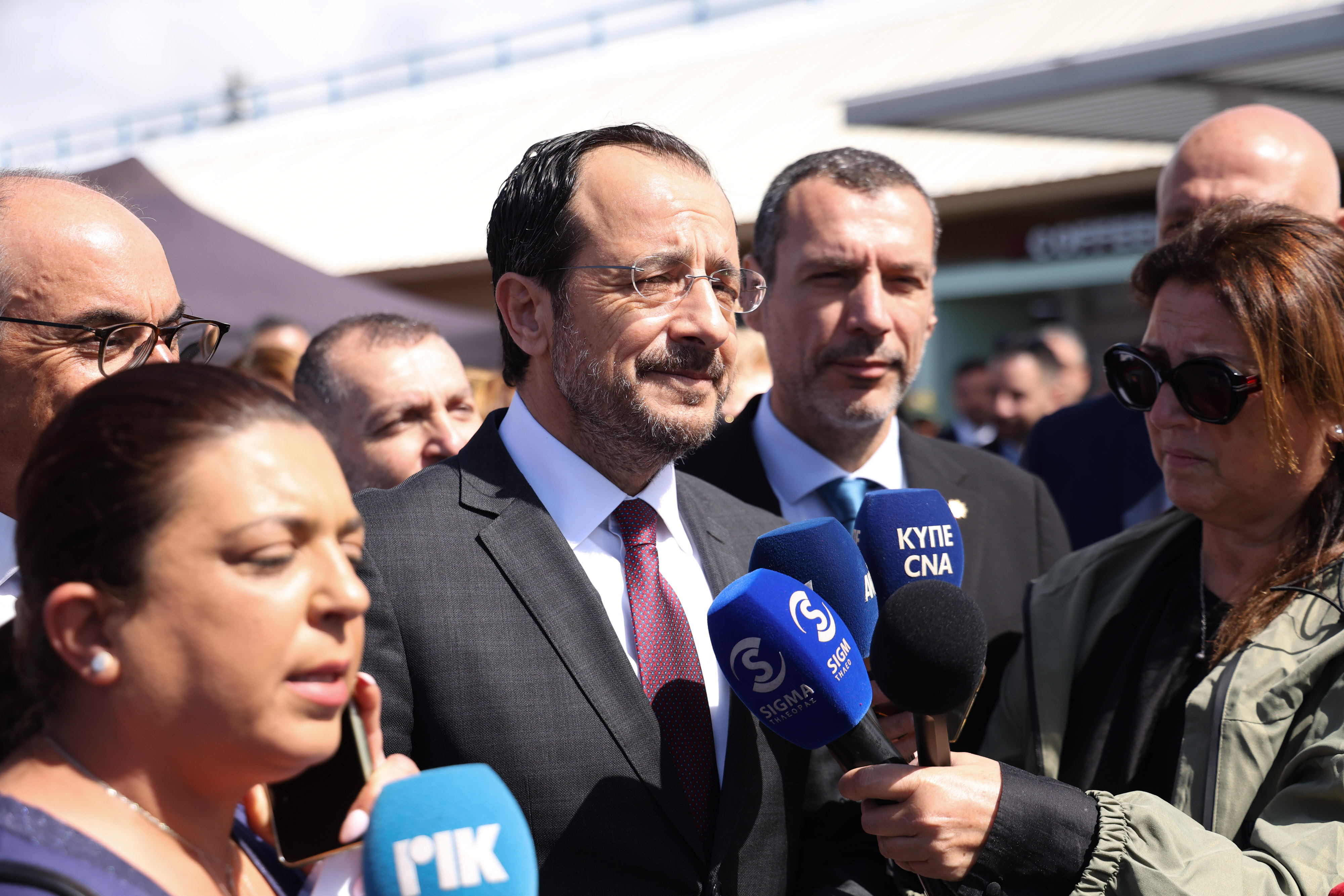
A clear mechanism on how the European Union should respond when its mutual assistance clause, Article 42.7 of the EU Treaty, is invoked, President Nikos Christodoulides said on Monday.
He said that, following Cyprus’ recent engagement with EU partners, there had already been a positive response from several member states, including Greece, France, Italy, Spain and the Netherlands.
“Without having formally activated Article 42.7, during my briefing at the last European Council we agreed at the level of the 27 leaders, as well as with the president of the council and the president of the commission, that there must be a mechanism in place for the actions the EU will take when and if a member state decides to activate this article,” he said.
Article 42.7 is a mutual defence clause introduced in 2009 requiring EU members to assist another member state facing armed aggression on its territory. The clause – which provides for mutual assistance among EU member states – has only been activated once, by France following a terrorist attack in 2015.
Christodoulides added that the European Commission has now been tasked with preparing specific steps outlining how the EU should respond in such a scenario.
The president said the initiative aligns with the broader objective of Cyprus’ presidency of the EU Council, emphasising the importance of a more autonomous EU.
“It was particularly important for us, even without activating Article 42.7, to see in practice solidarity from the European Union, with our partners coming here to strengthen the defensive shielding of our country,” he said.
Possible use of the clause has been raised since Iranian drones targeted the British base of Akrotiri in Cyprus, prompting questions over how countries can actually use the instrument.
He added that discussions at EU level would focus on defining the steps to be followed after the activation of the clause.
“We [Cyprus] have specific proposals. At the same time, the Commission has been tasked with preparing a draft, which we will discuss in order to take concrete decisions on how the European Union will operate when and if this article is activated,” he said.



Click here to change your cookie preferences