
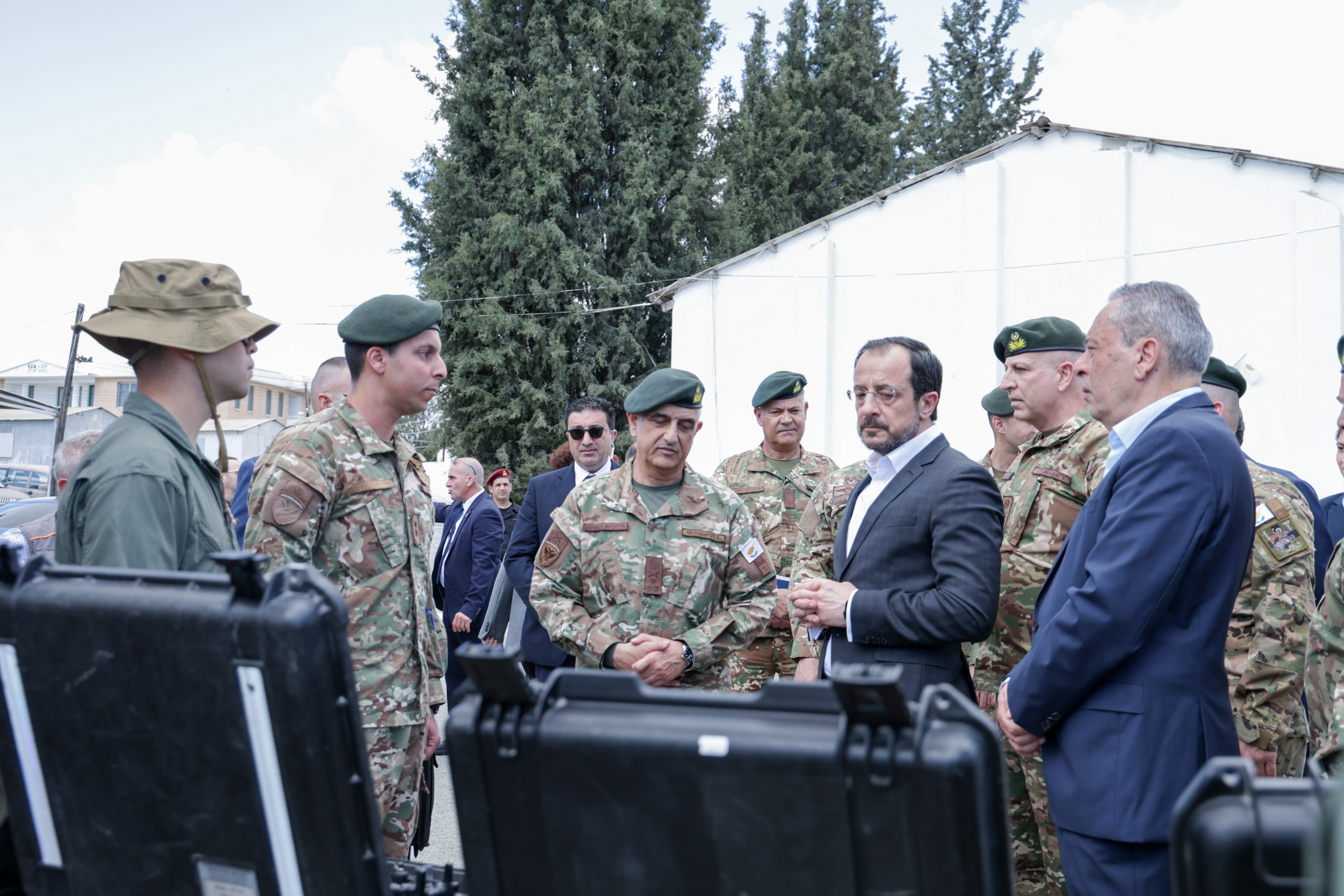
The government is continuing to strengthen the National Guard’s deterrent capability through targeted actions, including closer cooperation with Cyprus’ emerging defence industry, President Nikos Christodoulides said on Monday.
Speaking during a visit to the Limassol army training camp (KEN), he said the aim is not only for Cyprus to import defence equipment but also to eventually export to third countries.
Addressing officers and conscripts of the National Guard’s 3rd support unit, Christodoulides said his visit, alongside the defence minister and the National Guard chief, was a sign of recognition of its important role.
He highlighted its contribution not only to strengthening Cyprus’ deterrence but also to humanitarian efforts, including the Amalthea corridor, which he said underscores Cyprus’ role as a pillar of security and stability in the region.
Christodoulides said the government is “proud” of the National Guard, stressing that this is reflected in concrete actions rather than words.
Among the measures taken, he referred to improved employment conditions for contract soldiers as part of efforts to transform the National Guard into a more professional force.
He also pointed to enhanced international cooperation, including participation of National Guard personnel in training programmes in the United States.
Christodoulides highlighted Cyprus’ use of the EU’s SAFE financial instrument, noting that the country is set to receive €1.2 billion to strengthen defence capabilities and meet operational needs.
He added that investments are also being made in key infrastructure, including the Andreas Papandreou air base in Paphos and the Evangelos Florakis naval base.
Cooperation between the National Guard’s technical department and the private sector is central to plans to develop domestic defence capabilities, he said, adding that cabinet has decided that 15 per cent of defence procurement from third countries should involve Cypriot companies.
“All these actions to upgrade the National Guard and strengthen its deterrent capability are a top priority,” he said.
Christodoulides linked the policy both to Cyprus’ continued division and to its geopolitical position.
“Our country remains under Turkish occupation. At the same time, Cyprus is located in a region of significant geostrategic importance, with both opportunities and challenges,” he said, adding that EU membership further shapes the country’s strategic objectives.
He said that while progress has already been made, more work remains, much of which will take place “away from public statements and announcements”.





Click here to change your cookie preferences