
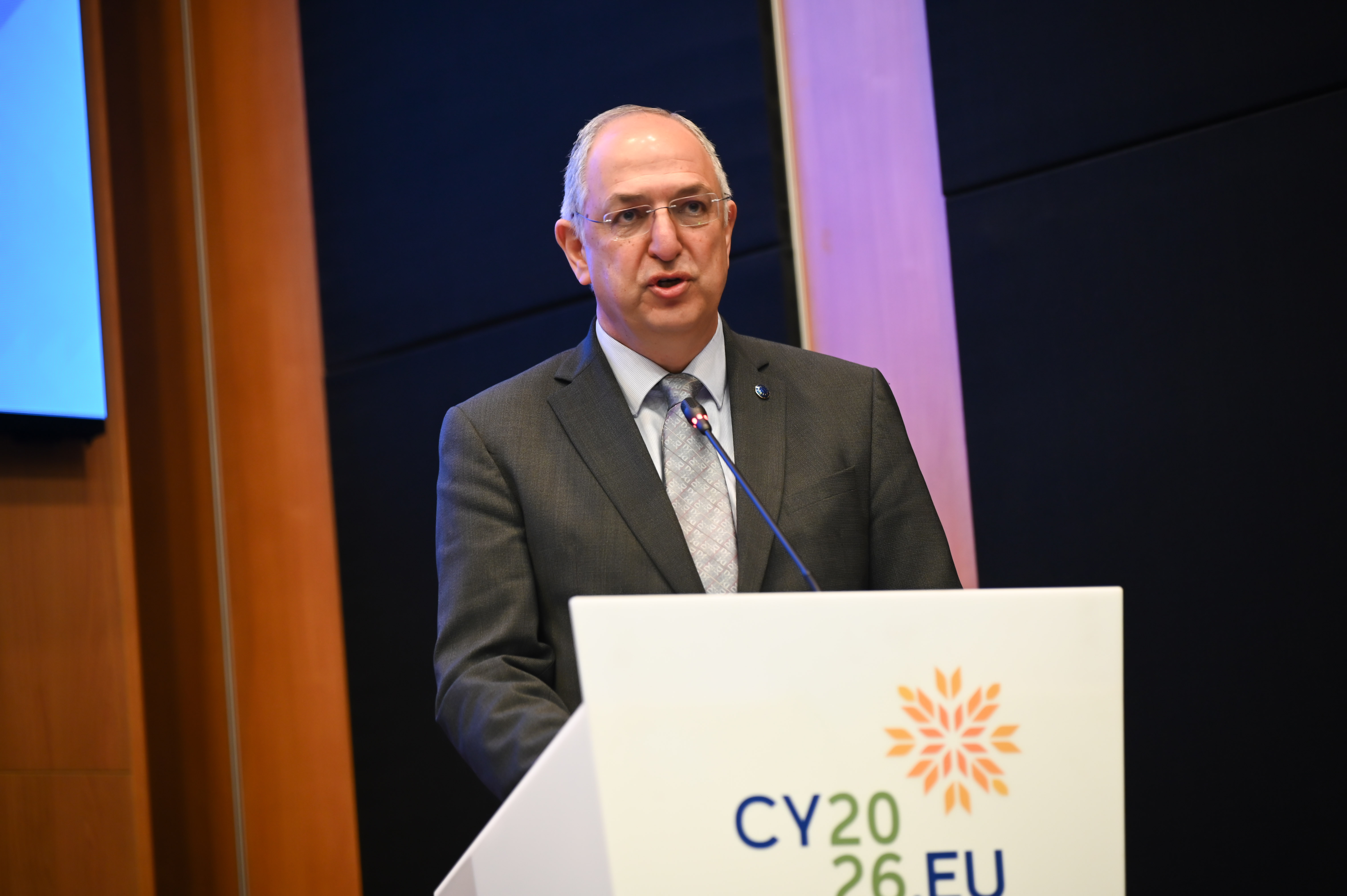
European Commissioner for Fisheries and Oceans Costas Kadis used the climate conference in Nicosia on Wednesday to warn that the climate crisis is also “an ocean crisis”.
Kadis warned that “the Eastern Mediterranean, where communities have long depended on the sea, is already facing the consequences of warming waters, shifting fish stocks and growing pressure on coastal livelihoods”.
Addressing the conference, Kadis said it was a privilege to attend both in his role as commissioner and “as a native of Cyprus”, describing the Eastern Mediterranean as a cradle of civilisation where the fate of millions remains closely tied to the health of the sea.
He said climate change is now putting that relationship at risk, with marine resources and the very fabric of coastal communities increasingly under pressure. In that context, he said the region offers clear evidence that “the climate crisis is an ocean crisis”, adding that the response must be bold and collective.
Kadis said the Mediterranean Sea is warming much faster than the global average, while marine heatwaves, acidification and invasive species are already reshaping ecosystems and threatening fisheries, tourism and coastal communities.
Referring to the EU’s Copernicus Marine Service, he said the findings confirm what fishers are already seeing on the ground, with stocks shifting, catches declining and traditional livelihoods at risk.
He referred to the European Ocean Pact, presented by the Commission last year, describing it as a comprehensive strategy to better protect the ocean, support a competitive and sustainable blue economy and strengthen the well-being of people living in coastal areas.
He added that the Commission is now moving ahead with implementation of the pact’s objectives.
At the same time, he said success depends on a stronger understanding of the ocean, which he described as the planet’s biggest climate regulator, adding that science and innovation are central to that effort.
In that respect, Kadis referred to OceanEye, unveiled by President Ursula von der Leyen in March, calling it “our window on the ocean” and the key to unlocking even more of its secrets.
He added that one of its main building blocks is the Digital Twin Ocean, part of the EU mission to restore oceans and waters, which is due to be completed by 2030 and will provide real-time modelling to predict and mitigate climate impacts.
He also said the Commission will present an Ocean Research and Innovation Strategy by the end of the year, aimed at supporting innovative solutions for the sustainable development of island and coastal communities, including through blue carbon sequestration.
Kadis said research and innovation can also serve as a stabiliser and confidence-building tool in complex geopolitical contexts, noting that the EU is able to engage through neutral, rules-based and value-compliant cooperation mechanisms embedded in Horizon Europe and the Partnership for Research and Innovation in the Mediterranean Area.
However, he made clear that “data on its own is not enough, saying knowledge must be turned into action. Because climate change does not respect borders, he said, the response must also be collective.”
In that context, he pointed to the work of the General Fisheries Commission for the Mediterranean, saying it shows that science diplomacy and regional cooperation can deliver results.
Through initiatives such as the EU-funded MedSea4Fish, he said efforts are under way to improve stock assessments, combat illegal fishing and promote sustainable management across shared waters. “A healthy, biodiverse ocean equals a stable climate,” he added.
On aquaculture, Kadis said the Commission has issued strategic guidelines for a more sustainable and competitive EU sector, while also remaining active internationally under the FAO framework.
Beyond food production, he said aquaculture is emerging as a climate solution, with some forms of farmed seafood acting as a net carbon sink as they grow and help restore ecosystems, while inland aquaculture can also serve as a water purifier.
He also referred to the Pact for the Mediterranean, presented last October, saying it deepens cooperation with southern Mediterranean partners and places particular emphasis on a sustainable blue economy, alongside stronger economic, educational and scientific ties.
At the same time, he welcomed the work of the Barcelona Convention in helping member states implement EU marine environmental legislation and address climate-related challenges in the Mediterranean Sea.
Kadis also said the European Commission is currently revising the Marine Strategy Framework Directive and the Maritime Spatial Planning Directive as part of the Ocean Pact’s legislative arm, with the aim of strengthening the protection of Europe’s seas from multiple pressures, including those linked to climate change.
He added that the impact of climate change on coastal and island communities, as well as possible solutions, will be addressed further in new Commission strategies due to be adopted in June and presented in Cyprus.
Beyond the region, Kadis said the EU remains actively engaged within the UN framework, pointing in particular to the entry into force of the Biodiversity Beyond National Jurisdiction (BBNJ) Agreement.
He said the EU is playing a catalytic role in the ratification of that agreement, which showed that biodiversity and climate goals can be advanced through cooperation in waters beyond national jurisdiction.
Kadis said the Eastern Mediterranean now stands “at a crossroads”, as the region faces the effects of climate change that cut across borders and geopolitics.
In that context, he congratulated the government of Cyprus, the Cyprus Institute and all contributors to the EMME Climate Change Initiative for promoting and coordinating regional climate action based on robust scientific data.
Kadis concluded that “science and innovation can help forge pathways to resilience and preserve marine ecosystems and communities,” adding that “through ambition and collaboration it is possible to secure a resilient, productive and sustainable ocean for both current and future generations.”



Click here to change your cookie preferences